by admin | Jan 15, 2017 | Authenticity, Cruel Tide, fact-based fiction, Fatal Reckoning, genre, Lake District, landscape, Morecambe Bay, readers, research, Sellafield, Uncategorized, West Cumbria
It was a wild and snowy night, with a full moon wierdly visible through the snow, as I drove to a readers’ group meeting at Grange-over-Sands library on Thursday and spoke to the hardy souls who turned up. Talking about the new book ‘Fatal Reckoning’  without giving away most of the plot was a challenge, so I relied on questions to pick up what my ‘audience’ wanted to discuss. ‘You obviously like to use specific local settings,‘ said one, ‘but what about people who nothing about the place? Doesn’t that specificity make them feel excluded and put them off?’
It’s a good question, and one that’s been on my mind for a while. Many of my most enthusiastic readers are local to the region of West Cumbria that I love and have used as the setting for all my books so far. The area has everything a story backdrop should have – interest, historical depth, variety, beauty and even controversy, in the local nuclear industry based around Sellafield. Occasionally I have to anonymise the community I’m writing about, but mostly the place names and the details are precise, and that’s what many of my readers enjoy. They haven’t seen references to their own home turf in novels before, and it’s great fun to recall them in your mind’s eye as you read.
But there’ll be many more readers – I hope – for whom the area is unknown and the specific references immaterial. Honestly, I don’t think this detracts from their reading pleasure. All of us read about places we don’t know, and accept the author’s word about what the settings look like. Too much description is a drag, but we appreciate enough detail to picture the scene, whether the setting is authentic or not. We enjoy finding out more about the setting of a good book: evocations of Ann Cleeve’s Shetland or Ian Rankin’s Edinburgh add immeasurably to the reading experience.
For me, setting is important on a number of levels. For all readers it provides the visual context of the story, adding colour and depth to the ‘events’. Sometimes, setting is so crucial that it becomes almost a character in itself. 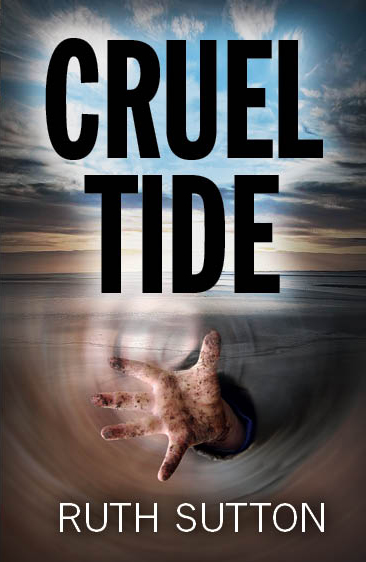 In my first crime novel ‘Cruel Tide’ the vast mudflats of Morecambe Bay and its sneaking tides are central to the plot. This can be achieved whether or not the reader knows the area herself. Local knowledge is not and should not be essential, but it adds another layer of enjoyment for some readers. This is especially so when the locality has previously been neglected in fiction, which I feel West Cumbria has been. Cumbria has been celebrated by many writers and poets, but not the west of the county, where the mountains meet the Irish Sea and seams of coal stretch further west under the waves. Coal and ore mining have gone, steel and iron works have closed, ship building has been replaced by nuclear submarines and commercial fishing is a shadow of past prominence, but the fascination of this coastal area continues and cries out to be shared. My next writing project may be different in characters and genre, but I’ve no doubt the setting will be the same, and hope it will be appreciated whether the readers are familiar with it or not.
by admin | Jan 5, 2017 | A Good Liar, Fatal Reckoning, Uncategorized, writing workshops
I didn’t know ‘writing apps’ existed until I was being interviewed for a blog last year and the interviewer asked me which one I used. He was far more digitally sophisticated than me, and seemed surprised that I was plugging away in ‘Word’, saving drafts into files, struggling to find things, taking time to find previous versions and essential research notes. Actually my writing process was even more more messy and muddled than I confessed to him at the time, but it had worked for some years, just about, and I felt “if it ain’t broke, don’t fix it”. 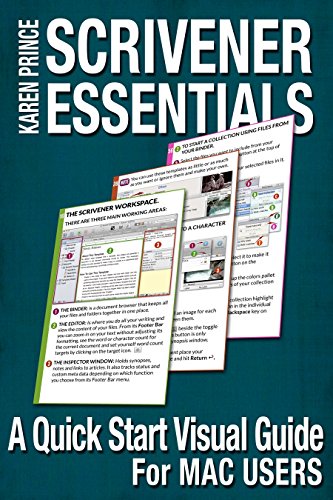 However inefficient, my approach by last year was a vast improvement on the frustrating experience of writing my first novel ‘A Good Liar’, which took four years from 2008 to 2012 and nearly went on the back of the fire more than once during that time.
My blogger friend had mentioned Scrivener, and I checked it out. Even the introductory blurb seemed very complicated: in the middle of the first draft of ‘Fatal Reckoning’ I was too busy to read it properly and carried on with my usual writing process that may not have been efficient but was at least familiar.
Some months later I ran a workshop on ‘Starting to Write’ at the Borderlines festival in Carlisle in 2016, and decided to mention it to the group, some of whom of course were well ahead of me, but still it felt like something that other people might use, not me.
Another few months on again and in the flush of New Year’s resolutions I’m telling myself that the time has come to try it out properly. I’m at the very early stages of researching and planning the next novel. Already I’ve eased the time pressure on myself by deciding from the start to aim for the summer of 2018 to get this book out, and the time to re-examine my writing process is definitely right. I decided to go straight in, avoiding the various guides to the software, and so this morning I downloaded the 30 day free trial version of Scrivener and have resolved to make myself try it out, patiently and with an open mind.
I have already reassured myself that the software has nothing to do with the content or style of my work, but deals only with the process of drafting in a way that might be helpful. My fear is always that my writing might become formulaic, paying too much attention to the usual protocols, but there’s no reason to believe that using Scrivener as a tool would increase that possibility, at least as far as I can see. So I’m resolved to give it a go. I reckon that by the time the free trial runs out I should have either decided to continue with it or not, and I’ll report my progress then.
In the meantime, if anyone reads this far and has practical advice to offer, I’m all ears. I am going to treat this experience as an intellectual challenge, like learning another language, which is believed to be good for an ageing brain like mine. Bring it on.
by admin | Dec 29, 2016 | A Good Liar, Fatal Reckoning, sex scene, Uncategorized, writing
 ‘Fatal Reckoning’ has been out a few weeks now and I’m beginning to get feedback from readers about it. Overall views are very positive, but there are always some who wanted something from the plot which I didn’t choose to provide. In particular, two male readers have regretted there wasn’t more explicit sex, or a more romantic view of the two protagonists.
They’re right. I could have added a plot development that involves a wedding, and there was opportunity for some more explicit sexual content. So why did I reject both? The wedding thing is easy: I’ve never been a fan of weddings, and both my female lead characters have similar ambivalence. I’m particularly unwilling to represent a wedding as part of the end of a story. ‘Lived happily ever after’ seems to be then required and in my experience that’s not often the case. Does that make me a cynical old feminist? Probably.
My response to the request for more sex is another matter, less personal, more ‘writerly’. There was one explicit sex scene in my very first book, ‘A Good Liar’ but it wasn’t actually about sex at all: it was about power, and the casual use of physical force that proved to be a turning point in the main character’s view of her lover. The details were necessary to provide the reader with the facts of her humiliation, and to heighten her dilemma about how to react.
As a writer I’ve decided, for the time being at least, that unless details of sexual behaviour add to either the plot or the readers’ understanding of a character, they should left to the imagination. The writer can feed that imagination with a fragment of detail, – the line of a shoulder, the play of light on skin – but hesitate to do more than that. Verbal descriptions of good sex fall hopelessly short of the real thing, in my view. The act itself is pretty basic and widely understood. Trying to describe in words the complex intertwining of senses and emotions, beyond the physiology of the act itself, is a pretty hopeless task and the result could fall far short of what the engaged reader can supply for him/herself. So why spoil it by explicitness, especially if the outcome detracts from the readers’ potential enjoyment?
Having said all this, I may change my mind by the time the next story gets ‘fleshed out’.
by admin | Dec 16, 2016 | 'unreliable narrator', character, plot devices, plotting, point of view, stories, Uncategorized
Two recent bestsellers have two things in common: the first is the use of the word ‘girl’ in the title, and the second is a story told by at least one ‘unreliable narrator’. I read ‘Gone Girl’ because I wanted to see what all the fuss was about, and felt at the end that I needed to cleanse myself from its unredeemed nastiness. Both ‘unreliable narrators’ were equally horrid and it was of little interest to me therefore which of them was the real villain. After that experience I was determined to resist the hype around ‘Girl on the Train’ and haven’t read it, or seen the film.  I read the reviews however and understand that the narrator – transposed from London to the USA for the film – is a drunkard and a liar whose testimony must therefore be suspect. I’m not sure I would warm to the character any more than I did to the ghastly creatures in the previous ‘Girl’ book.
Then I remembered another unreliable narrator, where the device was employed to such effect that I was pulled further into the story than I would have been otherwise. This was in ‘Empire of the Sun’, by J.G. Ballard, a story told from the point of view of a young boy – Ballard himself – caught up in the chaos of the Japanese attack on Shanghai in 1941, and its aftermath. Jim, the unreliable narrator, brings to the story his own childish innocence, naivety, optimism and compassion. He is unaware of his own slow decline into starvation and illness, and the reader has to glean this information not from the boy himself but from the reactions of the adults he encounters. It’s a gut-wrenching experience, in both the book and the film, and had a powerful impact on me. 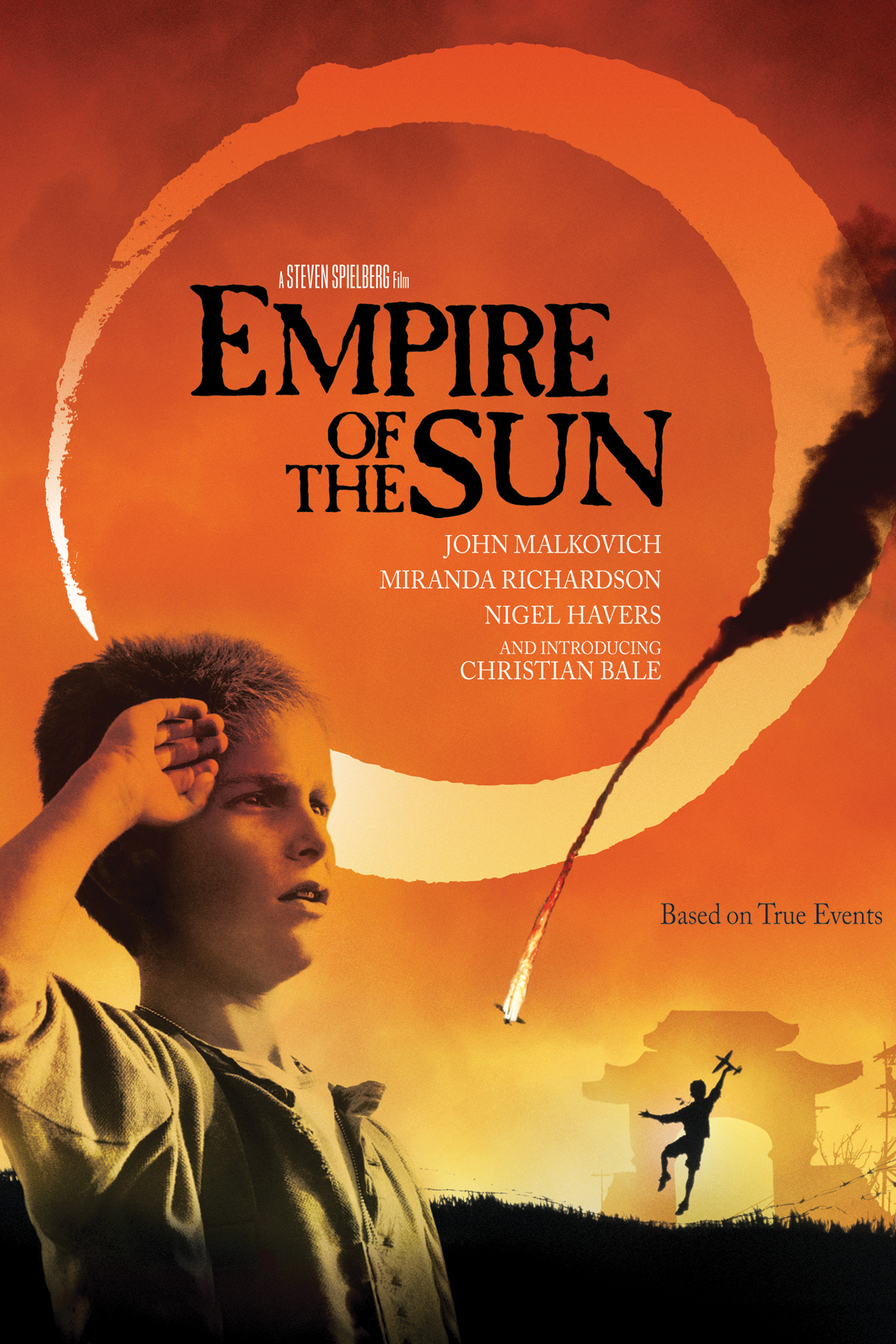
Ever since then I’ve toyed with the possibilities of using the POV of an unreliable but sympathetic story-teller. To begin with in my writing it was hard enough just to get the story told in a way that would keep the reader engaged, using the most straightforward narrative techniques – past tense, third person. I recall suggesting to my editor very early on that I might try something more ambitious and being gently warned off. Now with five ‘traditionally-told’ novels under my belt, this could be the time to stretch my skills. I’ve already given myself more time, delaying the next publication until the summer of 2018. Now I have to use that time to think about the choices I have and how best to tell a compelling story with a narrator who is likeable, even loveable, but whose view of events is limited by personality, maturity, or the complexity of the circumstances they face. It’s a challenge. I’m thinking hard about it.
by admin | Dec 10, 2016 | community, Cumbria, Fatal Reckoning, readers, research, stories, trilogy, Uncategorized, West Cumbria, Whitehaven
Every year in mid-December I borrow tables, chairs and crockery and invite all my neighbours in for the ‘Street feast’.

The annual gathering took place last night: fourteen adults, two children and a baby celebrating his first birthday with us. Ages ranged from 81 to the one year old and we all packed into my relatively small space – not a buffet, a proper sit-down meal. It’s a logistical challenge, and this was the biggest yet, but every year I’m glad we do it. Our row of nine houses is just a part of our village in West Cumbria, and the conversation round the tables last night showed yet again why this part of the world is such a rich setting for an ‘offcomer’ writer: long histories, inter-connecting families, shared memories and concerns.
Offcomers must always be on the fringe but being part of a community like this is very satisfying: over twenty years in my Salford flat I knew only two of my neighbours to speak to. I was accepted here relatively quickly mainly because my son-in-law is well-known in sporting circles and makes me ‘OK’ by association. Acceptance into a community brings with it a sense of responsibility. Writing the trilogy ‘Between the Mountains and the Sea’ was my first attempt at fiction, inspired by this place and its people, and I felt a strong obligation to get my facts right, which means many hours of research and checking. Worth it though.
At the launch of my new book ‘Fatal Reckoning’ last week in Whitehaven the Director of the Beacon Museum who welcomed us to her place said that my Jessie Whelan trilogy ‘Between the Mountains and the Sea’ was one of the first things she read on arriving in Cumbria and gave her an invaluable insight into the recent history of the place and its people. I was very chuffed by that. Last night’s party added to that sense of community and I loved it, as I always do.
by admin | Dec 4, 2016 | cover, crime fiction, Cruel Tide, Cumbria, fact-based fiction, Fahrenheit Press, Fatal Reckoning, historical fiction, Lake District, promotion, Publishing, research, trilogy, Uncategorized, West Cumbria, Whitehaven
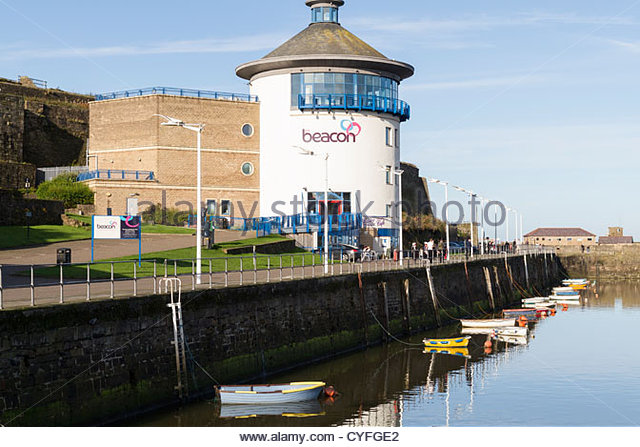
I knew this week would be busy but it’s been more than that: it feels like the start of a new chapter in my short writing life. Two events happened simultaneously. First, my new book ‘Fatal Reckoning’ was officially launched, on Friday at the Beacon Museum in Whitehaven, on the top floor (visible in the photo) with a superb view over the harbour and out to sea. It was a very enjoyable afternoon although I say it myself. One of the best parts was the introduction from the Director of the museum, Elizabeth Kwasnik – an off-comer from Scotland – who said that my trilogy ‘Between the Mountains and the Sea’ had given her valuable insight into the recent history of West Cumbria and its people. The historian in me was very pleased about that.
Second, the night before the Beacon launch the new ebook version of ‘Fatal Reckoning’ appeared on Amazon and the Kindle Store, published this time not by me but by Fahrenheit Press, who specialise in digital publishing, mainly of crime fiction. I’ve been fascinated to see how they set about establishing their books – and now mine – on the radar of crime fiction readers, mainly using Twitter. Chris McVeigh, who started Fahrenheit Press has also written a blog piece about the details of the curious partnership between us, by which they publish digitally and I do the paperback version. Two different formats, two different audiences, two different approaches, and an interesting development in self-publishing. As I explained last week, Fahrenheit’s version of Cruel Tide on Kindle has a completely different cover. Click the link to see it. And while you’re there, check the new ‘Fatal Reckoning’ cover too.
Both these developments have made me think, yet again, about what I’m doing and what next. The setting in Cumbria has to remain central to my writing, no doubt about that. Also, I really enjoyed weaving fact and fiction in the trilogy, and want to do that again. Could I combine that approach with a ‘crime’ story, as I tried to do in the first book in the trilogy ‘A Good Liar’? Does the next book need to be the start of a new series, which might be more lucrative but can be restrictive too?
My fiction writing life will be shorter than many authors, simply because I didn’t start until I was 60. So if the number of books left in me is relatively small, what are my priorities? I don’t want to spend precious time churning out books that might sell but don’t really interest or inspire me. Needless to say, a new idea is already forming, but nothing I want to talk about just yet.
Recent Comments