by admin | Dec 16, 2016 | 'unreliable narrator', character, plot devices, plotting, point of view, stories, Uncategorized
Two recent bestsellers have two things in common: the first is the use of the word ‘girl’ in the title, and the second is a story told by at least one ‘unreliable narrator’. I read ‘Gone Girl’ because I wanted to see what all the fuss was about, and felt at the end that I needed to cleanse myself from its unredeemed nastiness. Both ‘unreliable narrators’ were equally horrid and it was of little interest to me therefore which of them was the real villain. After that experience I was determined to resist the hype around ‘Girl on the Train’ and haven’t read it, or seen the film.  I read the reviews however and understand that the narrator – transposed from London to the USA for the film – is a drunkard and a liar whose testimony must therefore be suspect. I’m not sure I would warm to the character any more than I did to the ghastly creatures in the previous ‘Girl’ book.
Then I remembered another unreliable narrator, where the device was employed to such effect that I was pulled further into the story than I would have been otherwise. This was in ‘Empire of the Sun’, by J.G. Ballard, a story told from the point of view of a young boy – Ballard himself – caught up in the chaos of the Japanese attack on Shanghai in 1941, and its aftermath. Jim, the unreliable narrator, brings to the story his own childish innocence, naivety, optimism and compassion. He is unaware of his own slow decline into starvation and illness, and the reader has to glean this information not from the boy himself but from the reactions of the adults he encounters. It’s a gut-wrenching experience, in both the book and the film, and had a powerful impact on me. 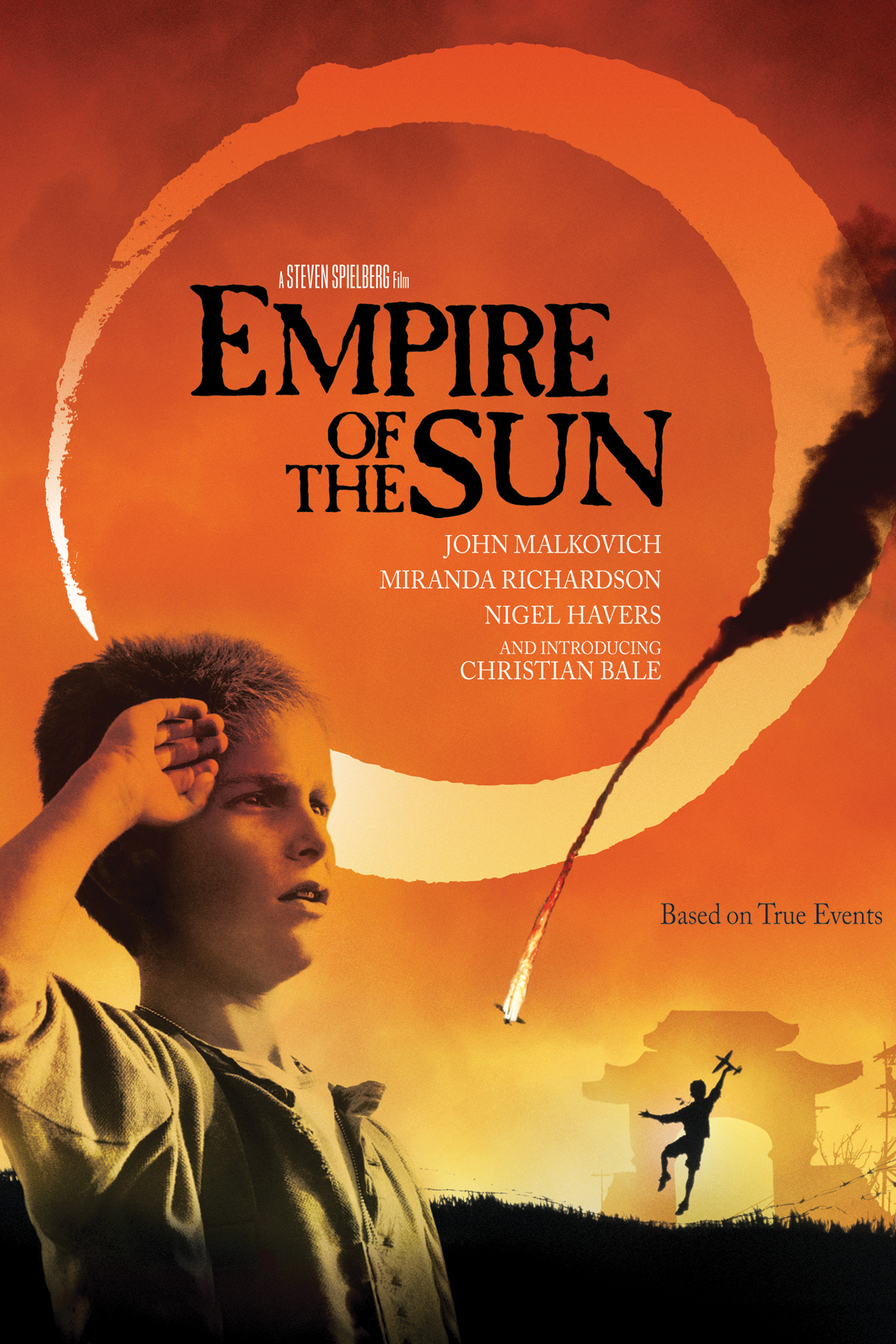
Ever since then I’ve toyed with the possibilities of using the POV of an unreliable but sympathetic story-teller. To begin with in my writing it was hard enough just to get the story told in a way that would keep the reader engaged, using the most straightforward narrative techniques – past tense, third person. I recall suggesting to my editor very early on that I might try something more ambitious and being gently warned off. Now with five ‘traditionally-told’ novels under my belt, this could be the time to stretch my skills. I’ve already given myself more time, delaying the next publication until the summer of 2018. Now I have to use that time to think about the choices I have and how best to tell a compelling story with a narrator who is likeable, even loveable, but whose view of events is limited by personality, maturity, or the complexity of the circumstances they face. It’s a challenge. I’m thinking hard about it.
by admin | Dec 4, 2016 | cover, crime fiction, Cruel Tide, Cumbria, fact-based fiction, Fahrenheit Press, Fatal Reckoning, historical fiction, Lake District, promotion, Publishing, research, trilogy, Uncategorized, West Cumbria, Whitehaven
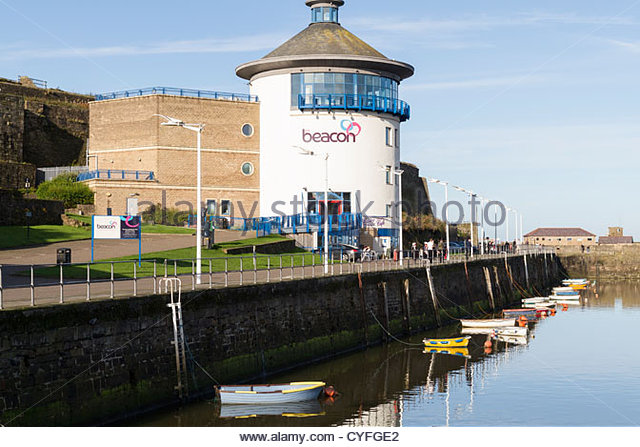
I knew this week would be busy but it’s been more than that: it feels like the start of a new chapter in my short writing life. Two events happened simultaneously. First, my new book ‘Fatal Reckoning’ was officially launched, on Friday at the Beacon Museum in Whitehaven, on the top floor (visible in the photo) with a superb view over the harbour and out to sea. It was a very enjoyable afternoon although I say it myself. One of the best parts was the introduction from the Director of the museum, Elizabeth Kwasnik – an off-comer from Scotland – who said that my trilogy ‘Between the Mountains and the Sea’ had given her valuable insight into the recent history of West Cumbria and its people. The historian in me was very pleased about that.
Second, the night before the Beacon launch the new ebook version of ‘Fatal Reckoning’ appeared on Amazon and the Kindle Store, published this time not by me but by Fahrenheit Press, who specialise in digital publishing, mainly of crime fiction. I’ve been fascinated to see how they set about establishing their books – and now mine – on the radar of crime fiction readers, mainly using Twitter. Chris McVeigh, who started Fahrenheit Press has also written a blog piece about the details of the curious partnership between us, by which they publish digitally and I do the paperback version. Two different formats, two different audiences, two different approaches, and an interesting development in self-publishing. As I explained last week, Fahrenheit’s version of Cruel Tide on Kindle has a completely different cover. Click the link to see it. And while you’re there, check the new ‘Fatal Reckoning’ cover too.
Both these developments have made me think, yet again, about what I’m doing and what next. The setting in Cumbria has to remain central to my writing, no doubt about that. Also, I really enjoyed weaving fact and fiction in the trilogy, and want to do that again. Could I combine that approach with a ‘crime’ story, as I tried to do in the first book in the trilogy ‘A Good Liar’? Does the next book need to be the start of a new series, which might be more lucrative but can be restrictive too?
My fiction writing life will be shorter than many authors, simply because I didn’t start until I was 60. So if the number of books left in me is relatively small, what are my priorities? I don’t want to spend precious time churning out books that might sell but don’t really interest or inspire me. Needless to say, a new idea is already forming, but nothing I want to talk about just yet.
by admin | Nov 26, 2016 | Amazon, cover, crime fiction, Cruel Tide, Fahrenheit Press, Fatal Reckoning, promotion, Publishing, Uncategorized
This is a bit complicated. Just to start things off, here are the covers of the two crime fiction books I’ve published, last year and last week.
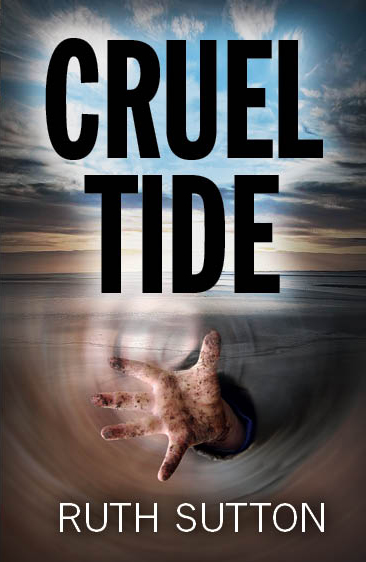

I think they’re quite good, but what they indicate more than anything else is the setting – Morecambe Bay in ‘Cruel Tide’ and Whitehaven harbour in ‘Fatal Reckoning’. The fact that they deal with dark deeds is implicit, not unmistakeable. These are the covers on the paperbacks that are in the shops, but they will not be the covers of the ebooks. How come?
Here’s what’s been going on ‘behind the scenes’. The ebook versions of both these books are being published not by me and my imprint ‘HoadPress’, but by an international crime fiction publisher called ‘Fahrenheit Press’ fahrenheit-press.com. They specialise in ebooks and POD, but rarely if ever publish paperbacks, unless there’s an enormous demand, at which POD becomes impractical. Casting around for a way to avoid the ‘agent’ route to publishing I found Fahrenheit Press a few months ago, sent them a copy of ‘Cruel Tide’ as an example of my work to date, and said that the sequel was in production. Long story short: the MD of Fahrenheit, Chris McVeigh, and I met in London, talked about the various routes to market and made the deal outlined above. I find the business of Amazon algorithms etc quite puzzling – as I wrote about a week or two ago. Chris understands that whole business better than I ever could, so why not give it a go, just to see what happens? He’s preparing both books for digital production right now, and when he’s ready I’ll take down my Kindle posting for ‘Cruel Tide’ and he will replace it immediately with his, adding ‘Fatal Reckoning’ as an ebook for the first time. The difference will be the covers, which we have been discussing this week. His preferred covers are completely different than my originals, denoting not setting but ‘genre’. They are very dark and stark, as befits a dark tale in two parts, and he’s called both of them ‘Judith Pharaoh novels’. So simple. When they’re finally agreed and published – in a week or two – , you be able to see them on the Amazon and Kindle websites and make your own comparisons. This is the first time that anyone else has published my work, in any format, I’m fascinated by the experience, so different from a traditional publishing deal.
by admin | Nov 3, 2016 | plot devices, Uncategorized
Louise D oughty had a profound impact on my fiction writing when I first met her on an Arvon course in 2008 called ‘How to Write novel’. She was already a well-published author, although not as famous and celebrated as she has since become. More importantly for me at the time, she was an inspirational teacher. I wonder if she has the time to do similar courses these days?
Recently I met her again at the Killer Women day in London, and bought her book ‘Apple Tree Yard’ which she signed for me. Since then I’ve tried to read the book, and thought about a plot device she uses known as ‘foreshadowing’, where the writer obliquely alerts the reader to a future development. The caricature of this device would be – ‘Little did she know that…’, or ‘If only he’d known then that…’. The foreshadowing in ‘Apple Tree Yard’ was more subtle than that, but it served the same purpose.
The first time foreshadowing was used in ‘Apple Tree Yard’, I was interested. The second time I was surprised. The third time I was irritated, and after that I gave up. I felt I was being manipulated, and it annoyed me. The text was also dense with detail, which had to be ploughed through to get to the plot twist that had been dangled in front of me. I found myself flicking ahead. Delayed gratification of one’s curiosity clearly doesn’t work well for me.
Now I’m wondering, what are the limits to using the foreshadowing device? Its repetition in this story must have been considered carefully, and survived – I suspect – some discussions with the editor. Writer and editor must have decided on the final form, and not bothered that a reader like me might find it clunky and intrusive. ‘Apple Tree Yard’ has been widely praised, so the critics too must have found the foreshadowing device more acceptable than I did. Maybe I’m just too impatient and perverse to let myself be pulled by the nose through the story, because that’s the way it felt.
by admin | Jul 24, 2016 | cover, crime fiction, title, Uncategorized
 My editor and I are having a disagreement about the title of the new book. The first title I chose sounded fairly dull, and I wasn’t convinced. Then I opted for a phrase ‘Seize the Day’ which appears once in the book, and quite significantly, but right at the end. She feels that the reader might be annoyed that the title’s meaning remains a mystery until the very end. She also thinks that the abstract phrase would be hard to link to an attractive cover image. All this may be true, but I can think of many books where the cover image is a mystery, and the title too: the connections between them and the story are intended to be part of the riddle. Am I asking too much of my readers? Do titles need to be ‘literal’?
We’re now considering various alternatives, but the issue of a connection between title and cover image remains a dilemma. There are various themes and events in the book that could be picked up in both title and image, but which would be most effective? No decision is absolutely necessary for a few weeks yet, so I shall wait for inspiration – showing more patience and tolerance of uncertainty than is customary for me.
by admin | Jul 17, 2016 | Authenticity, crime fiction, Uncategorized, West Cumbria
Problem:
- I want to write a crime series based in Cumbria.
- I want to have a female detective, who needs to be at least at sergeant and better still at inspector level.
- I want to keep clear of the technical complications of the DNA, Police and Criminal Evidence Act and the introduction of computerised data.
But… there were no female detectives in Cumbria until the 1990s. So, something has to give. Does authenticity matter, or could I introduce a female detective earlier than it actually happened? Ironically, the Cumbria police force now has plenty of high-status female detectives, including one with the wonderful surname of Thundercloud, but this is now and that was then. So what to do? My reluctant conclusion is that authenticity does matter: I must stick with my physical setting of West Cumbria because it’s so important to me, and so the time setting has to move into the mid/late 1990s. All the necessary research is unavoidable, but I can do it. Should be fun to discover how life has changed over the past twenty years.
Recent Comments