by admin | Apr 4, 2018 | crime fiction, feedback, Publishing, self-publishing, Uncategorized, writing
Of course, the question is facile: it’s not as black and white as that. So let’s pick apart the proof-reading stage of the publishing process, just to see what it contributes and where problems can arise.
First off, doing without proof-reading is a mistake. Nothing irritates a reader and or embarrasses a writer more than published text containing missing words, incorrect or unclosed speech marks, upper case/lower case mistakes, or whatever the obvious transgression might be.  Having said that, something seems to depend on the reader. While some readers spot everything, and usually tell you so, others seem not to notice at all.
As an ex-educator with a very picky grammar school education, I’m unbearably fussy about punctuation, or I least I thought I was until a recent experience with a professional proof-reader. My ‘rules’ seem to be based on what I’d learned at school and not updated since, and I was unprepared for the technical approach to writing that my proof-reader friend was keen on. And from what I read about current approaches to ‘grammar’ in English primary schools, it looks like today’s children are getting a bellyful of these ‘rules’ which are then tested: enough to put them off writing confidently for a long time.
I have had a very unfortunate experience with proof-reading, which I’m keen not to repeat. My first three books fared well, or relatively well, with very few errors being spotted during that first nervous check when they came back from the printers. Maybe we got complacent, even sloppy. When the fourth book arrived, something had gone badly wrong. I spotted one or two mistakes in a casual flick through, but then the careful readers’ feedback started. At first it was a general complaint about the number of errors, and then after a routine library talk a woman handed me a list of the errors she had spotted and kindly written out for me. My stomach turned when I glanced at the list of shame. For days I could hardly bear to look at it. Then one morning after a miserable night worrying about it, I sat in bed with the list, a copy of the book and a highlighter pen and marked up every single one. It took a while. In my distress I managed to get highlighter on my duvet covet and it has proved impossible to get rid of, reminding me of the miserable business every time the duvet cover appears on my bed.
The colleagues who had helped me with the errant book’s publication were duly informed and were as puzzled as me. How had this happened? We still can’t explain: it was as if the penultimate uncorrected proofs had been sent for printing by mistake. The ebook version of the book was corrected immediately, which was a relief, but I couldn’t afford to scrap the printed paperbacks and redo them. Mercifully, two years on, the stocks of the first edition are almost exhausted now and we can correct the mistakes before the reprint.
No need to convince me of the essential need for proof-reading. The conventions of the written form need to be visible in the text, to make the reader’s life bearable. But…are all these conventions set in stone? Some renowned authors have chosen to ignore them completely, but we can’t all be James Joyce.
Here’s my question: does the style and intensity of proof-reading vary according to genre? What’s acceptable – and required – in an academic paper maybe just too much for a work of fiction. And what’s appropriate to ‘literary fiction’, where writing style is the first concern, may feel wrong in a plot-driven crime story. Even within a story, the level of technical accuracy in a descriptive paragraph will and should be quite different than in dialogue, where people simply don’t speak in full balanced sentences with semi-colons and sub-clauses and all the rest.
Here’s my advice: when you’re working with a new proof-reader, ask for a few sample pages before he/she starts work in earnest. Be prepared for a discussion about the level of correction that could be deemed essential and what is a matter of choice and style. It’s your book, and you call the shots, but obviously you’ll listen to advice from a professionally trained person, even if sometimes you choose to ignore it. I’m sure that some proof-readers yearn to be editors even after the editing stage is officially over, but that could lead to all sorts of confusion and frustration. You – the author – may have to arbitrate and mediate. It’s your name on the cover, and you carry the can.
Back to the original question: can proof-reading flatten language? Yes, potentially it can, by applying ‘rules’ too heavily and inappropriately. If that’s not what you want, make sure you discuss the process with your proof-reader and find an acceptable compromise. “She who pays the piper calls the tune.”
by admin | Mar 29, 2018 | marketing, Uncategorized
 When I produced my first book in 2012 I was so taken up with the final stages of publication and all the detailed stuff that most writers – me included – find so intimidating, that I didn’t even think about a book launch. Then I came across a friendly local PR person, who gave some free advice about a ‘launch’, and I did as she advised. It seemed like a lot of work – press releases, emails to heaps of people I’d never met – and the outcome was deeply disappointing. I didn’t realise then what I know now, that self-published novels are two a penny and rarely make ripples on the local news scene. I also know now that many self-published novels deserve to sink without trace.
In my early innocence, I was surprised that the local media weren’t very interested in my book, and nor were local bookshops. The only people who agreed to come to the launch were friends and family, and it would have been easier and more comfortable to have a party for them at home. It felt as if we were putting on a show in front of a non-existent audience. On the way home I recall feeling wretched about the waste of money and the sense of humiliation – a far cry from the achievement of a life-long goal that I might have been celebrating.

With the second book I tried again. This time the local paper sent a photographer and there was quite a good write-up, but again it felt like an anti-climax. With Book 3 I didn’t bother with a launch. The book just appeared in the shops and as I toured the libraries and local groups talking about it, the local paper would appear and publish a photo. So the same end was achieved without the expense and awkwardness of standing around pretending to have fun.
Books 4 and 5 went the same way. Now the concept of a ‘launch’ has been so negatively affected by previous experience that thinking about ‘launching’ the new book fills me with dread.
This fear may be irrational, as the situation is quite different than it was in 2012 when I started down this road. I now have a considerable local following of readers who are anticipating the next book, having read all the previous ones. It’s hardly the Harry Potter phenomenon, but local booksellers tell me that they are regularly asked when the new book will be out. My readership has grown through word-of-mouth not as a result of serious promotion and marketing. The area of interest is regional to Cumbria, but there is a Cumbrian diaspora too that reads my stuff, and visitors to the area sometimes come across my books too and spread them further afield.
The region at the heart of the interest, however, is largely rural and thinly spread, with no obvious population centre where a launch would naturally happen. So what to do? Is a one-off ‘launch’ worth what it would cost, in both cash, time and anxiety?
The publication date of the new book is about two months away, and I have a decision to make about how to mark the event – if at all.
by admin | Mar 13, 2018 | promotion, Publishing, Uncategorized
 I saw an advert today for a ‘writing conference’, but actually it was an event designed solely to give writers access to a group of agents, for whom the writers were expected to ‘perform’, aka ‘pitching’. For this experience the writers would travel to the venue and pay a considerable fee. Could this be entitled a ‘writing conference’? It was about seeking approval from an agent, nothing more. Who are these arbiters of quality, and where does their power come from?
I need to declare an interest: twice in my writing life over the past ten years I have tried to find a agent, and twice the attempt has been fruitless. The second time, as a moderately successful self-published author, I said as much in my ‘pitching’ letter, and in one of the few responses I received I was told that my success so far was really nothing special and that I should be more ‘humble’. Thanks for that. Most of the responses from agents I have gathered over the years have been generic, making no specific reference to my work, which I suspect had not been read.
Sour grapes? Bitterness? Yes, probably. I’ve had a long professional career and don’t relish being ‘judged’ by a group of people whose qualifications for their role are so hard to define or to check. Granted my experience is limited, but the ‘average’ agent appears to be young (ie. younger than my daughter), well-spoken, publicly anodyne, and based in London. All of the agents I have encountered at conferences have been female, but some of the ones I’ve written to have been male, so gender may be immaterial.
I suspect that age may matter in this lottery of who will be of interest to an agent. The agent’s living comes from a percentage of an author’s sales/earnings. If the author has thirty or so years of writing life ahead of them they are a more attractive investment than someone like me who started late. It must also help to be well-connected in writing circles, with a wide reach for promotion purposes. When agents are, as they claim to be, inundated by submissions, the fact that the writer knows someone who knows someone would probably help too. Selecting a very small number from a huge range of applicants must be a nightmare, and any easy selection criteria must be welcome.
A fundamental dilemma of current publishing lurks beneath all these more superficial choice mechanisms. No one in publishing seems to be clear about what they are looking  for. ‘We need new voices’, they cry, but are drawn by the lure of sales to replicate the most recent best-seller. Best-sellers are regularly a surprise, as predictable as a winning lottery ticket. The agent must be risk-averse and a risk-taker simultaneously. No wonder their public statements are often so bland and unhelpful. A regular pronouncement from the agenting group is that they know a good book because they ‘fall in love’ with it, and we all know what an arbitrary process that is, impossible to define or to rationalise.
If the yearned-for book is impossible to describe, perhaps the agent is actually looking for a writer instead? Does he/she really want someone young, photogenic, articulate, ambitious, flexible/malleable? Find a book with some quality – not much better than thousands of others but with a ‘promotable’ author – pour a great deal of money into promotion and hope for the best. We are told that the great majority of published fiction fails to make any money at all: not a great affirmation of the agents’ or publishers’ judgement.
Without an agent, I continue to self-publish, and it’s hard work. I would love someone to take on the responsibility of getting my manuscript into production, although I would be less happy with the paltry royalties. But I’m done with agents. Going to a ‘pitching’ conference seems like buying a very expensive lottery ticket, with similar chances of success.
by admin | Mar 3, 2018 | A Good Liar, character, dialogue, drafting, opening paragraph, plotting, readers, setting, Uncategorized, writing
 Almost at the end of the writing and editing process on the new book now, and the last thing on the list of issues to deal with is the opening paragraph. The current version has been written and rewritten countless times over the past few months and before I’m done it’ll be started all over again. Not many lines, maybe half a dozen sentences, but I want to get it as good as I can.
It’s always a challenge. In a short space you have to give the reader a sense of place, time, character and the impending story, and every word counts, like poetry. It’ll be the first thing the curious potential reader will look at, and probably the first thing I read aloud when I’m presenting the book. I’ve read the first paragraph of ‘A Good Liar’ many times over the years since it was published and I’m still pleased with it, and I want to feel the same about the first paragraph of this book too. It’s almost there, but it’s still too clumsy. I’ve tinkered with it until the words start to blur. Now’s the time to start it all over again.
The other crucial section of course is the ending, the final few sentences. All the major plot points are sorted out by then, no more twists, just a ‘human interest’ scene and a shred of dialogue to leave the reader interested in what might come next. I think I’ve got that. So the first paragraph will keep calling to me until the deadline for sending it to the designer is upon me, or I just can’t bear to look at it any more. In either case, by the end of next week it’ll be done. Thank heaven.
by admin | Feb 26, 2018 | A Good Liar, agents, book covers, cover, crime fiction, Cruel Tide, promotion, Publishing, Uncategorized
With the ms of the new book with the copy editor, I’m thinking ahead to the upcoming stages of the book’s production. I’ll be using the same cover designer as on the previous five novels, and have a brilliant photo image already bought and paid for: now I’m wondering about the ‘back cover blurb’ so that the designer can get started.
All of which brings me to the business of finding a ‘quote’ ie. a brief endorsement of either the book, or me as the author, taken directly from a credible source who is willing and able to provide a phrase or two and put their name to them. Amazon readers’ reviews don’t cut it, I’m sorry to say. I’ve used ‘quotes’ on only two of my previous books: the first, on the reprint of ‘A Good Liar’, was hardly effusive, but its source was impeccable in Margaret Forster, an icon of the literary world and a famous Cumbrian. She told me when we started to correspond that she didn’t normally do any kind of endorsements, and I was both surprised and delighted when she agreed to this…..
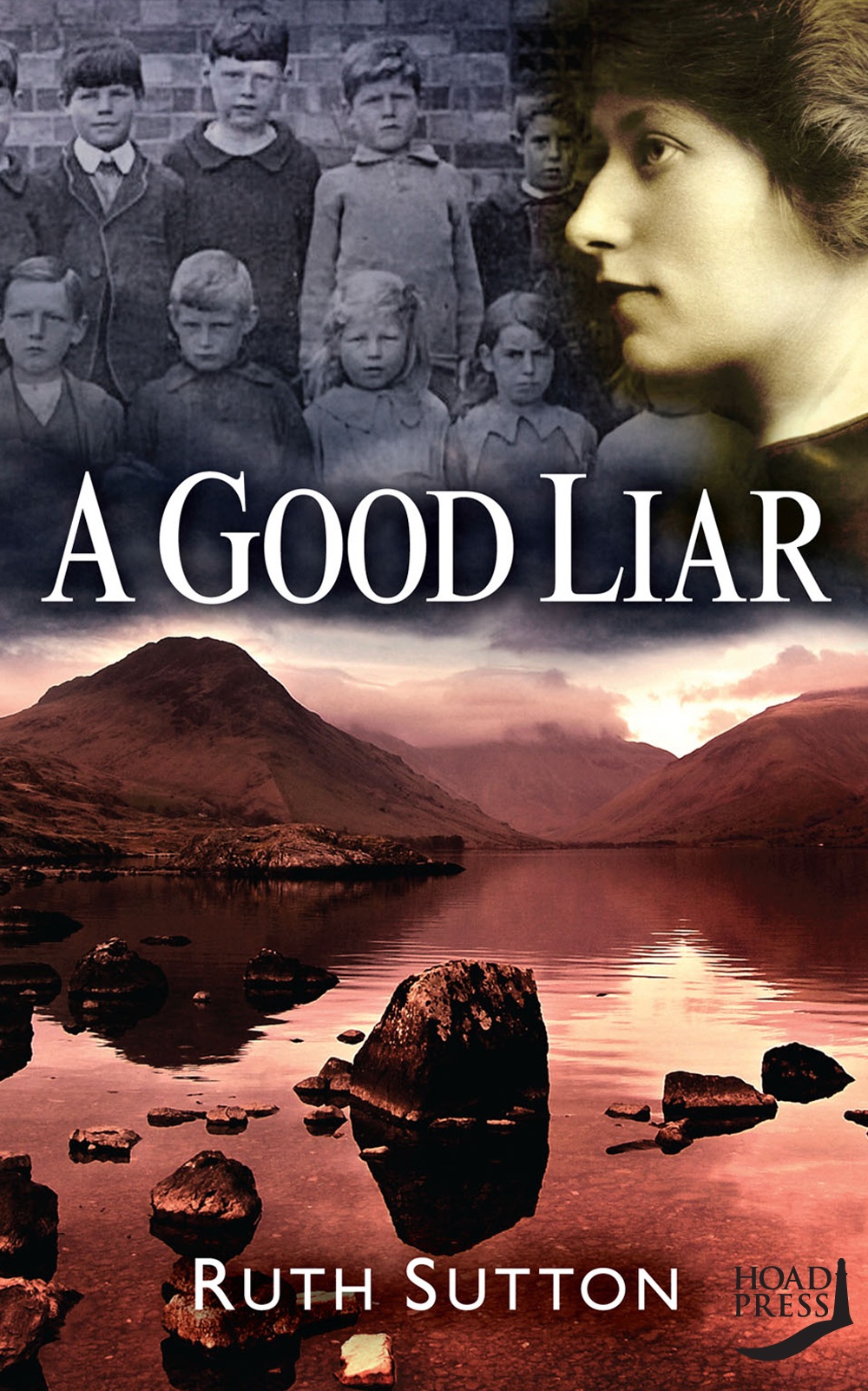
‘Historical background is convincing, and an excellent ending’
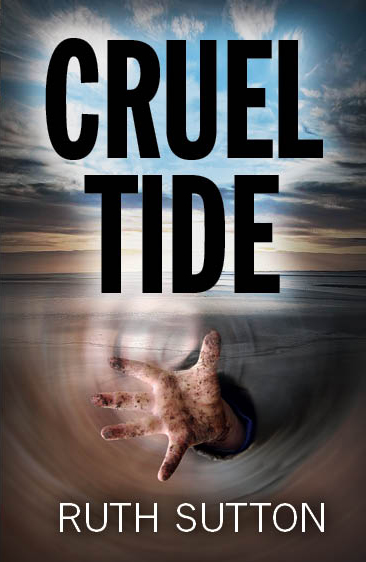
‘A thrilling tale of corruption and exploitation’
The second was from William Ryan, a very successful historical fiction writer, for my first crime novel ‘Cruel Tide’. I’d met him on a course and appealed to him directly, not through his editor or agent, and again was very pleased when he agreed. I’ve not managed – until now – to get a ‘quote’ on any of my other books, but that’s not through lack of effort.
There appears to be some unwritten protocols and other barriers that stand in the way. First, it’s very hard to find a way of approaching an author to ask if they would be willing. I’ve recently been reprimanded because the approach wasn’t made indirectly by my editor. If I had an agent, the approach could presumably have been made that way. Authors don’t widely share their email addresses, understandably, and it is not in the interests of an editor, agent or publisher to have their precious ‘client/commodity’ distracted by a gesture of support to another author, especially – horror! – a self-published one.
Secondly, authors who are successful enough that their name counts for something are obviously going to be very busy people. A recent approach to one was rebuffed by a litany of the pressures that the person was currently having to deal with, which meant that there couldn’t possibly be time to glance through a proffered manuscript and offer a few words. I had used the phrase ‘a quick read’, which was been batted back to me as if it denoted a lack of respect.
The third possible reason for my relative lack of success in my efforts has been the suspicion that authors are asked (or expected?) by their agents and/or publishers to offer quotes only to writers from the same ‘stable’ as themselves. Heaps of ‘quotes’ appear routinely in newly published books, inside as well as on covers: presumably the people who provide them have been able to find the time for the ‘quick read’ or whatever it takes to enable a few phrases to be offered for this purpose. There are ‘insiders’ who scratch each others’ backs in this aspect of publishing, and there are ‘outsiders’ like me, and possibly some of you. As a self-publishing author of what is still known as ‘genre fiction’, I’m accustomed to being treated as some kind of low life, but it still rankles occasionally.
In my darker moments I wonder if this reciprocal endorsement accounts for the stellar ‘quotes’ that sometimes appear on the covers of books that are really not that good, or not up to the usual standards of the author. In my even darker moments I wonder how some of the books on the shelves ever got published at all without apparently being subject to a properly critical edit. Could it be that once your name is known and will sell a book on its own, you can get away with mediocrity?
On a more positive note, my latest book will have a quote on the cover from a well-respected writer in the crime fiction business. It will be what’s known as a ‘generic’ quote, speaking to my books as a whole rather than the new one in particular, and the person providing it – for which I’m very grateful – is someone I happen to know a little from sharing a book festival panel. We’d met and talked, and I could approach him directly without offence. I did, asked politely, and he agreed. Hurray.
by admin | Feb 18, 2018 | A Good Liar, character, crime fiction, Cruel Tide, Cumbria, Fatal Reckoning, Lake District, plot devices, plotting, self-publishing, setting, stories, structure, Uncategorized, West Cumbria
When I started writing it was really all about setting and character: there was a background story line, but after a while that declined in importance and the interplay of the characters against the West Cumbrian backdrop became the main driving force.
 Readers love the Jessie Whelan trilogy for that reason. No one ever comments that the surprises of the plot kept them reading: it was all about what would happen to the people and the interest of the background.
Then I turned to crime fiction, in which the twists and turns of events and revelations have to be managed differently, but in the first two crime books the two leading characters were still centre stage.  ‘Cruel Tide’ and ‘Fatal Reckoning’ are mainly character driven, despite the skull-duggery of the plots. The tension is not so much ‘who dunnit?’, but ‘would the wrong doers be brought to justice?’ There was little in the way of police procedure as neither of the two main characters were senior police people, and the police were more concerned with covering things up than searching for evidence.
In the latest book, set in 2001 when everything about policing had changed, police behaviour and procedures are more central. The setting – the disastrous Foot and Mouth epidemic – is also vital, and now I wonder whether the delineation of character is as strong as before. As I re-write and ‘polish’ the question bothers me. In terms of ‘genre’ is this book quite different than the previous ones, and if it is, does that matter? It’s a good story, with enough twists and turns to keep things going. The body count is low – but that’s OK. I’m increasingly tired of dramas that need death after nasty death to sustain the reader’s engagement. After a while, whatever the professed authenticity of the setting, too many crime stories turn out like ‘Death in Paradise’ or ‘Midsomer Murders’. Or is that what happens when crime is adapted for TV? Is it ‘episodic’ presentation that causes the structure of the story to change? Surely what matters is not how many bodies are discovered, or even how they died, but why: what drives someone to attack another? Motive, opportunity, means, in that order. Or are we so jaded that we demand ever more violence?
My final final deadline for the current manuscript is within a day or two. Once the damn thing goes away to the editor I will celebrate for a few days before I have to think about it again. If I had a ‘publisher’ I might be able to relax a little for the next few months while the book makes it way to publication, but when you self-publish every aspect of what happens has to be organised and monitored by yourself. It’s exhausting! As my next big birthday approaches, I’m wondering – again – how much longer I want to carry on. I still have a list of things I enjoy and want to do – sewing, drawing, singing, keeping fit – all of which take time and commitment. The curse of writing is that it seems to squeeze out everything else. I have to give this dilemma some serious thought.
by admin | Feb 8, 2018 | 'unreliable narrator', character, memory, plotting, point of view, stories, Uncategorized
I’ve written before about the challenge of writing from a child’s point of view. To some extent, the child is an unreliable narrator as their view of the world is coloured by youth and inexperience and possible misconceptions. But there’s always the possibility that the child will see things as they truly are, uncluttered by notions of what ‘ought’ to be visible. 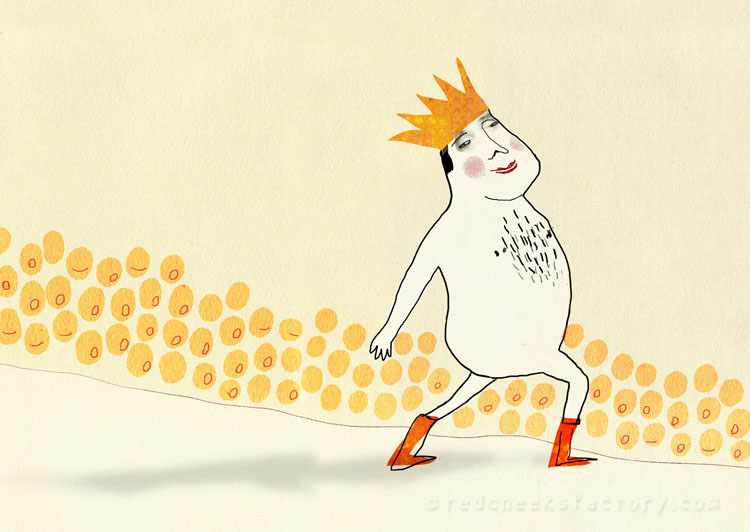 The ‘Emperor’s clothes’ is the classic example: whereas adult viewers see the Emperor luxuriously clad as befits his/her status, the child sees that the Emperor is in fact naked. The child may say so, but will not be paid attention to because he/she is ‘just a child’.
“Out of the mouths of babes and sucklings shall come forth wisdom.” That’s a biblical quote, in which ‘wisdom’ is equated with ‘truth’.
There are two children in my new novel. One of them is central to the action, first encountered on page 1 and staying centre stage for much of the story. Writing from her POV meant getting into the mind and reactions of a fairly unsophisticated young person, biologically but not personally mature. Reaching back into my own memory of being that age was quite a shock. Had I really noticed what happened around me and analysed it in that way, so intense, so sceptical? To double check, I recalled my own child at that age, and the hundreds I’d encountered at school during my teaching years. It seemed to me that some perceptions were sharp and accurate, and some others were missing altogether. Adults may see something that the child misses completely – hence the ‘unreliability’.
 The other child in my latest story is younger, further back in my memory and beyond my teaching experience. This voice was harder to capture. One thing I was sure of however: this child is more ‘wise’ than those around him give him credit for. He may not say much but he misses very little of what’s going on, even though he may not understand all of it. He will offer what he knows only if asked directly, and demonstrate his knowledge in unconventional ways. Interesting. It creates tension that is subtle and quiet, but still intriguing to any reader whose senses have not been dulled by too much ‘action.’ I hope it works.
by admin | Feb 3, 2018 | crime fiction, pace, plotting, readers, self-publishing, structure, Uncategorized, word count
Last week’s issue was the business of ‘murdering darlings’. This week I’m looking at the carnage and wondering – to use yet another metaphor – whether I’ve thrown the baby out with the bathwater.
The main victim of last week’s murderous rampage through the third draft was the opening of the new story, where I took four chapters to get to the first real tension, although I thought the discerning reader would see the story’s inexorable decline into noir and be prepared to wait. There was merit in some of those early scenes, but in the end they just weren’t justifiable and out they went.
There’s no doubt that the 4th draft now gets going faster and rattles along, but when I sliced away at the rather turgid middle section as well I noticed that the final word count had shrunk by an astonishing 15,000 words, from 99,000 down to 83,000, and I began to wonder whether I’d been too enthusiastic.
I checked around. How long is too short for a thriller/crime story? My previous two had been over 100,000 words, which is probably why this one felt a little thin. But other opinions were reassuring : anything between 70,000 to 100,000, said someone whose experience I respect.
What I need to do now is step away from the text for a day or two and go back to it with fresher eyes. Have I thrown the baby away? Which fragments of the erstwhile opening chapters need to be included, to add depth without length? Sometimes all it takes is a remark or a look or a thought to enrich the reader’s view of the scene, and that will be my task for the next re-write. I also need to look out for anywhere further on in the story where reference are made to passages that are now lying on the ‘cutting room floor’.
I suspect that by the the time I’ve added in one or two potentially dramatic and useful scenes and fleshed out the  opening details just a little more I’ll be up to the 85,000 word mark, exactly midway between the parameters suggested by expert colleague. Let’s hope so. I’m getting to the stage now when I never want to see this manuscript ever again.
Apart from any other considerations, a slightly shorter book will make for faster and thereby cheaper production, especially proof-reading. After the embarrassment of inadequate proof-reading in one of my previous books, I’ll be doing whatever it takes this time to get that the stage of the process properly covered, even it costs a lot.
by admin | Jan 26, 2018 | crime fiction, drafting, editing, Lake District, opening paragraph, pace, plotting, structure, Uncategorized, writing
Remember the sense of anti-climax at the end of the first draft that I complained about last week? Well, instinctive dissatisfaction was well founded. Even before the long and perceptive email arrived from my editor I had reluctantly admitted to myself that the story took too long to get going, the middle sagged, and the final chapters were either too detailed or melodramatic, or – worse – both. Oh dear.
Just goes to show that you need plenty of time for second thoughts. Fortunately, because of the fierce final effort to finish the damn thing I still have some time to play with before copy-editing is due and the production juggernaut starts to roll. Some decisions were easy: the opening scene that I crafted with such care had to go, and the first ‘darling’ disappeared. With that gone, of course, other passages now didn’t work, and they had to go too. Cut, cut, cut.
The hardest part of the whole exercise is keeping track of the various versions and not mixing them up. Every now and then on Twitter you encounter an author bemoaning the fact that they’ve just spent several hours correcting the wrong draft. I know how it feels and how easy it is to make that mistake when you’re tired or panicking or fed up with the whole business.
I cannibalise the original draft, moving text around, deleting and adding, before cutting and pasting the new version into the 4th draft, carefully labelled as such, and saving it. Two days into the corrections I’m doing OK so far, despite a head cold. Actually, concentrating on the work, however hard that might be, helps to dissipate the effects of the cold, and at least I feel as if I’m still achieving more than just a mounting pile of used hankies.
There are some technical details I’ve had to check to make the necessary plot tweaks. Here’s an intriguing example : ‘How to evade a tracker dog?’ I think I’ve got away with that one. When you’re splicing new bits into an existing draft there are continuity issues too, which are tedious both to pick up and to deal with.
But hey. If you’re going to do it, do it right. The book could still be out there when I’m too old to remember it, and I want it to work as well as it can. What’s a few murdered darlings in the great scheme of things?
by admin | Jan 20, 2018 | editing, planning, plotting, research, selling, thinking, Uncategorized
Yesterday morning a strange feeling came over me, a sense of loss and uncertainty, a long way from the delight and celebration I’d anticipated at ‘The End’, the final words of the new novel. In the final week, for six days straight from first thing in the morning u ntil it was dark I’d tapped away furiously, stopping only to gaze at the wall while I found a way through a barrier. The concentration was intense: it spilled over into those times when I wasn’t sitting at the laptop, and unfortunately haunted the night too. I would sleep for a couple of hours and then wake with dialogue or a plot twist in my head.The only way to break its hold on my mind was to play Solitaire on the ipad, which meant more screens, more eye strain and was probably not conducive to getting back to sleep. When I’m writing, the usual habit of reading before sleep doesn’t seem to work.
When ”The End’ finally came it took me by surprise, and more surprising was that I felt so flat. Maybe it had happened before, but if it did I’d forgotten. Living alone, there was no one to turn to in triumph. Friends are very patient, but listening to someone banging on about the details of a fictional conversation or the way out of a plot puzzle is enough to make your eyes roll back.
I was ahead of schedule, but worried that I’d been too driven by the deadline and should have taken more time. I’d resolved a big plotting problem, but it still felt too cerebral, too subtle, not enough action. I’m working with a new editor and chose her for her experience and ‘hard-nosed’ straight-forwardness, but I don’t know how she’ll react to the first draft of mine she’s ever seen. Worry, worry, worry.
And of course, the ever-present question: why do I put myself through this? I’ve retired from ‘work’ and should be pleasing myself, sauntering through the days, going on little jaunts, planning big jaunts, seeing people, having fun. And instead of that I’m spending most of time on research, planning, writing, re-writing, and worrying.
 I tell myself that the rewards are worth the painful gestation and birth. It’s undoubtedly true that you have to keep writing if you want to maintain people’s interest in your work and the sales that go with it. Every new books boosts sales of the previous ones. If you want press interest or access to speaking at book events and festivals you have to have a new book to showcase.
If all goes well, the new book should be out in June, and then what? I have a choice: pack it in and have an easy life, or keep going and endure the lows as well as the highs, all over again.
Recent Comments