by admin | Nov 12, 2016 | readers, self-publishing, Uncategorized
I was talking self-publishing with an old friend who writes and publishes in a different genre to me, and does very well. Most of his sales are on Amazon, both paperback and ebook formats. ‘It’s all about algorithms,’ he said, and I nodded sagely. I should have said straight out that he’d have to explain, but I didn’t. Since then I’ve cast around to understand what this is about, and ended up – as we all do – ‘googling’ the term to see what turns up. This appeared, in an article by someone called Samuel J.Woods, who is clearly American from his spelling of ‘behavior’. It was helpful, up to a point…
 “An algorithm is a set of (well-defined) instructions for carrying out a particular task. It’s, for the most part, deterministic, predictable, and not subject to chance. It works for all cases and gives a (presumably) correct answer.
Lots of people approach marketing this way, especially with the lure of “Big Data”.
You look for predictability in buyer decision-making and behavior, so you can scale a campaign.”
OK. Still not quite sure what you will do next after this analysis. And I’m wondering how much time this process might take, or at least how long it would take me as a data novice. My friend did say it took a long time, but he clearly felt it was time well spent.
Part of me thinks I should ‘get with the programme’ as the Americans say, embrace the new world of Big Data and grow my sales that way. But the other part of me thinks that life is short, especially at my advanced age, and maybe I should spend my time doing something more enjoyable than sitting at the laptop. Last year, my ‘direct’ sales, that is books sold direct to the reader by me, were greater than all sales through Amazon or my website. I know it’s wasteful to work in this way: I can only be in one place at once and sometimes I have to drive quite a way to reach my buyers. And I have to entertain my potential readers first, with a talk or discussion of some kind. Groups are sometimes quite small and I know it doesn’t make sense commercially, but here’s the thing – I enjoy it. It helps that I live in a stunningly beautiful area so the driving is often scenic. And I meet hundreds of people, mostly women, who love my stories and tell me so, and share stories of their own.
Now I’m doing a deal with a California-based book publisher and marketer who lives and breathes algorithms and reckons he could increase my digital and POD sales, especially in North America. He’s explained the dark arts of his expertise, but most of it sailed well over my head. I could do all this myself, or I could get him to do it and share the profits – if there are any. No brainer really. So we’re talking about the two crime books, for a year’s deal. I can carry on doing everything I do now, talking to my readers, publishing and selling ‘real’ books to them and the distributors and bookshops. The new deal marks my tentative entry to the brave new world of algorithms.
I’ve just noticed the title of the article from ‘Samuel J. Woods’ quoted above. The title is ‘Algorithms are cool, except they don’t work for marketing: heuristics do.’ What? Back to the definition of ‘heuristics’ that follows:
“A heuristic… is an experience-based technique that helps in problem discovery, learning, and solving. It basically helps you come to a “good enough” solution — close enough to the best, optimal, solution. It’s like a set of educated guesses or “rules of thumb”.
If you approach marketing this way, you have a greater chance of success (in generating leads, sales, or what have you). Why?
Because marketing is, inherently, unknown and disorderly.”
Back to the drawing board. Stick to what you enjoy, and don’t expect that any single approach to marketing is going to be enough.
by admin | Nov 3, 2016 | plot devices, Uncategorized
Louise D oughty had a profound impact on my fiction writing when I first met her on an Arvon course in 2008 called ‘How to Write novel’. She was already a well-published author, although not as famous and celebrated as she has since become. More importantly for me at the time, she was an inspirational teacher. I wonder if she has the time to do similar courses these days?
Recently I met her again at the Killer Women day in London, and bought her book ‘Apple Tree Yard’ which she signed for me. Since then I’ve tried to read the book, and thought about a plot device she uses known as ‘foreshadowing’, where the writer obliquely alerts the reader to a future development. The caricature of this device would be – ‘Little did she know that…’, or ‘If only he’d known then that…’. The foreshadowing in ‘Apple Tree Yard’ was more subtle than that, but it served the same purpose.
The first time foreshadowing was used in ‘Apple Tree Yard’, I was interested. The second time I was surprised. The third time I was irritated, and after that I gave up. I felt I was being manipulated, and it annoyed me. The text was also dense with detail, which had to be ploughed through to get to the plot twist that had been dangled in front of me. I found myself flicking ahead. Delayed gratification of one’s curiosity clearly doesn’t work well for me.
Now I’m wondering, what are the limits to using the foreshadowing device? Its repetition in this story must have been considered carefully, and survived – I suspect – some discussions with the editor. Writer and editor must have decided on the final form, and not bothered that a reader like me might find it clunky and intrusive. ‘Apple Tree Yard’ has been widely praised, so the critics too must have found the foreshadowing device more acceptable than I did. Maybe I’m just too impatient and perverse to let myself be pulled by the nose through the story, because that’s the way it felt.
by admin | Oct 29, 2016 | author platform, Fatal Reckoning, Uncategorized, West Cumbria, Whitehaven
I wrote a good post this afternoon, illustrated with the cover of my new book, ‘Fatal Reckoning’ – due out end of November.
 The post was full of wise words about the need for visual images, that I learned in a workshop on blogging at the Killer Women event in London. I edited my new post carefully, previewed, then hit ‘Publish’, and it disappeared. Part of the now invisible post referred to my technical inadequacies – ‘quod est demonstrandum’.
So I’m having to do it again. How embarrassing. But I’ve managed to insert the images, which is something. The Killer Women event was really good, by the way. Check their website. More next week when I’ve recovered from the frustrations involved in putting this together.
by admin | Oct 29, 2016 | Uncategorized
It’s been a long absence!
by admin | Aug 2, 2016 | cover, Fallout, Publishing, title, Uncategorized, Windscale fire
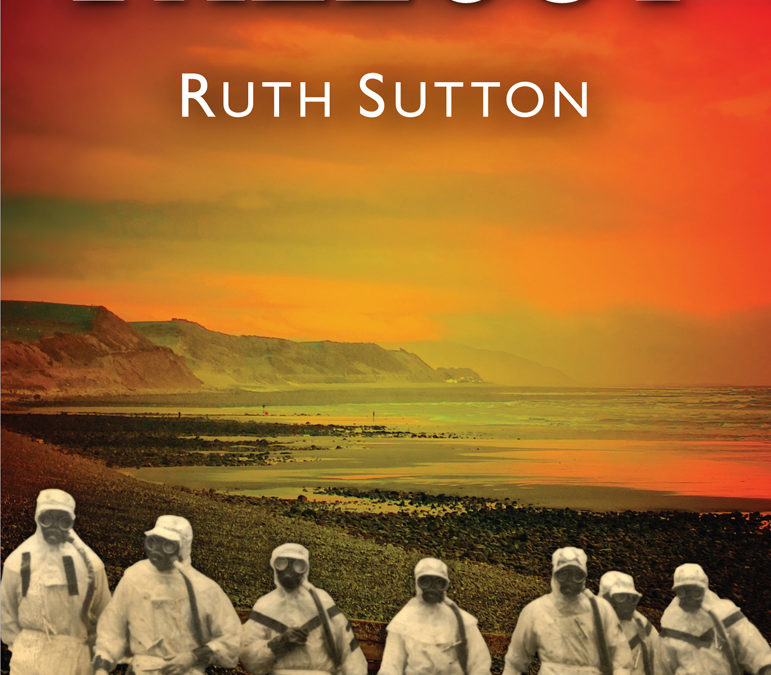
There’s no copyright on book titles. I didn’t realise that to start with and fretted that I couldn’t ever use a title that had been used before, but I can, although it’s still needs thinking about.
The easiest way to check is to do what I did yesterday – draw up a shortlist and then look each title up on the Amazon data base. I know it’s lazy, but it’s quick. Looking carefully at what comes up helps me to decide whether a previously used title could be used again. If the title has been used before, which almost all titles have, I look for various criteria:
- Was the previous book the same genre? I want a title for my novel: if the previous title was for non-fiction, it’s unlikely that someone looking it up would be confused.
- Has the title been used in the UK, or just in North America or elsewhere around the world? If it’s just in the US, for example, I wouldn’t hesitate to use the title again.
- Was the title previously used for a paperback, or just for an ebook? I publish in both formats, and I might still choose to use the title again, although I might slip down the priority order
- How long ago was the title I want used previously
 ? If it’s within the past year or two, that could be a problem. In 2014, when I was looking for a title for my novel set in and around the Windscale reactor fire in Cumbria in 1957, the title ‘Fallout’ was an obvious choice, and I really wanted it. Just three months before we went to print another novel appeared with that title, published in the UK, and I had to make the choice. In the end I decided to go ahead, but I’ve noticed that since publication we’ve had two copies returned – which I guess arose from the confusion over the title. I still think I made the right decision, though, and the cover is pretty special too. ‘Garish’ someone called it, but at least it gets noticed.
When I’ve checked all these criteria, I find that some titles don’t feel so appealing, as they have been used before many times, and quite recently. The exercise yesterday brought the list of eight possible titles down to two or three, which was helpful. Once my trusty editor returns from her hols the fateful decision will be made and possible covers will then be designed. Still on schedule for publication in November 2016.
by admin | Jul 24, 2016 | cover, crime fiction, title, Uncategorized
 My editor and I are having a disagreement about the title of the new book. The first title I chose sounded fairly dull, and I wasn’t convinced. Then I opted for a phrase ‘Seize the Day’ which appears once in the book, and quite significantly, but right at the end. She feels that the reader might be annoyed that the title’s meaning remains a mystery until the very end. She also thinks that the abstract phrase would be hard to link to an attractive cover image. All this may be true, but I can think of many books where the cover image is a mystery, and the title too: the connections between them and the story are intended to be part of the riddle. Am I asking too much of my readers? Do titles need to be ‘literal’?
We’re now considering various alternatives, but the issue of a connection between title and cover image remains a dilemma. There are various themes and events in the book that could be picked up in both title and image, but which would be most effective? No decision is absolutely necessary for a few weeks yet, so I shall wait for inspiration – showing more patience and tolerance of uncertainty than is customary for me.
by admin | Jul 17, 2016 | Authenticity, crime fiction, Uncategorized, West Cumbria
Problem:
- I want to write a crime series based in Cumbria.
- I want to have a female detective, who needs to be at least at sergeant and better still at inspector level.
- I want to keep clear of the technical complications of the DNA, Police and Criminal Evidence Act and the introduction of computerised data.
But… there were no female detectives in Cumbria until the 1990s. So, something has to give. Does authenticity matter, or could I introduce a female detective earlier than it actually happened? Ironically, the Cumbria police force now has plenty of high-status female detectives, including one with the wonderful surname of Thundercloud, but this is now and that was then. So what to do? My reluctant conclusion is that authenticity does matter: I must stick with my physical setting of West Cumbria because it’s so important to me, and so the time setting has to move into the mid/late 1990s. All the necessary research is unavoidable, but I can do it. Should be fun to discover how life has changed over the past twenty years.
by admin | Jun 30, 2016 | crime fiction, fact-based fiction, historical fiction, plotting, research, Uncategorized
Who remembers good old Sergeant Dixon, courteous, uncomplicated, with his files and his big black phone, solving crime through listening to people and figuring things out?
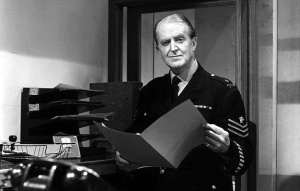
Those were the ‘good old days’, before DNA and computers and CSI forensics, when policing was simple and villains were wicked and the death penalty was still the ultimate deterrent and women knew their place.
I’m thinking about the setting of a new crime series. The choice of place is easy, it has to be Cumbria. But time? Personally I prefer the present day to previous decades when oppression of various kinds was more widespread, but as a crime writer I’m attracted by the relative simplicity of policing in the past. I want my main detective to be female, but that’s unrealistic in the days before the late eighties when it was finally accepted that female police officers might be given more to do than making the tea. But I also want to avoid some of the more clinical and technical aspects of contemporary policing which radically affect both the research and the plotting. There must be a window of opportunity between these two. It would be really interesting to focus on the early days of women in CID in Cumbria, in which case I need to talk to some of those early pioneers and get their stories. That would be a worthwhile exercise, no matter what plots ideas flowed from it.
At the same time as I’m considering all this I’m watching the Brexit decision and all its implications. Today I saw the figures on the close correlation between those in favour of the death penalty and those wishing to leave the EU. And there’s a piece in the Guardian about ‘false binaries’, another way of saying that the best choices are rarely just one solution or another, which is one reason why the EU referendum was so flawed in both process and result. Real life, personal, social and political, is always complicated and pragmatism is an under-rated virtue. President Obama has maintained a good balance of principle and pragmatism, in my view, but I’m not optimistic about political leadership in the UK right now. They say we get the political leadership we deserve. We must have done something really bad.
by admin | Jun 19, 2016 | cover, crime fiction, Cruel Tide, Morecambe Bay, Publishing, readers, self-publishing, title, Uncategorized
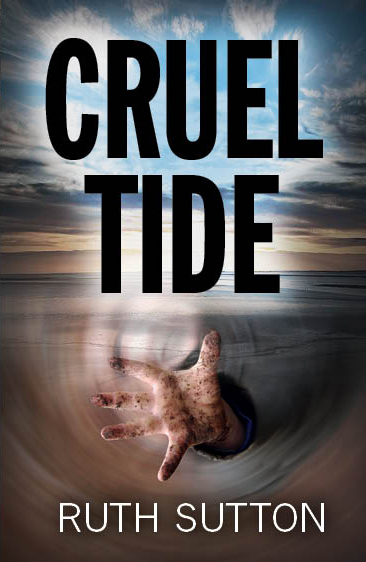
I always struggle with titles, and then with the cover image that should illuminate the title and engage the reader: as an independent author/publisher, these decisions are all mine. The image on the cover of ‘Cruel Tide’ developed before I even started the book. It came to me when I did the walk across Morecambe Bay and was struck by the menace of quicksand very close to the northern shore. The snaking, threatening tide that covers these huge mudflats twice every day connected with another cruel tide – of abuse, cover-up and corruption that have damaged so many children’s lives. The decision about both title and cover came to me quite quickly.
Not so with the sequel to ‘Cruel TideI’ that I’m currently completing. My editor Charlotte and I have brainstormed possible titles, but nothing really stood out. Then in the final stages of the first draft, in one of those times when the story seems to be writing itself, the words ‘Seize the Day’ became suddenly significant and I could see them on the cover, with a dark image of one of the settings – no details for fear of plot-spoiling.
The first thing you do is check how many other books already exist with that title. Of course there are several, but then you have to take them one at a time and decide whether the replication is significant. The most recent was non-fiction, an autobiography, so that was OK. Another appeared to be a religious tract, too different to bother about. There was one fiction book, but a very different genre.
I think I have my title. Next I’ll think hard about the image, and start working with the cover designer Kevin Ancient who did such a wonderful job with ‘Cruel Tide’. Crime fiction covers seem to be have some common characteristics, to ensure that readers understand what may lie between the covers. Decisions to make. Watch this space.
Recent Comments