by admin | Dec 23, 2017 | agents, marketing, Publishing, readers, self-publishing workshops, success, Uncategorized, zen
Arriving on a Caribbean island is an object lesson in slowing down. It didn’t help that four planes arrived at once, but the line for passport and customs checks took nearly two hours.  Friday night traffic jammed the road from the airport, and by the time we had walked to a local restaurant, the meal on the plane – surprisingly good – was a distant memory.
We were a large party and the young man serving us struggled to keep track of orders. He came back twice to check drinks, and three times to check the food order before anything arrived. You could feel people getting more fretful as the time ticked by. When it finally came, the food disappeared fast, but dessert was abandoned as we trudged towards our beds, four hours on from local time and more interested in sheets than sweets.
Today while the rest of the group went sight-seeing I stayed behind to rest my injured leg, and practiced doing everything more slowly. I swam in the pool slowly, did some slow washing, lay languidly on a lounger and drank a bottle of beer one small sip at a time. Delicious. And I also did something I haven’t done for too long – read my copy of ‘The Author’ (quarterly magazine of the Society of Authors) from cover to cover. Normally I skim the headlines and read whatever looks most interesting, but in the spirit of a slow day I started at the beginning and read on to the end. All sorts of unexpectedly good things revealed themselves, most memorably a piece by a Turkish author currently imprisoned about the life of the mind which nourishes him in the bleakest of circumstances. That helped to put things in perspective
More prosaic, but still important, were references in various articles to the choices that minor novelists like myself face. Fundamentally, what are we really trying to do? It’s a question I put right up front when I do workshops on ‘Successful self-publishing’: what constitutes success? Every author will have their own answer, and these days whether you’re self-published or part of the mainstream commercial publishing world, writing just for profit is increasingly problematic. We know that most commercially published fiction actually makes a loss, and even if you keep outgoings to a minimum by self-editing and going for ebook only, the result may not financially justify the hours of time and effort invested in the project.
 From my slow reading of various reports of events, the advice to fiction writers seems to be ‘Be true to yourself; enjoy the reactions of readers, regardless of how many there may be; find a community of writers (and agents, publishers etc for those who have them) to engage with and be supported by.’ Nothing new there then. No blinding flash of revelation, just a message of internal efficacy and relatively low expectations. Of course close scrutiny and replication of commercially successful books, and assiduous courting of the ‘blogsphere’ might pay off financially. But who wants to spend their precious time doing that? Not me.
The zen of the art of writing seems, ultimately, to be about doing what pleases and satisfies you, and letting go of the urge to borrow other people’s definitions of ‘success’.
by admin | Dec 16, 2017 | costs, crowd-funding, hardback format, marketing, Pricing, Publishing, readers, reviews, selling, stories, Unbound, Uncategorized, West Cumbria
The papers this weekend are commenting on, and apparently bemoaning, the decline in sales of the ‘literary’ novel over the past two years. Some of the articles suggest that sales of this or that novel might increase when it’s published in paperback, usually a year or so after the hardback.
I read all this with some bemusement. Firstly, I’m struck yet again by the artificiality of genre distinctions that the publishing world seems fixated on. Who decides whether a novel is ‘literary’ or ‘genre’ fiction – I think that’s the main divide, before the ‘genre’ is further sub-divided? I’ve seen it defined that character drives ‘literary fiction’, and plot drives ‘genre fiction’, but surely these are points along a spectrum, not a dichotomy? It might be easy to identify novels at either end of the spectrum, but after that the distinction falters.
The ‘literary’ tag may have to be reconsidered, especially as it now seems to be connected to poor sales, which is increasingly the traditional publishers primary concern. We’ve all heard that a very high proportion of published books lose money, and that the business is rescued from financial disaster only by a few block-busters. Some of these massive sellers can be predicted – the ghastly Dan Brown, for example – whereas others come out of nowhere, as predictable as a win on the lottery. Does any other business trying to make a profit organise itself like this?
And if we’re talking about sacred cows in need to disposal, what is the point of publishing novels in hardback form first and making anyone who doesn’t want a heavy expensive tome wait for a year to get the version they actually want to buy? This is a mystery, and clearly, it’s not working. This time next year, and the year after, will publishers still be fretting about poor sales of the hardback versions and still planning to keep on churning them out? I admit to be baffled about it all.
Many readers like a ‘real’ book – I do myself: the paperback format fulfils this need. Ebooks are also useful in some circumstances. So who wants to read a hardback, besides a tiny number of picky traditionalists who profess to have ‘standards’ and probably insist on esoteric and expensive ways of eating and drinking as well as reading?
My recent and unsuccessful dalliance with ‘Unbound’ crowd-funded publishing came across this issue all the time. Many of my readers, keen to see the new book as soon as it comes out,were puzzled that they would have to pay twice as much as normal for a ‘special edition’ hardback when they would actually prefer a paperback, lighter to carry around and easier hold with one hand in bed, for instance. ‘That’s the way traditional publishing works’ I would lamely explain, and I had no answer to the inevitable next question – ‘Why?’
by admin | Dec 7, 2017 | Alliance of Independent Authors, readers, self-publishing, success, Uncategorized
 All my plans for meeting readers at the Lake District shows this summer went west the moment I fell down the stairs in mid-August and emerged with a ruptured Achilles tendon and damaged shoulder ligaments. Couldn’t walk for a while, couldn’t drive, couldn’t lift or carry books, couldn’t even use a keyboard without pain and handwriting was no better. What a mess!
Of course I was lucky, I could have died or sustained what are euphemistically called ‘life-changing’ injuries. As it was I was deprived of my precious independence for a while, but gradually I’ve got back to a semblance of normality and am well into the first draft of the new novel now, with every chance of getting the book to my editor by the agreed date of the end of January.
But during the past few months the lack of contact with readers has taken its toll.
I guess all writers doubt themselves, unless and until they’re clearly successful and maybe even then. However good your original idea, and however happy you may be with the plan in your head or on paper, there comes a point somewhere in the middle of the first draft when you wonder why on earth you’re doing devoting all your spare time to this project, and whether it’ll be worth it.
At that stage, it’s really helpful to have a way of refreshing your self-confidence, – especially that part of your self-esteem particularly linked to your writing. And that’s what’s been missing, because I simply couldn’t reach readers in person for quite a while.
Today was a chance to put this right. It meant a three hour return drive, and not long to talk with quite a small group, but I did so enjoy it. And when some of them began to talk about reading my books, I realised yet again how much I need that feedback.
One of the people asked me, ‘Do readers write to you, or let you know their reaction to your books?’ And the answer to that was ‘No, not much, and I wish they would!’ It’s hard to know how many people out there have read my stuff. Once the books have gone to the distributors and the shops they are beyond my view. I know that books get handed around : sometimes readers tell me with pride how many people they’ve lent my books to! I don’t know how many people get copies from the library.  Nor do I know whether readers are more forthcoming with feedback for other writer’s books. I’m not myself, I realise. I may love a book, talk about it, delay finishing it because I’m enjoying it so much. But I never think of telling Claire Tomalin, or Hilary Mantel, or Ann Cleeves, or Andrea Levy how much I love their work, and why.
And there is another problem, of the relative isolation of many self-published authors like me. We rarely get reviews, or awards, or mention in the conversations of the regular book world. I could do something about this, I know. I could read and respond to more blogs and hope that the effort is reciprocated. I could actively seek more reviews on Amazon, although very few of my sales come through that route. I could be more active in the various writers’ networks. But time spent on all that seems like time off-task. My priority as a writer is to write.
As my life returns to normal I’ll probably get out more, and meet more of the people who read my stuff. Those direct conversations are obviously important to me, and I’ve been missing them.
by admin | Nov 29, 2017 | A Good Liar, character, crime fiction, plotting, readers, Uncategorized, villain
Maybe it’s the optimist or the humanist in me, or just naïveté, but I have trouble reading or writing about a character who is unquestionably and irredeemably wicked to the core.
I recognise that such characters are can be useful to a simple story.
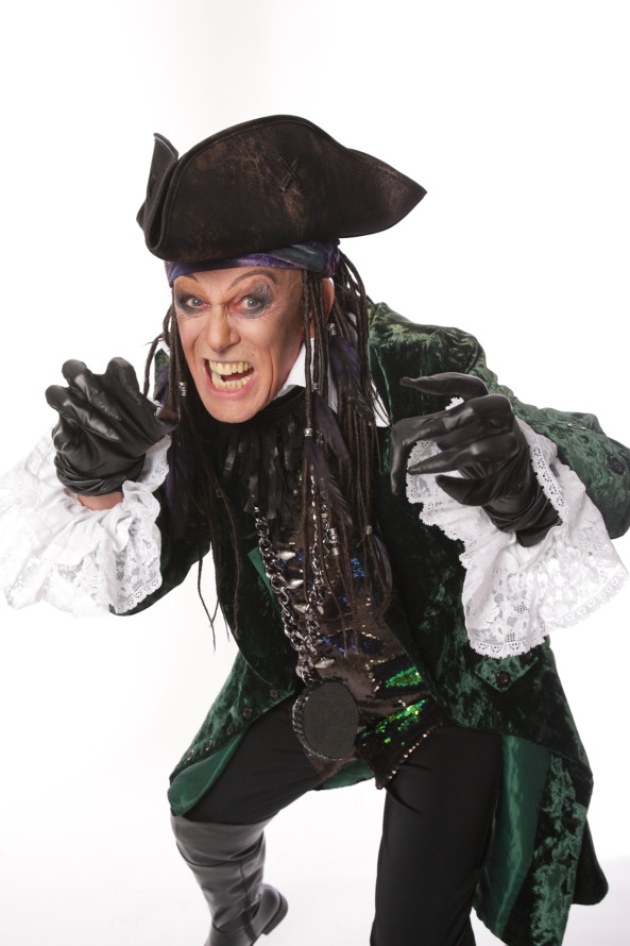 From pantomime onwards, everyone enjoys booing the villain and seeing her/his downfall, and the same is true of some modern psychological thrillers so that the fear can be cranked up as the ‘goodie’ (or ‘less baddie’) is faced with an implacable foe. Sometimes it’s their very badness that makes the character entertaining: the Devil in Milton’s ‘Paradise Lost’ is probably the most interesting being in the work. But I still prefer to introduce some nuances. Weakness in the villain may produce a lower level of fright, but it can add to the tension in more subtle ways.
My villain in my current ‘work in progress’ is a formidable person, brave, resourceful, risk-taking, committed to his vision of a family, even if that’s delusional. He is also violent, self-centred and unable or unwilling to consider the long-term outcomes of his behaviour.

Apparently this last is the fundamental flaw in many young men who find themselves incarcerated: a colleague of mine who worked with young offenders was struck by the high proportion who seemed not to understand the steps along the road that had led them to conviction and imprisonment.’How did this happen?’ was their cry, and the answer was found not in their own behaviour but in ‘bad luck’, conspiracies and the actions of others, not themselves. I think in ‘eduspeak’ it’s called ‘external attribution’ and is a factor in many negative outcomes for students.
If a villain is likeable at all, I can find the emotional and moral ambivalence which I’m after in both my reading and writing. My interest in seeing both sides of people and situations is not universal: it doesn’t, for example, encompass the current President of the United States for whom I cannot find anything but contempt. But almost everyone else has some traits that might be deemed likeable, or at least understandable.
I suspect that some of my readers like things to be more straight-forward, and are shocked to discover some of the frailties of characters they want to like. such as Jessie Whelan in my first novel ‘A Good Liar’. The title of that book was chosen deliberately as a play on ‘good’ in relation to lying: Jessie has to be an effective liar, but is still a good person. I expect those readers may be similarly anxious about feeling just a tiny bit sorry for a person who does bad things. Never mind. That’s just the way it’s going to be.
by admin | Nov 17, 2017 | critique, plotting, setting, thinking, Uncategorized, writing
At one of the first residential writing courses I went on, many years ago, the special guest one evening was a published author – one novel – who was invited to talk to us about his writing process. He seemed quite grumpy and I wondered if he’d been having a bad day. From what he told us, however, it sounded as if every day was a bad day. ‘Writing is hell’ was the main headline of his remarks. ‘I don’t why I do it. Once the first book was out they were badgering me for another one, and it’s like pulling teeth.’ This is not verbatim, but that was the gist. I wasn’t the only one who wished he had st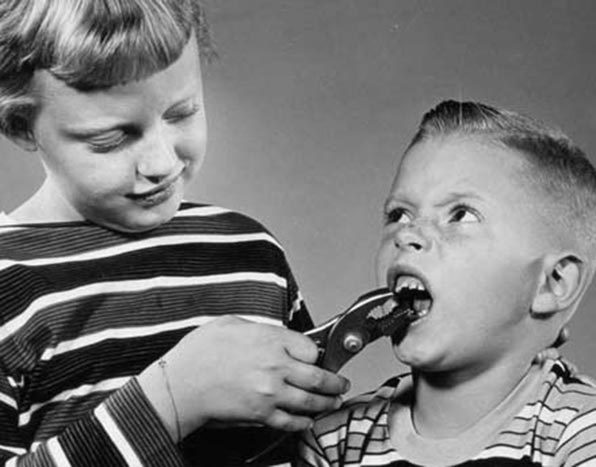 ayed at home.
This miserable bloke’s writing process was as follows. Every day he would write a sentence or two, struggling over every word until he was satisfied with it. Then he would stop, presumably exhausted. The next day he would read over what ever he’d written so far, agonise over it again, and write another sentence. And so on until he’d finished. Really? To this day I suspect he was making that up. But maybe that’s truly the way some people write: intensive and painfully slow, as if they were writing a poem.
On the sixth novel now, if I have a preferred writing process it has probably by now established itself. Needless to say, my process differs somewhat from that described above. The bloke appeared to have lost the will to live, unless that too was a wind up, and I would have felt the same if that was my daily routine.
I’ve talked before about the planning process, but let’s assume that I have a rough idea about each chapter, the key points and scenes, and what it contributes to the whole story. (By the way, if the chapter doesn’t contribute anything, then what’s the point of it?) With a few pointers to the shape and focus of the chapter I’ll start to write, quite fast. Sometimes I correct typos etc as I go along, sometimes I leave them and correct them all on the second reading. If the ideas are clear I can rattle along for quite a while, several hundred words. Something will halt the flow and I’ll stop and go back. This is the first edit, checking for continuity and consistency, improving poor phrasing, finding better words, correcting obvious errors.
At this point I often go back to the plan for the current chapter, or possibly previous ones, noting that something will need changing. Or I look at future chapters which are now taking a slightly different direction. If there are past pieces to change, I tend to do them straight away, before I lose the detailed focus. That done, on we go, more fast writing and then stop, go back, adjust, edit. A four thousand word chapter might be written in sections like this, one after the other, and pretty fast. When it’s going well I can write a chapter in a day.
There’s a very strong tendency to feel dissatisfied with the whole thing as you get beyond Act 1, when the setting is established and the story should be driving forward. I always ask myself at this point, is this story worth telling? If I wallow in this indecision for too long, or try to get feedback too early, the enterprise could quickly grind to a halt. It’s all about confidence: without confidence there’s no energy, and without energy there’s no progress. So I tell myself to stop worrying too much at this early stage and just keep going. The time for serious reflection, feedback and discussion with ones-self and others is when this first fast draft is finished. In terms of painting a picture it’s ‘once over lightly’ and then stand back and look hard at the emerging work.
The fine detail can be added, in what is now the third, or even fourth edit. If greater depth is needed for a character this can be provided with just a few more or different words or actions. A potentially confusing piece of plot can be fixed with a sentence or two. Once the whole work is ‘visible’ all sorts of extra touches, colour, fine tuning – call it what you will – can be added. Details of weather, prevailing atmosphere, smells, details, all of these can be added, so long as they don’t affect the storyline too much. When all that is done, the work is clearly an improvement on what you started with, and probably pretty close to the final version, although more polishing will continue until the set deadline is upon you. Without a deadline, you could polish for ever and drive yourself nuts, or at least I could. Part of the art of editing is knowing when to stop.
The contrast with the painstaking misery of our guest writer could hardly be greater. I wonder if he ever finished that novel?
by admin | Nov 8, 2017 | Authenticity, community, crime fiction, Cumbria, Lake District, landscape, Uncategorized, West Cumbria
I live in Cumbria, the most north-westerly county of England, and one of the most beautiful. Both sides of my family came from here, it was the place where all my childhood holidays were spent, and when I moved back here to live twelve years ago it felt like coming home .
.
When I decided, just after moving here, that I would write the novel I’d been planning for years, there was no doubt where it would be set. This place is essential to the world in my head that drives my stories. But I was wary of making the immediate location of my story too identifiable: my neighbours, the community I am part of, might not take kindly to being so clearly recogniseable, and as an ‘offcomer’ I didn’t want to sour the relationships that are important in a rural environment. So I anonymised my village, changing its features slightly and giving it a new name. When the action moved further afield those worries receded and I included real places, with their real names. In fact many of the people who read my books love to follow the locations. It’s as if my mention of places they know, peopled by imaginary characters, validates where they live.
That’s fine as long as the characters are reasonably real and mostly well-intentioned. But when I turned to crime fiction for my fourth book, I had bad people doing bad things, and didn’t want to upset the current inhabitants of my locations, so I anonymised the specific locations yet again, even though the physical geography of the area remained the same, recogniseable to anyone who knows the area.
Changes of name are one thing, but actually changing the landscape of this area strikes me as quite different. It breaks the authenticity that a sense of place in fiction demands. If the setting is all a figment of your imagination, you can do what you like with it. But if you say that this is, for example, a Cumbrian story, then I feel that you should respect the land that is called Cumbria and not mess with it. At least that’s my view.
One crime story I read was ostensibly set in the Lake District, the national park located within Cumbria, but the writer didn’t seem to know the area well at all. He had travel distances and times between places that bore no relation to reality. He had wildlife that didn’t belong there. The lack of authenticity annoyed me so much that I put the book down.
Recently I heard another author talking about his novels, also based in the Lake District, although he lived elsewhere. He was so keen not to locate his stories in anywhere recogniseable that he actually changed the landscape, including new valleys and hills that couldn’t be found on the map. For some reason, I found this hard to take, perhaps because he was messing with a place so important to me. This sounds petty, but the landscape is so precious and eternal that I don;t want it to be treated like that. We create fictional people, of course, but landscape that is half real and half a fabrication? No, not for me.
Is this too precious? I wasn’t even even born here and I’m being proprietorial about the place. But the fact remains that I don’t want to read books in which the setting is an invention, despite the title that claims that the setting is real.
Recent Comments