by admin | Jan 15, 2017 | Authenticity, Cruel Tide, fact-based fiction, Fatal Reckoning, genre, Lake District, landscape, Morecambe Bay, readers, research, Sellafield, Uncategorized, West Cumbria
It was a wild and snowy night, with a full moon wierdly visible through the snow, as I drove to a readers’ group meeting at Grange-over-Sands library on Thursday and spoke to the hardy souls who turned up. Talking about the new book ‘Fatal Reckoning’  without giving away most of the plot was a challenge, so I relied on questions to pick up what my ‘audience’ wanted to discuss. ‘You obviously like to use specific local settings,‘ said one, ‘but what about people who nothing about the place? Doesn’t that specificity make them feel excluded and put them off?’
It’s a good question, and one that’s been on my mind for a while. Many of my most enthusiastic readers are local to the region of West Cumbria that I love and have used as the setting for all my books so far. The area has everything a story backdrop should have – interest, historical depth, variety, beauty and even controversy, in the local nuclear industry based around Sellafield. Occasionally I have to anonymise the community I’m writing about, but mostly the place names and the details are precise, and that’s what many of my readers enjoy. They haven’t seen references to their own home turf in novels before, and it’s great fun to recall them in your mind’s eye as you read.
But there’ll be many more readers – I hope – for whom the area is unknown and the specific references immaterial. Honestly, I don’t think this detracts from their reading pleasure. All of us read about places we don’t know, and accept the author’s word about what the settings look like. Too much description is a drag, but we appreciate enough detail to picture the scene, whether the setting is authentic or not. We enjoy finding out more about the setting of a good book: evocations of Ann Cleeve’s Shetland or Ian Rankin’s Edinburgh add immeasurably to the reading experience.
For me, setting is important on a number of levels. For all readers it provides the visual context of the story, adding colour and depth to the ‘events’. Sometimes, setting is so crucial that it becomes almost a character in itself. 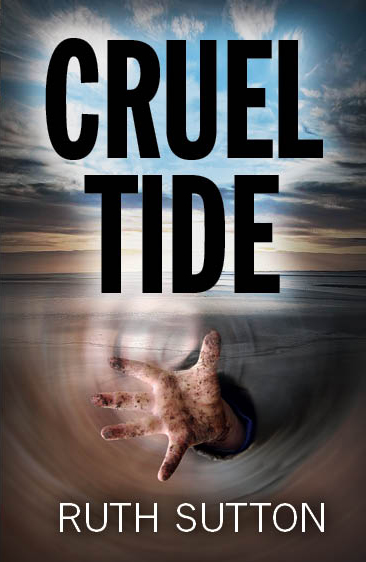 In my first crime novel ‘Cruel Tide’ the vast mudflats of Morecambe Bay and its sneaking tides are central to the plot. This can be achieved whether or not the reader knows the area herself. Local knowledge is not and should not be essential, but it adds another layer of enjoyment for some readers. This is especially so when the locality has previously been neglected in fiction, which I feel West Cumbria has been. Cumbria has been celebrated by many writers and poets, but not the west of the county, where the mountains meet the Irish Sea and seams of coal stretch further west under the waves. Coal and ore mining have gone, steel and iron works have closed, ship building has been replaced by nuclear submarines and commercial fishing is a shadow of past prominence, but the fascination of this coastal area continues and cries out to be shared. My next writing project may be different in characters and genre, but I’ve no doubt the setting will be the same, and hope it will be appreciated whether the readers are familiar with it or not.
by admin | Dec 10, 2016 | community, Cumbria, Fatal Reckoning, readers, research, stories, trilogy, Uncategorized, West Cumbria, Whitehaven
Every year in mid-December I borrow tables, chairs and crockery and invite all my neighbours in for the ‘Street feast’.

The annual gathering took place last night: fourteen adults, two children and a baby celebrating his first birthday with us. Ages ranged from 81 to the one year old and we all packed into my relatively small space – not a buffet, a proper sit-down meal. It’s a logistical challenge, and this was the biggest yet, but every year I’m glad we do it. Our row of nine houses is just a part of our village in West Cumbria, and the conversation round the tables last night showed yet again why this part of the world is such a rich setting for an ‘offcomer’ writer: long histories, inter-connecting families, shared memories and concerns.
Offcomers must always be on the fringe but being part of a community like this is very satisfying: over twenty years in my Salford flat I knew only two of my neighbours to speak to. I was accepted here relatively quickly mainly because my son-in-law is well-known in sporting circles and makes me ‘OK’ by association. Acceptance into a community brings with it a sense of responsibility. Writing the trilogy ‘Between the Mountains and the Sea’ was my first attempt at fiction, inspired by this place and its people, and I felt a strong obligation to get my facts right, which means many hours of research and checking. Worth it though.
At the launch of my new book ‘Fatal Reckoning’ last week in Whitehaven the Director of the Beacon Museum who welcomed us to her place said that my Jessie Whelan trilogy ‘Between the Mountains and the Sea’ was one of the first things she read on arriving in Cumbria and gave her an invaluable insight into the recent history of the place and its people. I was very chuffed by that. Last night’s party added to that sense of community and I loved it, as I always do.
by admin | Nov 12, 2016 | readers, self-publishing, Uncategorized
I was talking self-publishing with an old friend who writes and publishes in a different genre to me, and does very well. Most of his sales are on Amazon, both paperback and ebook formats. ‘It’s all about algorithms,’ he said, and I nodded sagely. I should have said straight out that he’d have to explain, but I didn’t. Since then I’ve cast around to understand what this is about, and ended up – as we all do – ‘googling’ the term to see what turns up. This appeared, in an article by someone called Samuel J.Woods, who is clearly American from his spelling of ‘behavior’. It was helpful, up to a point…
 “An algorithm is a set of (well-defined) instructions for carrying out a particular task. It’s, for the most part, deterministic, predictable, and not subject to chance. It works for all cases and gives a (presumably) correct answer.
Lots of people approach marketing this way, especially with the lure of “Big Data”.
You look for predictability in buyer decision-making and behavior, so you can scale a campaign.”
OK. Still not quite sure what you will do next after this analysis. And I’m wondering how much time this process might take, or at least how long it would take me as a data novice. My friend did say it took a long time, but he clearly felt it was time well spent.
Part of me thinks I should ‘get with the programme’ as the Americans say, embrace the new world of Big Data and grow my sales that way. But the other part of me thinks that life is short, especially at my advanced age, and maybe I should spend my time doing something more enjoyable than sitting at the laptop. Last year, my ‘direct’ sales, that is books sold direct to the reader by me, were greater than all sales through Amazon or my website. I know it’s wasteful to work in this way: I can only be in one place at once and sometimes I have to drive quite a way to reach my buyers. And I have to entertain my potential readers first, with a talk or discussion of some kind. Groups are sometimes quite small and I know it doesn’t make sense commercially, but here’s the thing – I enjoy it. It helps that I live in a stunningly beautiful area so the driving is often scenic. And I meet hundreds of people, mostly women, who love my stories and tell me so, and share stories of their own.
Now I’m doing a deal with a California-based book publisher and marketer who lives and breathes algorithms and reckons he could increase my digital and POD sales, especially in North America. He’s explained the dark arts of his expertise, but most of it sailed well over my head. I could do all this myself, or I could get him to do it and share the profits – if there are any. No brainer really. So we’re talking about the two crime books, for a year’s deal. I can carry on doing everything I do now, talking to my readers, publishing and selling ‘real’ books to them and the distributors and bookshops. The new deal marks my tentative entry to the brave new world of algorithms.
I’ve just noticed the title of the article from ‘Samuel J. Woods’ quoted above. The title is ‘Algorithms are cool, except they don’t work for marketing: heuristics do.’ What? Back to the definition of ‘heuristics’ that follows:
“A heuristic… is an experience-based technique that helps in problem discovery, learning, and solving. It basically helps you come to a “good enough” solution — close enough to the best, optimal, solution. It’s like a set of educated guesses or “rules of thumb”.
If you approach marketing this way, you have a greater chance of success (in generating leads, sales, or what have you). Why?
Because marketing is, inherently, unknown and disorderly.”
Back to the drawing board. Stick to what you enjoy, and don’t expect that any single approach to marketing is going to be enough.
by admin | Jun 19, 2016 | cover, crime fiction, Cruel Tide, Morecambe Bay, Publishing, readers, self-publishing, title, Uncategorized
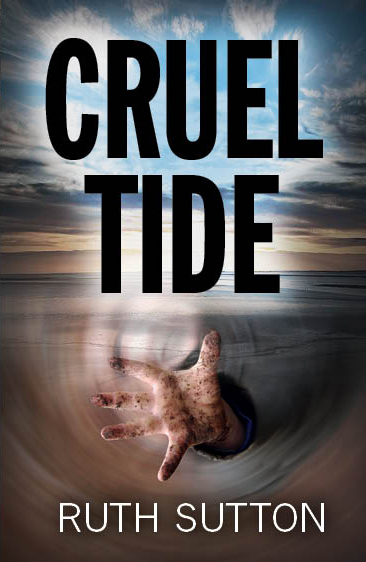
I always struggle with titles, and then with the cover image that should illuminate the title and engage the reader: as an independent author/publisher, these decisions are all mine. The image on the cover of ‘Cruel Tide’ developed before I even started the book. It came to me when I did the walk across Morecambe Bay and was struck by the menace of quicksand very close to the northern shore. The snaking, threatening tide that covers these huge mudflats twice every day connected with another cruel tide – of abuse, cover-up and corruption that have damaged so many children’s lives. The decision about both title and cover came to me quite quickly.
Not so with the sequel to ‘Cruel TideI’ that I’m currently completing. My editor Charlotte and I have brainstormed possible titles, but nothing really stood out. Then in the final stages of the first draft, in one of those times when the story seems to be writing itself, the words ‘Seize the Day’ became suddenly significant and I could see them on the cover, with a dark image of one of the settings – no details for fear of plot-spoiling.
The first thing you do is check how many other books already exist with that title. Of course there are several, but then you have to take them one at a time and decide whether the replication is significant. The most recent was non-fiction, an autobiography, so that was OK. Another appeared to be a religious tract, too different to bother about. There was one fiction book, but a very different genre.
I think I have my title. Next I’ll think hard about the image, and start working with the cover designer Kevin Ancient who did such a wonderful job with ‘Cruel Tide’. Crime fiction covers seem to be have some common characteristics, to ensure that readers understand what may lie between the covers. Decisions to make. Watch this space.
by admin | May 19, 2016 | readers, research, self-publishing
Last night at a local Women’s Institute meeting I heard a young man talk about how he and his wife have developed a plant nursery over the past seven years or so. Dull? It was rivetting, a saga of enthusiasm, aspiration, challenge, set-backs, perseverance, commitment, hard work, adverse weather and current growth – both commercial and horticultural. What kind of promotion and marketing has worked for you, he was asked. ‘Word of mouth’ he said. ‘If two people find us, a mile off the main highway and on the road to nowhere, and if those two people have a good time and each tell two, or three or ten people about it, then the business grows, and it costs us nothing that we wouldn’t be doing anyway, ie giving our customers a good experience.’My words, perhaps, not his, but that was the inference.
These people are BUSY, running a seven day a week outfit, developing the site, growing and selling their own plants and raising two young children. They won’t have time for sitting at the laptop, doing all the internet-based social media marketing stuff that we are told is the only way forward for a new business. And they are successful, doing what they love and are good at.
So what did I gather from all this, as someone trying to write and publish one novel a year, which is also pretty time-consuming? Tom Attwood’s story about the Halecat Nursery confirmed what I’ve been learning myself about the relative ‘efficiency’ of different forms of ‘promotion and marketing. We’ve learned that meeting people matters, and that nothing spreads sales faster than word of mouth. The most successful bookshop for sales of my book is the one where the person who owns and runs it tells each customer how popular my books are, that they are set in places they know, and that I live just minutes away and bring in the books myself. The single largest income stream in my book sales is the thousands of pounds I make every year through direct sales. I’ll do a talk somewhere, explain about how I write my books, the research, the stories, the challenges, and then I sell copies to people who are interested in them. It’s ‘book signing plus’, and it works.
In rural areas like ours there are many opportunities for people to come together and listen to a speaker, and an author like myself can gain an audience by simply making yourself available, and being prepared to plan as far ahead as these organisations do. Numbers may not be great, but there were forty or so people listening to Tom last night and he did a really good job. He brought lots of plants with him, made a fair amount of money from sales, garnered a small fee, and – more importantly – encouraged everyone there to come and visit the nursery, tell their friends, check the website. I’ve no doubt that the impact of his personal presence was far more effective than seeing a Tweet or an advertisement somewhere. People love plants grown locally for local conditions. People love books written locally with local stories and locations. If that’s the niche in this crowded market, then it pays both of us to address it.
That’s not to say that a writer like me can ignore all the internet-driven routes to market, but it’s clear to me that ‘viral marketing’ inspired by personal contact works really well, and it’s much more enjoyable than sitting at a keyboard.
by admin | Apr 29, 2016 | costs, Publishing, readers, self-publishing, self-publishing workshops, writing
The reader who approached me at a recent library talk waited until the end of the event and spoke to me quietly. “I really enjoy your books,” she began, and I could tell there was a ‘but’ on its way. “But, I’ve noticed a few mistakes, nothing major, just little things….lots of little things.” My heart sank, but I rallied and mumbled something about the odd inevitable proof-reading problem. “Could you let me know what you’ve found?” I asked her, and thought not much more of it, until the copy of the book in question arrived with the errors painstakingly marked up and a forest of little stickers marking the pages to be looked at.
I am slowing recovering from the shock and embarrassment of what was revealed. Even when I found the delicate pencil stroke in the margin and looked for the error it sometimes took two or three attempts to even see it. They were little things: often an extra or missing short word, and eyes reading quickly for the sense of the sentence floated over without registering it. Very few readers have mentioned the errors to me, and I must have read the offending sections many times and never noticed either, but it’s still unacceptable in properly published material.
Crying and spilled milk come to mind. The book is out there, and the inquest among the editorial team has begun. All of us recognise how the errors have happened, mainly because the people trying to proof-read have been involved in the development and drafting of the story right from the beginning. Familiarity hasn’t bred contempt, just a failure to see each word on the page separate from the context that we all know so well. It has taken a fresh reader, who must read more slowly and carefully than me, to spot what we couldn’t see. I’m very grateful to my amateur proof-reader, and have told her so. She could have been aggressive about it and got my defences up, but her approach was perfect and it worked. If she’s prepared to proof-read all my previous books before they go for reprint, I’d be delighted.
As a self-published author I have the same responsibilities to my readers as a traditional publisher. If it costs more money – probably an additional £400 or so – to hire a professional outside reader for the second proof read immediately before printing, and if that process takes a week or two on top of an already tight schedule to publish one book a year, well that’s what it has to take, and it will be done.
Advice to self-publishers? Don’t cut corners on proof-reading, and don’t try to do it yourself. Once the book is out there with your name on it, the mistakes will haunt and taunt you. Your reputation and your readers deserve the best. Mea Culpa.
Recent Comments