by admin | Dec 16, 2018 | creativity, crime fiction, Cumbria, planning, plotting, setting, stories, Uncategorized, West Cumbria, writing
After the difficulties in writing and publishing my last novel ‘Burning Secrets’ I vowed I wouldn’t put myself under that kind of pressure again. I would not set immutable deadlines, or make important decisions too quickly. And I would set time aside for other things in my life, to avoid the constant feeling of obligation to a project which was supposed to be a pleasure, not a burden.
 So far, I’m doing well with these resolutions. I took time to plan an overdue visit to see friends in New Zealand, and for the four weeks or so I was away I wrote no blog posts, didn’t look at the draft outline of the new book, or read anything remotely connected with it. But now I’m back, living once more in the area where all my books are set, and the itch to get writing has started again. For my morning reading today I chose not the biography of Hitchcock by Peter Ackroyd that is sitting by my bed but a book about forensic science. Not a detailed dry tome about a technical subject but a great read, full of engaging questions and dilemmas, just the kind of book I enjoy. The book is ‘All That Remains: A Life in Death’ by Professor Sue Black, about her career as a forensic anthropologist, and inevitably it’s started me thinking again about my story.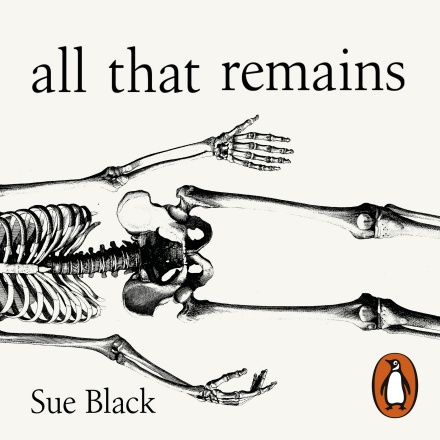
The timing isn’t great, as I really ought to be doing something about Christmas, but maybe the upcoming busyness could be turned to advantage. If in the next day or two I can absorb enough information, my brain can churn away for several days, processing and sorting and generating new ideas while I’m distracted by mindless festivities. When I return to ‘work’ in a couple of weeks I expect things to be clearer and the draft outline improved. It takes time and deliberate distraction for this useful process to be effective, and I suspect it doesn’t work for everyone. I just need the confidence to step away for a while. The mistake I made last time was to get so anxious about losing momentum that I didn’t step away, and some opportunities for improvement were lost.
I can already feel some of the pieces of the complex plot dropping into place, which makes the new writing project a potential source of pleasure rather than pain. Thank heaven for that.
by admin | Oct 19, 2018 | Authenticity, crime fiction, genre, planning, plotting, research, self-publishing, setting, Uncategorized
How easy  it must be to finish a manuscript and just send it off, confident that a small army of people employed by your adoring publisher will immediately step up to do everything necessary to get your masterpiece into the hands of equally adoring readers.
Editors, designers, proof-readers, printers, they’re all provided, and you the author need not worry about any of it. You’ll have to respond to the editor, and approve the cover, and check the final proofs, but most of the responsibility rests with your publishers. For this they get well rewarded if your book sells well, and carry the deficit if it doesn’t.
If your books sell really well, and in doing so keep the entire operation afloat, your publisher will be very keen to support you in any way they can. If like me you write what is mysteriously called ‘genre fiction’ the publisher will want you to keep those books rolling out, one a year if you can manage it, and if that means providing the expert help you need to keep going, so be it.
A good crime writer knows the importance of research and getting the facts right.  Whatever setting you choose – contemporary or in the past – the details of police procedures and enquiry methods need to be correct. Forensic science has changed radically over the past thirty years or so, and is progressing all the time, so those details too are very time-specific and all too easy to get wrong. What does the self-publishing writer have to do?
The trick is to gather around you a team of people to help, so that you can spend your time assembling all this information into an engaging story. You’ll need someone to advise about policing, and someone else as the forensics expert. Other aspects of criminality might need expert input too – gang behaviours, money laundering, drug smuggling, whatever. The aristocracy of the crime writing world, Ann Cleeves, Peter Robinson, Val McDermid and the like, will have all the necessary experts ready to assist, presumably paid for out of the hefty profits the publishers will make from the resulting best-sellers. The self-made artisans of the writing world, however, don’t have such support, unless we find and pay for it ourselves. At which point I ask myself, what price expertise?
I’m used to finding the production experts I need – editor, ‘type-setter’, cover designer, proof-reader, printer, – and paying each of them the agreed fee up front, before the book goes on sale. But I’m now I find myself wanting expert help of a different kind even as the book is being written. Unlike many crime writers who have had careers in the law, or the probation service, or the police, I have no professional background and expertise to draw upon. I choose a setting, and characters, and a story, but I still need expert input to get the crime details right, and sometimes the story itself will hinge around the procedural details.
I’m really grateful to the retired DI who advises me, and who wants nothing more for his help than cups of tea and acknowledgement in the book, but I’ve struggled to find someone on the forensics issues. Textbooks and online sites are available, but they have to relate to the time period: for a story set in 2001 I scoured the booklists looking for a a text written before that time, to make sure that it was pertinent to my setting. It’s interesting to do it all myself but it takes so much time, and trying to complete a book a year is just too much.
The latest move is to cast my net wider in looking for expert help that won’t cost me more than I can afford.  My local University website reveals teams of academics specialising in the very areas I want help with. Hallelujah! I scoured the staff lists, looking for the expertise I need, picked some names almost at random, and sent an email explaining what I was looking for and that I couldn’t offer remuneration. My expectations were low, I admit, but were confounded when I got reply from one name almost immediately, taking up my offer to go and talk about what I’m doing and what I need. Result!
As much as the expertise, what I’m most looking forward to is the chance to talk to someone who is interested in what I’m doing. Writing as a self-published author, and living in a wonderful rural location, it can be a lonely life. Maybe this could be the start of a collaboration that will be fun as well as fruitful.
by admin | Sep 6, 2018 | author platform, creativity, crime fiction, genre, readers, self-publishing, success, Uncategorized, writing
I’m trying to keep my ideas open and fluid around the issue of future writing. At the end of the last post I wondered whether I could sell copies of my backlist books if I didn’t have a new book to add to the list. Now my conversations with myself, and with others in the writing business, are revolving around whether readers will stay loyal if a new book doesn’t appear for a couple of years.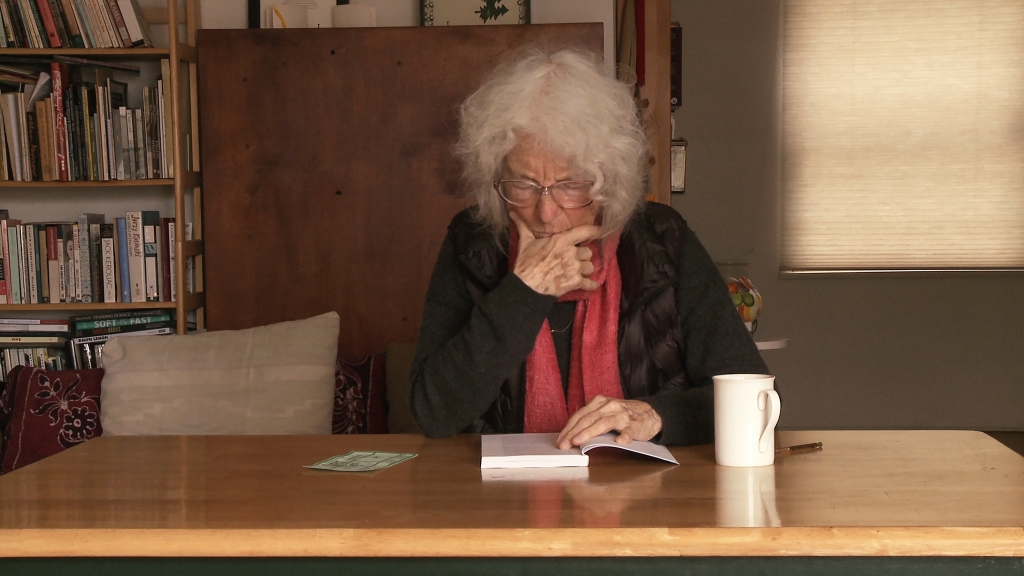
Whatever I do in the future, I need to get off the treadmill that this focus on the next book has become. Having been divorced and self-employed for most of my adult life, I respond badly to pressure from external obligations – which is not the same as avoiding responsibility. Responsibility is fine, so long as its a choice, not an expectation.
The unsurprising conclusion is that my motivation is almost entirely intrinsic, not extrinsic: clearly I need to write because I want to, not because I have to.
So, is all this incompatible with life as a self-published author? If I take my time to decide what to do next, will it matter if a new books appears in two years rather than one? If I want to play around with genre, regardless of whether the outcome will sell well, does that matter? I wrote ‘Burning Secrets’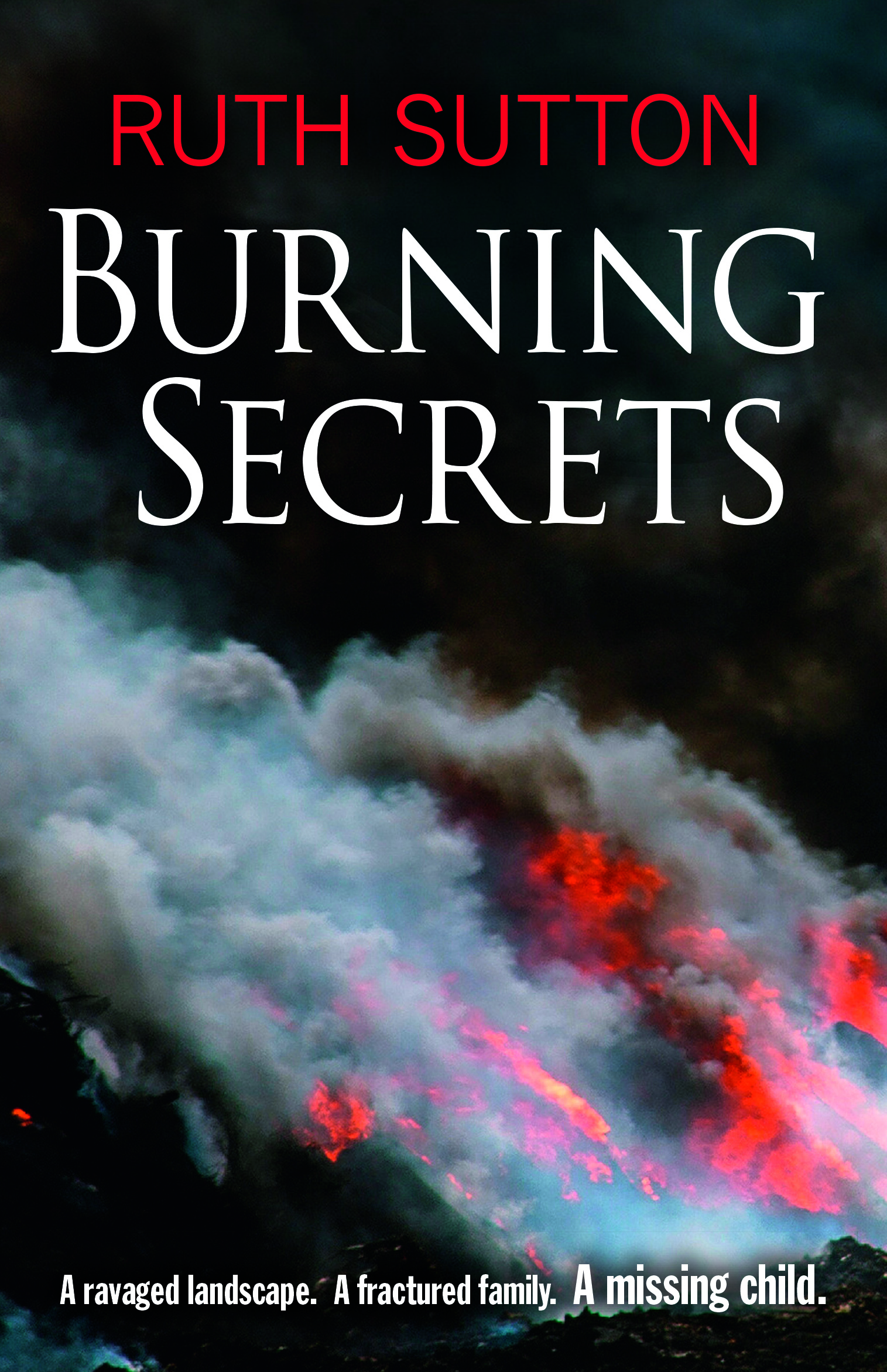 with an eye on a continuing crime-fiction series, but my current thoughts are veering away from that towards something more character-driven and less concerned with police procedures.
Above all, I’m asking myself whether my books sell – which they do – because of the genre, or because they have my name on the cover? Without any real marketing, and with no budget for promotions or advertising, sales are slow but keep going, and readers who pick up one book usually come back for more.
If there isn’t a new ‘Ruth Sutton’ book next year, of course readers won’t just wait, twiddling their thumbs. Of course they’ll migrate to other authors. But readership isn’t a ‘zero-sum’ game. If existing readers are looking elsewhere for books, that doesn’t mean they’ll forget about mine, and when a new book appears, with a modicum of publicity, they’ll be interested. New readers may need more persuasion, but the backlist is there, waiting for their interest to be piqued, and curiosity about what else I’ve written might well overcome the unfamiliarity of a different genre. Genre boundaries are so artificial anyway.
So another option opens up for me. Delay the decision about whether to write again. Turn away for a while, do other things, scratch the itch. If something really attractive begins to bubble in the writing brain, follow that lead, but don’t force it. Don’t be bound by past decisions about genre. You can’t force inspiration into being, it has to be allowed to develop, even it that takes a bit of time.
There, I’ve convinced myself that’s it’s OK to wait. Let’s see if I feel the same after the week’s writing course I’m starting on Monday.
by admin | Aug 31, 2018 | Authenticity, Burning Secrets, crime fiction, Cumbria, drafting, fact-based fiction, genre, planning, plotting, structure, Uncategorized, West Cumbria, writing shed
It’s some weeks since my last post, and I’m still debating whether I want to write another book. It could help if I could pin down why the prospect feels problematic. What is it that fills me with trepidation?
I’ve already accepted that my recollections of the past year have been coloured by my fall down the stairs just over a year ago and all its consequences – temporary immobilisation, pain, frustration, endless physiotherapy. I’m almost back to normal fitness now, but it’s been a long haul.
The content of last book was difficult too. I chose a backdrop – the catastrophic Foot and Mouth outbreak in Cumbria in 2001 – that required very careful research and a balance between authenticity and fear that the ghastliness of it all could overwhelm the ‘front story’. The research was painful, but I live in a farming community and couldn’t get the details wrong.
I was also working with a new editor, which was fine in the end but felt different than the well-worn relationship I’d had earlier. The new editor is very experienced in what makes for successful commercial genre fiction, but sometimes her expectations clashed with my obsession with authenticity. Yes, her ideas for a scene or the ending would be exciting, but if they felt ‘unrealistic’ I couldn’t go along with them. It’s quite a strain to pay someone for their advice and then decide to ignore it. And when I did agree with her, after the first draft, our shared view required a complete re-write of the first quarter of the book, which I didn’t enjoy at all.
For all these reasons, and probably others too, writing the last book rarely flowed easily. I had a deadline, and achieved it, but when ‘Burning Secrets’ finally emerged it didn’t excite me, even when it was clear that readers enjoyed and some think it is my best to date.
Looking back, I think I was so taken up with the research that I didn’t spend long enough on the structure before starting the first draft. So the writing stopped and started, got stuck and had to be rescued, and in the end had to be hammered into submission by some agonised re-thinking of the final scenes. Very stressful. If I could summon the patience and imagination next time to create a better detailed outline, that would definitely help to enhance the writing experience, and avoid painful rewrites further down the line.
Now I have the Arvon writing course to look forward to, which starts on September 10th. I signed up for this particular as the focus seemed to be on structure and plot, which is exactly what I need. I’m going with an open mind to see if help, advice and an undivided focus will clarify the future enough for me to stop writing without regret, or carry on.
In darker moments I think about the boxes of unsold books stored in my writing shed. While I have a new book to promote, sales of all the books tick along nicely. If there’s no new book, will I still be able to sell the backlist? I don’t necessarily need the money, but those boxes could haunt me for a long time.
by admin | Jul 9, 2018 | accident, slow writing,, character, creativity, crime fiction, editing, planning, plotting, research, setting, stories, Uncategorized, writing
The last blog post was all about slowing down, taking things easy, enjoying the unusually lovely weather, and yet here I am, only a few days later, reflecting on my default attitude to life which seems to be ‘Life is short, don’t hang around, make decisions, get things done, move on.’ 
I’m pretty sure I know why this is so: most of my immediate family members have died prematurely. Father went out to work one day when he was 45, died at work and never came home. Mother declined into Alzheimers in her mid-60s and died four years later. One of my older sisters died at 37 and another at 65. I think it was Dad’s sudden disappearance when I was nine that had the most profound effect. Suddenly my certainty about the future was fractured. If he could go without warning and with such effect, anything could happen, and the future could not be relied upon. If there was something I wanted to do, or to become, don’t wait. Just go for it. It may not be planned to perfection, but that’s OK.
Sometimes you need to ‘Ready, fire, aim’. If you think and dither around for too long it becomes ‘Ready, ready, ready.’
I was listening this morning to Michael Ondaatje,  author of ‘The English Patient’, talking about his writing approach which involves twenty edits before he commits to print. The first draft is just a sketch, and it goes from there. What patience, I thought to myself. How does he slow down enough to let such snail’s pace iteration happen? Could I ever work like that?
Probably not! I’m 70 now, and enjoying every aspect of my life. I have many things to do and to learn, not just my writing. Worse, as soon as I start thinking about writing another book I start planning deadlines and put time pressure on myself. The urge to write too quickly is so strong that my first response now is to avoid that pressure altogether by not writing at all. There must be another way, surely, somewhere between Ondatjee’s caution and my usual recklessness.
The next step could be, consciously and deliberately, to dawdle. Just mess around for a while. I have some characters I’d like to play with, and I have a setting – it has to be Cumbria, nowhere else provides the same inspiration. Now what I need is a story, a real character-driven story, not just a series of twists and turns choreographed by some formulaic notion of ‘tension’. The story needs to intrigue me, and move me. The central character might be a police person but it’s not going to be a ‘police procedural’ or a forensic puzzle, both of which in the modern era require tedious technical research.
Maybe I should abandon even the pretence of ‘crime fiction’ and just tell a story about a person and a crisis. Above all, I need to drift and learn to use the first draft as a mere sketch. Only then will I know whether I’ve got something worth spending time on. ‘Ready, fire, aim.’
by admin | Apr 4, 2018 | crime fiction, feedback, Publishing, self-publishing, Uncategorized, writing
Of course, the question is facile: it’s not as black and white as that. So let’s pick apart the proof-reading stage of the publishing process, just to see what it contributes and where problems can arise.
First off, doing without proof-reading is a mistake. Nothing irritates a reader and or embarrasses a writer more than published text containing missing words, incorrect or unclosed speech marks, upper case/lower case mistakes, or whatever the obvious transgression might be.  Having said that, something seems to depend on the reader. While some readers spot everything, and usually tell you so, others seem not to notice at all.
As an ex-educator with a very picky grammar school education, I’m unbearably fussy about punctuation, or I least I thought I was until a recent experience with a professional proof-reader. My ‘rules’ seem to be based on what I’d learned at school and not updated since, and I was unprepared for the technical approach to writing that my proof-reader friend was keen on. And from what I read about current approaches to ‘grammar’ in English primary schools, it looks like today’s children are getting a bellyful of these ‘rules’ which are then tested: enough to put them off writing confidently for a long time.
I have had a very unfortunate experience with proof-reading, which I’m keen not to repeat. My first three books fared well, or relatively well, with very few errors being spotted during that first nervous check when they came back from the printers. Maybe we got complacent, even sloppy. When the fourth book arrived, something had gone badly wrong. I spotted one or two mistakes in a casual flick through, but then the careful readers’ feedback started. At first it was a general complaint about the number of errors, and then after a routine library talk a woman handed me a list of the errors she had spotted and kindly written out for me. My stomach turned when I glanced at the list of shame. For days I could hardly bear to look at it. Then one morning after a miserable night worrying about it, I sat in bed with the list, a copy of the book and a highlighter pen and marked up every single one. It took a while. In my distress I managed to get highlighter on my duvet covet and it has proved impossible to get rid of, reminding me of the miserable business every time the duvet cover appears on my bed.
The colleagues who had helped me with the errant book’s publication were duly informed and were as puzzled as me. How had this happened? We still can’t explain: it was as if the penultimate uncorrected proofs had been sent for printing by mistake. The ebook version of the book was corrected immediately, which was a relief, but I couldn’t afford to scrap the printed paperbacks and redo them. Mercifully, two years on, the stocks of the first edition are almost exhausted now and we can correct the mistakes before the reprint.
No need to convince me of the essential need for proof-reading. The conventions of the written form need to be visible in the text, to make the reader’s life bearable. But…are all these conventions set in stone? Some renowned authors have chosen to ignore them completely, but we can’t all be James Joyce.
Here’s my question: does the style and intensity of proof-reading vary according to genre? What’s acceptable – and required – in an academic paper maybe just too much for a work of fiction. And what’s appropriate to ‘literary fiction’, where writing style is the first concern, may feel wrong in a plot-driven crime story. Even within a story, the level of technical accuracy in a descriptive paragraph will and should be quite different than in dialogue, where people simply don’t speak in full balanced sentences with semi-colons and sub-clauses and all the rest.
Here’s my advice: when you’re working with a new proof-reader, ask for a few sample pages before he/she starts work in earnest. Be prepared for a discussion about the level of correction that could be deemed essential and what is a matter of choice and style. It’s your book, and you call the shots, but obviously you’ll listen to advice from a professionally trained person, even if sometimes you choose to ignore it. I’m sure that some proof-readers yearn to be editors even after the editing stage is officially over, but that could lead to all sorts of confusion and frustration. You – the author – may have to arbitrate and mediate. It’s your name on the cover, and you carry the can.
Back to the original question: can proof-reading flatten language? Yes, potentially it can, by applying ‘rules’ too heavily and inappropriately. If that’s not what you want, make sure you discuss the process with your proof-reader and find an acceptable compromise. “She who pays the piper calls the tune.”

Recent Comments