by admin | Feb 18, 2018 | A Good Liar, character, crime fiction, Cruel Tide, Cumbria, Fatal Reckoning, Lake District, plot devices, plotting, self-publishing, setting, stories, structure, Uncategorized, West Cumbria
When I started writing it was really all about setting and character: there was a background story line, but after a while that declined in importance and the interplay of the characters against the West Cumbrian backdrop became the main driving force.
 Readers love the Jessie Whelan trilogy for that reason. No one ever comments that the surprises of the plot kept them reading: it was all about what would happen to the people and the interest of the background.
Then I turned to crime fiction, in which the twists and turns of events and revelations have to be managed differently, but in the first two crime books the two leading characters were still centre stage.  ‘Cruel Tide’ and ‘Fatal Reckoning’ are mainly character driven, despite the skull-duggery of the plots. The tension is not so much ‘who dunnit?’, but ‘would the wrong doers be brought to justice?’ There was little in the way of police procedure as neither of the two main characters were senior police people, and the police were more concerned with covering things up than searching for evidence.
In the latest book, set in 2001 when everything about policing had changed, police behaviour and procedures are more central. The setting – the disastrous Foot and Mouth epidemic – is also vital, and now I wonder whether the delineation of character is as strong as before. As I re-write and ‘polish’ the question bothers me. In terms of ‘genre’ is this book quite different than the previous ones, and if it is, does that matter? It’s a good story, with enough twists and turns to keep things going. The body count is low – but that’s OK. I’m increasingly tired of dramas that need death after nasty death to sustain the reader’s engagement. After a while, whatever the professed authenticity of the setting, too many crime stories turn out like ‘Death in Paradise’ or ‘Midsomer Murders’. Or is that what happens when crime is adapted for TV? Is it ‘episodic’ presentation that causes the structure of the story to change? Surely what matters is not how many bodies are discovered, or even how they died, but why: what drives someone to attack another? Motive, opportunity, means, in that order. Or are we so jaded that we demand ever more violence?
My final final deadline for the current manuscript is within a day or two. Once the damn thing goes away to the editor I will celebrate for a few days before I have to think about it again. If I had a ‘publisher’ I might be able to relax a little for the next few months while the book makes it way to publication, but when you self-publish every aspect of what happens has to be organised and monitored by yourself. It’s exhausting! As my next big birthday approaches, I’m wondering – again – how much longer I want to carry on. I still have a list of things I enjoy and want to do – sewing, drawing, singing, keeping fit – all of which take time and commitment. The curse of writing is that it seems to squeeze out everything else. I have to give this dilemma some serious thought.
by admin | Feb 8, 2018 | 'unreliable narrator', character, memory, plotting, point of view, stories, Uncategorized
I’ve written before about the challenge of writing from a child’s point of view. To some extent, the child is an unreliable narrator as their view of the world is coloured by youth and inexperience and possible misconceptions. But there’s always the possibility that the child will see things as they truly are, uncluttered by notions of what ‘ought’ to be visible. 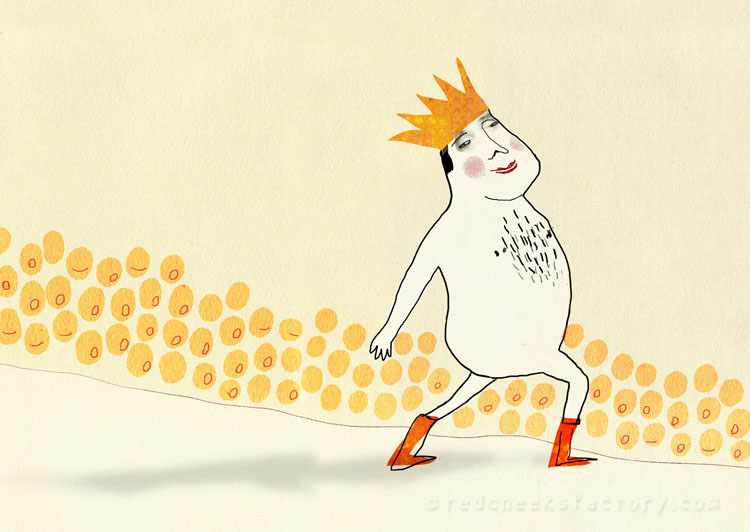 The ‘Emperor’s clothes’ is the classic example: whereas adult viewers see the Emperor luxuriously clad as befits his/her status, the child sees that the Emperor is in fact naked. The child may say so, but will not be paid attention to because he/she is ‘just a child’.
“Out of the mouths of babes and sucklings shall come forth wisdom.” That’s a biblical quote, in which ‘wisdom’ is equated with ‘truth’.
There are two children in my new novel. One of them is central to the action, first encountered on page 1 and staying centre stage for much of the story. Writing from her POV meant getting into the mind and reactions of a fairly unsophisticated young person, biologically but not personally mature. Reaching back into my own memory of being that age was quite a shock. Had I really noticed what happened around me and analysed it in that way, so intense, so sceptical? To double check, I recalled my own child at that age, and the hundreds I’d encountered at school during my teaching years. It seemed to me that some perceptions were sharp and accurate, and some others were missing altogether. Adults may see something that the child misses completely – hence the ‘unreliability’.
 The other child in my latest story is younger, further back in my memory and beyond my teaching experience. This voice was harder to capture. One thing I was sure of however: this child is more ‘wise’ than those around him give him credit for. He may not say much but he misses very little of what’s going on, even though he may not understand all of it. He will offer what he knows only if asked directly, and demonstrate his knowledge in unconventional ways. Interesting. It creates tension that is subtle and quiet, but still intriguing to any reader whose senses have not been dulled by too much ‘action.’ I hope it works.
by admin | Feb 3, 2018 | crime fiction, pace, plotting, readers, self-publishing, structure, Uncategorized, word count
Last week’s issue was the business of ‘murdering darlings’. This week I’m looking at the carnage and wondering – to use yet another metaphor – whether I’ve thrown the baby out with the bathwater.
The main victim of last week’s murderous rampage through the third draft was the opening of the new story, where I took four chapters to get to the first real tension, although I thought the discerning reader would see the story’s inexorable decline into noir and be prepared to wait. There was merit in some of those early scenes, but in the end they just weren’t justifiable and out they went.
There’s no doubt that the 4th draft now gets going faster and rattles along, but when I sliced away at the rather turgid middle section as well I noticed that the final word count had shrunk by an astonishing 15,000 words, from 99,000 down to 83,000, and I began to wonder whether I’d been too enthusiastic.
I checked around. How long is too short for a thriller/crime story? My previous two had been over 100,000 words, which is probably why this one felt a little thin. But other opinions were reassuring : anything between 70,000 to 100,000, said someone whose experience I respect.
What I need to do now is step away from the text for a day or two and go back to it with fresher eyes. Have I thrown the baby away? Which fragments of the erstwhile opening chapters need to be included, to add depth without length? Sometimes all it takes is a remark or a look or a thought to enrich the reader’s view of the scene, and that will be my task for the next re-write. I also need to look out for anywhere further on in the story where reference are made to passages that are now lying on the ‘cutting room floor’.
I suspect that by the the time I’ve added in one or two potentially dramatic and useful scenes and fleshed out the  opening details just a little more I’ll be up to the 85,000 word mark, exactly midway between the parameters suggested by expert colleague. Let’s hope so. I’m getting to the stage now when I never want to see this manuscript ever again.
Apart from any other considerations, a slightly shorter book will make for faster and thereby cheaper production, especially proof-reading. After the embarrassment of inadequate proof-reading in one of my previous books, I’ll be doing whatever it takes this time to get that the stage of the process properly covered, even it costs a lot.
by admin | Jan 26, 2018 | crime fiction, drafting, editing, Lake District, opening paragraph, pace, plotting, structure, Uncategorized, writing
Remember the sense of anti-climax at the end of the first draft that I complained about last week? Well, instinctive dissatisfaction was well founded. Even before the long and perceptive email arrived from my editor I had reluctantly admitted to myself that the story took too long to get going, the middle sagged, and the final chapters were either too detailed or melodramatic, or – worse – both. Oh dear.
Just goes to show that you need plenty of time for second thoughts. Fortunately, because of the fierce final effort to finish the damn thing I still have some time to play with before copy-editing is due and the production juggernaut starts to roll. Some decisions were easy: the opening scene that I crafted with such care had to go, and the first ‘darling’ disappeared. With that gone, of course, other passages now didn’t work, and they had to go too. Cut, cut, cut.
The hardest part of the whole exercise is keeping track of the various versions and not mixing them up. Every now and then on Twitter you encounter an author bemoaning the fact that they’ve just spent several hours correcting the wrong draft. I know how it feels and how easy it is to make that mistake when you’re tired or panicking or fed up with the whole business.
I cannibalise the original draft, moving text around, deleting and adding, before cutting and pasting the new version into the 4th draft, carefully labelled as such, and saving it. Two days into the corrections I’m doing OK so far, despite a head cold. Actually, concentrating on the work, however hard that might be, helps to dissipate the effects of the cold, and at least I feel as if I’m still achieving more than just a mounting pile of used hankies.
There are some technical details I’ve had to check to make the necessary plot tweaks. Here’s an intriguing example : ‘How to evade a tracker dog?’ I think I’ve got away with that one. When you’re splicing new bits into an existing draft there are continuity issues too, which are tedious both to pick up and to deal with.
But hey. If you’re going to do it, do it right. The book could still be out there when I’m too old to remember it, and I want it to work as well as it can. What’s a few murdered darlings in the great scheme of things?
by admin | Jan 20, 2018 | editing, planning, plotting, research, selling, thinking, Uncategorized
Yesterday morning a strange feeling came over me, a sense of loss and uncertainty, a long way from the delight and celebration I’d anticipated at ‘The End’, the final words of the new novel. In the final week, for six days straight from first thing in the morning u ntil it was dark I’d tapped away furiously, stopping only to gaze at the wall while I found a way through a barrier. The concentration was intense: it spilled over into those times when I wasn’t sitting at the laptop, and unfortunately haunted the night too. I would sleep for a couple of hours and then wake with dialogue or a plot twist in my head.The only way to break its hold on my mind was to play Solitaire on the ipad, which meant more screens, more eye strain and was probably not conducive to getting back to sleep. When I’m writing, the usual habit of reading before sleep doesn’t seem to work.
When ”The End’ finally came it took me by surprise, and more surprising was that I felt so flat. Maybe it had happened before, but if it did I’d forgotten. Living alone, there was no one to turn to in triumph. Friends are very patient, but listening to someone banging on about the details of a fictional conversation or the way out of a plot puzzle is enough to make your eyes roll back.
I was ahead of schedule, but worried that I’d been too driven by the deadline and should have taken more time. I’d resolved a big plotting problem, but it still felt too cerebral, too subtle, not enough action. I’m working with a new editor and chose her for her experience and ‘hard-nosed’ straight-forwardness, but I don’t know how she’ll react to the first draft of mine she’s ever seen. Worry, worry, worry.
And of course, the ever-present question: why do I put myself through this? I’ve retired from ‘work’ and should be pleasing myself, sauntering through the days, going on little jaunts, planning big jaunts, seeing people, having fun. And instead of that I’m spending most of time on research, planning, writing, re-writing, and worrying.
 I tell myself that the rewards are worth the painful gestation and birth. It’s undoubtedly true that you have to keep writing if you want to maintain people’s interest in your work and the sales that go with it. Every new books boosts sales of the previous ones. If you want press interest or access to speaking at book events and festivals you have to have a new book to showcase.
If all goes well, the new book should be out in June, and then what? I have a choice: pack it in and have an easy life, or keep going and endure the lows as well as the highs, all over again.
by admin | Jan 7, 2018 | cover, feedback, genre, planning, Publishing, readers, research, self-publishing, Uncategorized, writing
WARNING People write books about this: one blog post can cover only the bare bones
We can split the process of going from story in your head to books available to readers (in whatever form) into three parts. As a self-published writer, you’re on your own: whatever help you need will need to be found, by you, and paid for if necessary. You can do it all yourself if you wish, and save the money, but the finished product could be an embarrassment, and most of us would want to avoid that, unless – like the current US President – you think you’re a genius and therefore infallible.
Part 1 is about getting the story out in first draft form, and will apply whether you have a publishing deal or not.  You will need an idea, a setting – time and place – some characters who interest you and a story that hopefully will engage potential readers. Whether you plan in detail or not is your choice, and you also decide when you will write, where, for how long, alone or in collaboration with others. Personally, I do plan – although the plan changes all the time. I write at home, out in the shed if the weather’s good, upstairs if it’s not too cold, and downstairs if I need more warmth. I research and plan for several months before starting the first draft and then I try to write chapters in the order in which they’ll be read. Once I’m writing, the first draft emerges pretty quickly.
Part 2 is about everything that has to happen between the completion of a first draft and the final manuscript being ‘published’ in either paperback or ebook format.
a) story edit. You may feel you don’t need this if you’ve had feedback about the story as you go along. 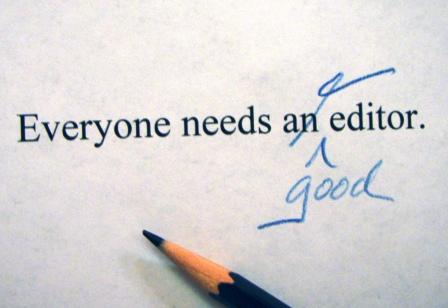 This is where the details of the story are checked to see if they hang together. Does the chronology work? Are there inconsistencies of any kind? Does every chapter/scene add to the story? Does the plot develop in a way that keeps the reader going? I like to get feedback from someone who’s not encountered the story before, beyond the initial outline. The person needs to understand how stories work, to be clear in their judgement and able to provide a critique which is helpful without being bossy – it’s your story, after all.
b) next draft, use the notes from a) to improve the quality. Any manuscript will improve with careful editing, but beware of ‘over-writing’ which makes the text feel too elaborate and heavy.
c) back to the editor for ‘line-editing’, with a focus now on the grammatical and other details, to clear up any infelicitous phrasing, poor punctuation etc. Lots of errors will be picked up. Don’t assume that corrections can be made at the proof-reading stage, where you will have very little room for correction. The final edited manuscript must be as good as you can get it.
d) the text has to be laid out in the form that will appear on the page. With or without expert help, you have to decide – depending on whether it’s on the page or the screen -on the font, the page size and layout, chapter headings, placing of page numbers, all sorts of visual details. I never know what to call this stage – probably ‘design’ is the best word to use. A professional book designer can make a book look beautiful – but it’s one more person to be paid.
e) cover design. Here again it depends how much you want to spend, and how visible the cover will actually be. On the Kindle store the dimensions will be small with not much room for detail. The cover of a paperback can be more dense. Either way, the cover is the first indication to the reader (and the bookseller/browser too) of what the book might be about. Different genres have different styles. If you want to get ideas, go to a bookshop or library and look for covers that seem to work, analyse why they do, and use those insights in either designing your own cover or briefing someone else to do it.
f) preparing and checking proofs. This is the very final check before your book is published. Once it’s out there, it’s too late to change anything.  One of my books slipped through this stage with insufficient attention and I have regretted it ever since – far too many tiny errors that a fast reader wouldn’t even notice but a slow/picky reader did and will. There’s always a kind person out there who will send you the unbearable list of mistakes. The best way to get the proofs properly checked is to have them read by someone with a professional and very picky approach and who has never encountered your story before, at all, ever. Some of the best proof-readers read from back page to front to avoid getting so involved with the story that their reading speed picks up and mistakes are missed. We need proof-readers, even if we might not want to spend the evening with them.
I know this is all pretty basic, but I’m constantly surprised by questions from people who don’t know what self-publishing entails but think it might be right for them.
You’ll recall I said there are three stages. If you think that Stage Three is about sitting back and watching the money roll in you are gravely mistaken. Stage Three is about getting people to pay their money to read your book, and that doesn’t happen unless you do something to make it happen. More on that later.
Recent Comments