by admin | Aug 26, 2017 | accident, slow writing,, character, crime fiction, opening paragraph, plot devices, plotting, point of view, readers, structure, Uncategorized
My temporary living space is looking pretty well organised now (check previous posts to see what this is all about). And my head is getting round the new situation too: instead of fretting about the necessary confinement I’m using the time to tackle something that’s been overshadowed by health issues for a a couple of weeks – starting the first draft of the new book.

The outline is pretty well sorted, apart from the final denouement which I want to leave loose for now. So first thing this morning I split my screen, posted the outline of Chapter 1 on one side and pulled up a blank document on the other headed, ‘Burning Secret Chapter 1’. The title may change, but it’ll do for now.
Immediately at this point the writer faces a choice about ‘point of view’. Whose eyes am I looking through in this scene? Whose head am I inside, and what does this person see, hear, do and feel? What are the implications of this choice, and is it significant for the reader? It’s a chance to clarify who is at the centre of the story, or possibly to catch the reader off-guard. Do you remember the film ‘Psycho’? For the first several minutes of that Hitchcock masterpiece the viewer thinks they’re being told a story about Janet Leigh’s character having an affair. All the action is from her point of view, until in an iconic shocking twist her character is gone and we are jolted into another story. The decision about the first POV the reader encounters is one the writer needs to think carefully about.
For this book I’ve decided that POV should stay the same for the whole of the first chapter. The setting, both time and place, is quite complicated and one POV is probably enough for the reader to manage. Perhaps at the chapter’s end the hook to draw the reader forward could be the introduction of a new POV, as the story begins to unfold. 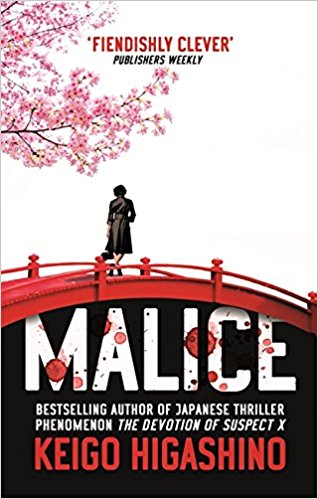
I read an excellent Japanese crime story recently, – ‘Malice’ by Keigo Higashino – at the end of which there was an interview with the author about the techniques he’d used. One of these was to give the reader an early memorable snippet of information about a key character that would be crucial in establishing whether the character was trustworthy or likeable. With that impression established, the reader would interpret the character’s behaviour through that lens. ‘First impressions count’ is the message, and those impressions are manipulated by the author.
So, the choice of character for the first POV, the information the reader is offered, the source of that information and what it signifies, are all Chapter One decisions. However well I’ve planned, much of this subtlety only presents itself when the actual first draft is being written. And that’s what I started on yesterday. I couldn’t write for long because of the sore shoulder, and I’m writing this post early so I can rest for a while before going back to Chapter One later in the morning. Pacing myself like this is useful as it makes me think more about what I’m doing and why, instead of just racing on.
For those of you who are new to this blog, I’m confined to the house having injured myself in a fall, and trying to use this as an opportunity for achievement, not just a source of frustration. It’s Day 2 of a ten day confinement: I hope the good intentions can be sustained. While the rest of country is starting the busiest holiday weekend of the year I shall be quiet in my small space and live inside my head. And if I need distractionthere’s a cricket test match to listen to on the radio. What more could I want?
by admin | Jul 26, 2017 | pace, planning, plotting, research, stories, Uncategorized
Sex and money are powerful human motivators. Almost all the great stories involve one or the other, or both. What can I learn from this?
My new book is taking shape, in chapter outlines not a first draft as yet, and it’s at this stage that I begin to look at the movement in the story, how it rattles along, what makes the reader want to turn the pages. At the root of it all is the energy generated by the characters themselves, faced with the circumstances that I have created for them. What makes them act they way they do? Are sex and money critical in this story too?
Having left myself more space this time to think about the story rather than ploughing on quickly to meet the self-imposed target of ‘one book each year’, I’m interested to see how the characters are developing in my head. Straight-forward ‘goodies’ and ‘baddies’ are too easy: there need to be layers, nuances and contradictions that push the reader one way and then another as the story unfolds. I’m asking the ‘what if?’ questions about my story, and it seems to be working. At some point, when all thirty or so chapters are sketched out, I’ll start the first draft. Even then, details and complications will come to me and have to be incorporated, but hopefully without too many ramifications for earlier parts of the plot.
Another useful effect of spending longer thinking before I write is that I forget great chunks of the research. The things that remain are the precious bits that stay lodged in the memory when the rest has gone – the ‘nuggets’. Nothing bogs a story down as fast as too much extraneous detail which the writer has dredged up through painstaking research and is consequently determined to use. The trick is to identify the ‘nuggets’ and use them sparingly, adding colour to the story without slowing it down.
Sex and money aren’t the only things that drive action: love, fear, survival – they all play a part. Theymay manifest themselves differently in different eras and societies, but they never lose their relevance and their potency.
by admin | May 28, 2017 | Authenticity, character, crime fiction, Cumbria, fact-based fiction, Fallout, plotting, readers, Unbound, Uncategorized, Windscale fire
Three years ago I was in the final stages of writing my third novel ‘Fallout‘, which had as its backdrop the nuclear reactor accident at Windscale in Cumbria in October 1957.
Deciding on that context for a story about finding love in later life was a gamble. For a start, the background might end up being much more interesting than the main story line. And dealing with a real event was always going to be tricky. It’s a touchy subject here in Cumbria even after sixty years: the final report on the incident used a phrase about ‘local errors of judgement’ that still rankles. (Actually the phrase was inserted into the report by the Macmillan government as a way of explaining the incident to the Americans without blaming the government’s own rushed reactor building programme.) And of course, because it was a ‘real’ incident within living memory it was essential for me – a local ‘offcomer’ – to get the facts right.
The inside story of the reactor fire was a complicated technical issue. How was I going to help the non-scientific reader to understand what was really going on, and why the key the decisions were made? The plan was to place a character on the inside of the Windscale whose job was to ask questions about the operation of the reactor. This character would act as the reader’s ‘friend’, gathering information in an intelligible way. in ‘Fallout’ this character was Lawrence Finer, seconded to Windscale from Harwell, the nuclear research facility near Oxford.
In my next book ‘Burning Secret’ I face the same issue – explaining farming to a non-farming readership, and then clarifying the complications of a catastrophic infection that decimated our farm animals in 2001. I need a character that acts as the ‘guide’ to a specialist subject for a non-specialist audience. Talking to a local dairy farmer last week it occurred to me how to handle this. 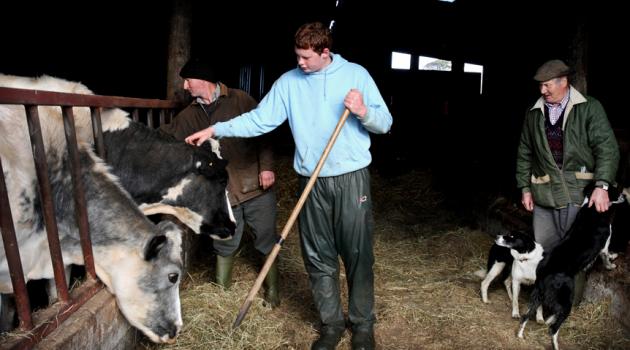 Large dairy farms often employ people to help with milking and the care of the herd, but during the outbreak restrictions were introduced that made it impossible for dairy farm workers to work normally, going home after work and coming back the next day. This particular farm asked a family friend from Liverpool to come and stay on the farm for the duration to help them, and the young man had no experience of farming life. He reacted to the everyday routines of the farm as you or I might, noticing things that the farmers took for granted, asking naive questions, making mistakes through lack of experience. In literary terms, this character’s function is somewhere between the Greek chorus and the gravediggers in Hamlet, and more emotionally detached than the farmers themselves as the outbreak spread ever closer. In a crime story, as this will be, the ‘stranger’ can also be a useful source of tension and mystery. Let’s see how it all turns out.
by admin | Dec 16, 2016 | 'unreliable narrator', character, plot devices, plotting, point of view, stories, Uncategorized
Two recent bestsellers have two things in common: the first is the use of the word ‘girl’ in the title, and the second is a story told by at least one ‘unreliable narrator’. I read ‘Gone Girl’ because I wanted to see what all the fuss was about, and felt at the end that I needed to cleanse myself from its unredeemed nastiness. Both ‘unreliable narrators’ were equally horrid and it was of little interest to me therefore which of them was the real villain. After that experience I was determined to resist the hype around ‘Girl on the Train’ and haven’t read it, or seen the film.  I read the reviews however and understand that the narrator – transposed from London to the USA for the film – is a drunkard and a liar whose testimony must therefore be suspect. I’m not sure I would warm to the character any more than I did to the ghastly creatures in the previous ‘Girl’ book.
Then I remembered another unreliable narrator, where the device was employed to such effect that I was pulled further into the story than I would have been otherwise. This was in ‘Empire of the Sun’, by J.G. Ballard, a story told from the point of view of a young boy – Ballard himself – caught up in the chaos of the Japanese attack on Shanghai in 1941, and its aftermath. Jim, the unreliable narrator, brings to the story his own childish innocence, naivety, optimism and compassion. He is unaware of his own slow decline into starvation and illness, and the reader has to glean this information not from the boy himself but from the reactions of the adults he encounters. It’s a gut-wrenching experience, in both the book and the film, and had a powerful impact on me. 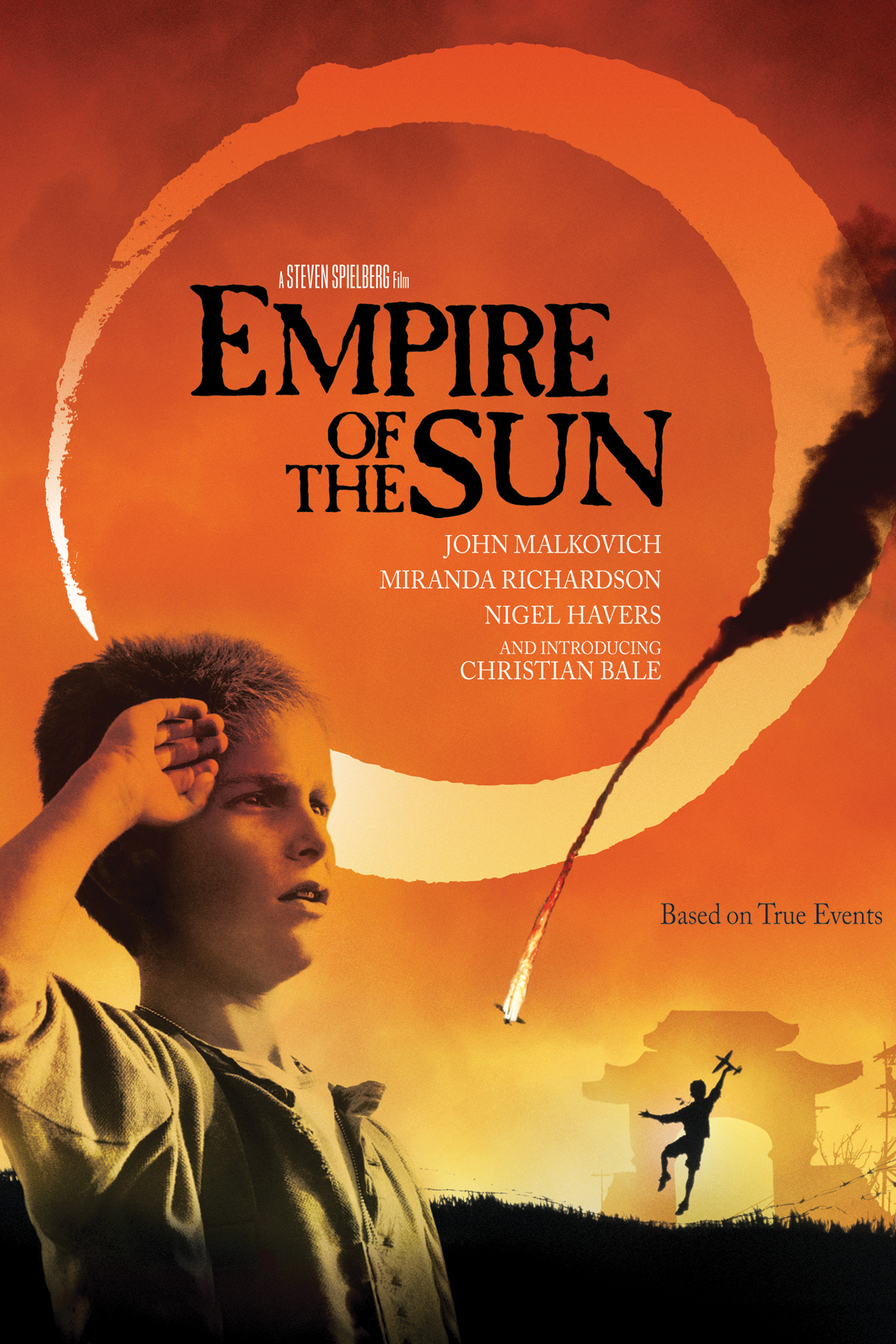
Ever since then I’ve toyed with the possibilities of using the POV of an unreliable but sympathetic story-teller. To begin with in my writing it was hard enough just to get the story told in a way that would keep the reader engaged, using the most straightforward narrative techniques – past tense, third person. I recall suggesting to my editor very early on that I might try something more ambitious and being gently warned off. Now with five ‘traditionally-told’ novels under my belt, this could be the time to stretch my skills. I’ve already given myself more time, delaying the next publication until the summer of 2018. Now I have to use that time to think about the choices I have and how best to tell a compelling story with a narrator who is likeable, even loveable, but whose view of events is limited by personality, maturity, or the complexity of the circumstances they face. It’s a challenge. I’m thinking hard about it.
by admin | Jun 30, 2016 | crime fiction, fact-based fiction, historical fiction, plotting, research, Uncategorized
Who remembers good old Sergeant Dixon, courteous, uncomplicated, with his files and his big black phone, solving crime through listening to people and figuring things out?
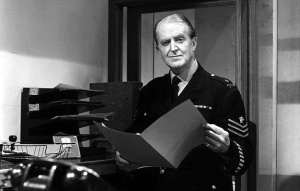
Those were the ‘good old days’, before DNA and computers and CSI forensics, when policing was simple and villains were wicked and the death penalty was still the ultimate deterrent and women knew their place.
I’m thinking about the setting of a new crime series. The choice of place is easy, it has to be Cumbria. But time? Personally I prefer the present day to previous decades when oppression of various kinds was more widespread, but as a crime writer I’m attracted by the relative simplicity of policing in the past. I want my main detective to be female, but that’s unrealistic in the days before the late eighties when it was finally accepted that female police officers might be given more to do than making the tea. But I also want to avoid some of the more clinical and technical aspects of contemporary policing which radically affect both the research and the plotting. There must be a window of opportunity between these two. It would be really interesting to focus on the early days of women in CID in Cumbria, in which case I need to talk to some of those early pioneers and get their stories. That would be a worthwhile exercise, no matter what plots ideas flowed from it.
At the same time as I’m considering all this I’m watching the Brexit decision and all its implications. Today I saw the figures on the close correlation between those in favour of the death penalty and those wishing to leave the EU. And there’s a piece in the Guardian about ‘false binaries’, another way of saying that the best choices are rarely just one solution or another, which is one reason why the EU referendum was so flawed in both process and result. Real life, personal, social and political, is always complicated and pragmatism is an under-rated virtue. President Obama has maintained a good balance of principle and pragmatism, in my view, but I’m not optimistic about political leadership in the UK right now. They say we get the political leadership we deserve. We must have done something really bad.
by admin | Apr 1, 2016 | A Good Liar, formula, plotting, structure, trilogy, Uncategorized
In the past few weeks I’ve been getting into the next book, the fifth one. When I began the first one A Good Liar seven years ago, I had no idea of the implications of being a planner or a ‘pantser’ (it’s a ghastly term, isn’t it, but aptly described the exercise of writing ‘by the seat of your pants’). It turned out I was a ‘pantser’ who really should have planned more. The first draft of A Good Liar was a terrible mess and took two years to sort out. Even now it feels more of a dog’s breakfast than I’m really happy about. It sells well as the first part of the trilogy, although I sometimes wish it didn’t!
After that difficult experience I decided I would plan in much greater detail, and do try to do so, but with this latest book I’m realising yet again that however careful the plan, it won’t hold together as soon as you start writing. Writing involves immersion in the characters and their world. It’s trite to say that they take over and do unexpected things, but sometimes that’s what happens, and the carefully programmed story veers off into something else. These deviations from the plan are not u-turns, more like scenic diversions, but when they come along they are welcomed, not disapproved of. So does that make me an inadequate planner? I don’t think so.
Writing is like life, complex, varied, and predictable only up to a point. That’s what makes both of them so enjoyable. I have an outline for each chapter which gives me a sense of direction, but every few chapters I amend it, adding a chapter or removing one, introducing a new idea or nuance in a conversation or a scene to drive the story more convincingly even though the direction may not radically change. Without any plan, I’m lost. With too rigid a plan, things get stale and formulaic. So I hover happily between the two stances, – an ‘organic shaper’. That phrase sounds like environmentally friendly underwear: there must be a better term for my mixed approach to novel writing. All suggestions welcome.
Recent Comments