by admin | Jul 4, 2017 | author platform, being off-line, crowd-funding, promotion, Publishing, self-publishing, Uncategorized

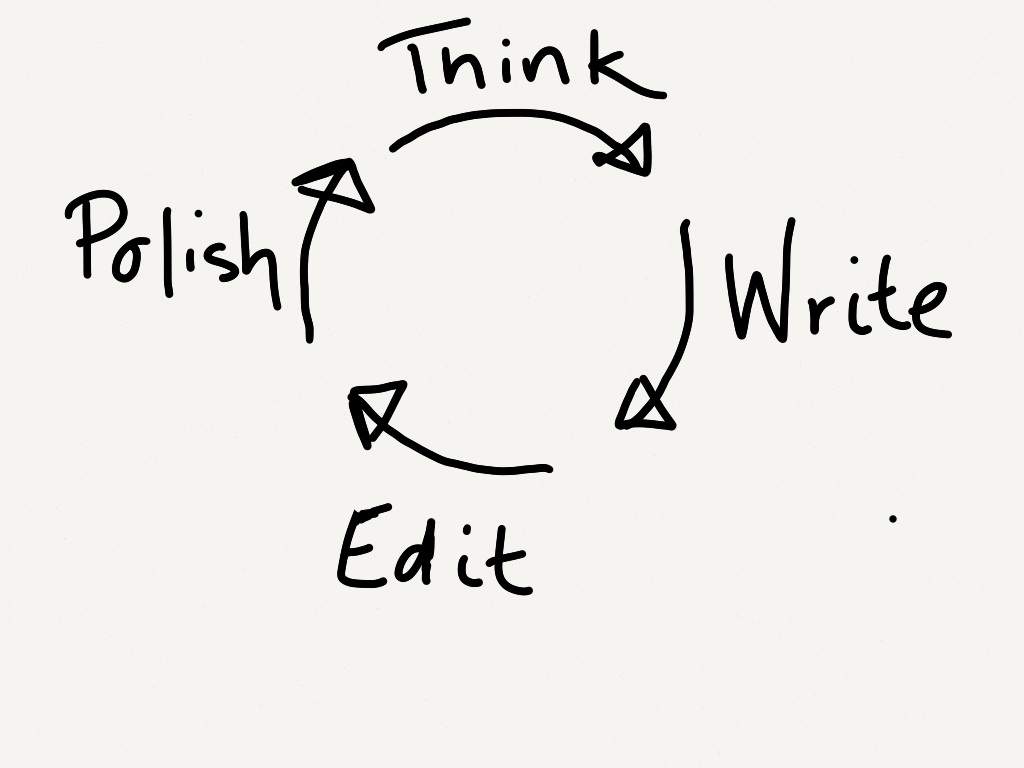
After my last novel ‘Fatal Reckoning’ came out in 2016, I promised myself a break. Five books published in five years, and I needed some time out. So six months later I’m looking back and reflecting on what the break has taught me, so far.
Firstly, it’s clear that I was right to step off the conveyor belt for a while. I needed time to get my head up and look around without worrying every day about the next target and the immediate tasks. Secondly, with less intensity to occupy my head, I began to dawdle more over social media and realised how much of it is trivial ‘noise’. Thirdly, and connected to the other two, I resented the pressure I felt under as a self-published author to spend more time marketing, promoting, blogging, tweeting, just to keep sales of my books ticking over. If I stopped for a while, no one else would help: it was down to me alone. Wouldn’t it be great, I thought, to have someone else to share that load, to care about my sales and push the books onto shelves on my behalf.
After the second search for an agent, and the same negative outcome as before, I’ve given up any expectation that my books are attractive to someone looking only for the next best seller. I’ve sold thousands, and they’re all still selling, but it’s a trickle, not a flood. London-based publishing seems distant and uninterested in what I’m doing out here in the sticks (or is it ‘Styx’?). So forget about an agent. If I need to, I could go straight for a small publisher, preferably not in London, who doesn’t rely on ‘agented submissions’ and is prepared to read my backlist to see what I can do. There aren’t many of those, but it only takes one to change my life.
The next stage in reflection on this unpromising scenario came recently while I was away in Canada and offline for a week or two in the far reaches of Vancouver Island and the Alaskan Inner Passage. What a relief it was not to have to check my KDP sales reports and the ‘pledges’ for the crowd-funding that was supposed to finance my next book – more of that next week. In my clearer head, the images of the new book were turning. I wasn’t writing anything, but I was thinking about the story for once, not the sales, and noticing how much more satisfying that felt.
Maybe I’ll change my mind, but right now the story is my priority. Yes I’ll need an editor at some point, and when the story is as good as I can make it I’ll have to think about how people will find and read it. But not now. For the next few months I want to be a writer, not a self-publicist.
by admin | Jun 17, 2017 | marketing, Uncategorized
First, to pick up on the last blog post, how has it been the past week to be back in a place where I used to do so much work? Actually, despite my fears, it’s been great. There are enough people here who still remember me and our time together, and it’s been lovely to see them, even if only for a few minutes. But if I’d left it much longer to return, it would have been too late, so the timing was about right and can’t be repeated.
Secondly, I’ve realised that what people remember, about me or anyone else in the public arena, is not the written word, but the spoken. The events of the past week have reinforced that too: we long to hear words at time of tragedy or uncertainty, not just read them. The human voice has immense emotional power and subtlety. Used well it can move, to tears, to anger, to inspiration. It can also reveal discomfort and insincerity, the tone and timing sometimes belying the actual content.
Can we learn to speak effectively, or is it a gift? For me, relying on my voice over decades in my education work, what seems to matter most is to clear my mind of everything that would come between the words in my head and their expression. Only then will the connection between me and my ‘listeners’ be as close as it needs to be. The words in my head come from careful thought, over an extended period of time, and maybe a few notes which may be discarded or used only as an occasional prompt. Never read, never look down for more than a second, look at people, connect with them, speak freely, let your mind elaborate and make connections.
Don’t rush, hold a silence if you want to, make the words count. Speaking freely and without notes has a cost: sometimes things don’t come out exactly as they should. A story or a joke may bubble up and can’t be contained, even though some might find it inappropriate. If that happens, apologise, but not too much.
It’s been interesting to discover that what people heard me say is what they remember most, and gratifying to realise that most of it is positive. I’m pleased that some remember my words as both thought-provoking and funny. In a few weeks I’m heading into the first draft of a new novel, which will mean a intense focus on the written word, not the spoken. What I will need also is the chance to speak about what I’m writing and learning, and to savour those precious opportunities.
by admin | Jun 12, 2017 | retirement, Uncategorized
I’m in Winnipeg, Manitoba, at present, visiting for a few days. Over the past two decades I’ve been here dozens of times, three times a year for several years, in the fall, the deep winter and the very early spring, working with teachers and school leaders in various parts of the city and around southern Manitoba.
This will probably be the last visit, and I was in two minds about it. Part of me wanted to see again people I’ve worked with closely, seen in their schools, shared evenings with and many glasses of wine. It’s a couple of years since I was last here, and as the plane touched down yesterday I hoped it wasn’t a bad idea to return.
Going back can be difficult. Times change, people move on, the work we thought at the time was so significant may by now have blurred and faded, or been forgotten all together. New people are in the schools, new ideas in the air. Would they remember me? Would some say, ‘Ruth Sutton? Who’s that? What did she do?’ All that may be true, but I’m still glad I came. The city I’d seen so often in monotones of white and grey, snow on the ground, nothing growing, deeply cold and crackling dry, is now clothed in full leafed trees, stretching out towards the plains beyond. Balconies and porches smell of flowers, children play by the river and in the parks, the air is soft.
There’s a party tonight, a retirement and farewell party for me – the only one I’ve ever had – and I’m touched by the thought of it even before it’s taken place. So maybe coming back wasn’t such a bad idea. I used to be a teacher and an educator. Now I’m a writer, with five books already out and another ‘Burning Secret’ taking shape in my head. But I’m still the same person, and happy to see however many of my old friends and colleagues will come and say hello.
By the way, to hear more about the writing, here’s a link to a conversation I had recently, about all the writing and publishing I’ve been doing since my ‘retirement’. It’s quite long, but I think you’ll enjoy it.
by admin | Jun 4, 2017 | Authenticity, community, crime fiction, Cumbria, fact-based fiction, historical fiction, Lake District, readers, Unbound, Uncategorized, West Cumbria
Does it help to talk about a catastrophe years later?
The 2001 foot and mouth outbreak in Cumbria 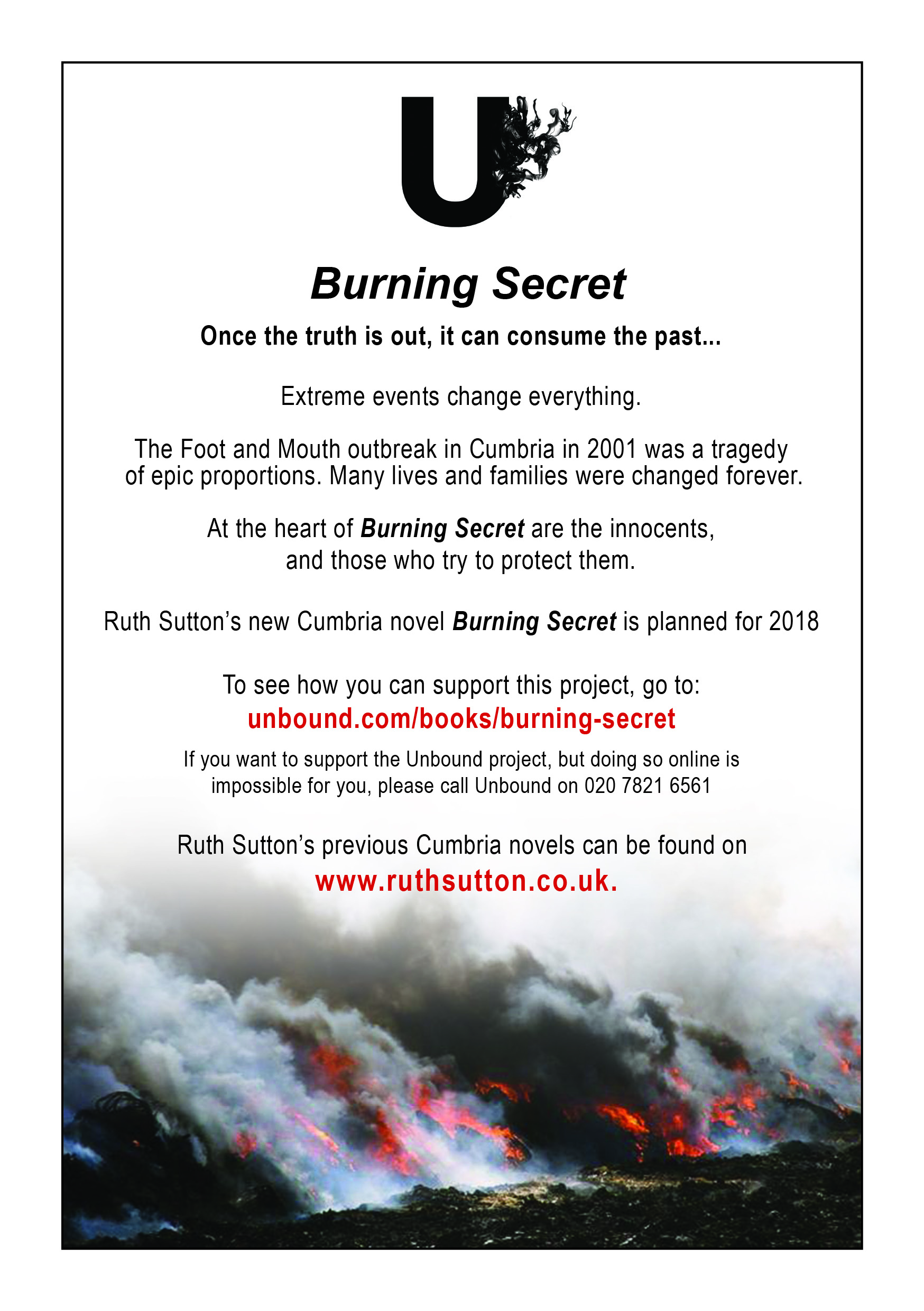 was undoubtedly a catastrophe, and mention of it can still stir a wide range of emotions – sadness, anger, and fear are commonplace among my neighbours and farmers across the county. We could deal with all that by saying nothing, or by remembering and sharing memories and giving ourselves permission to move on. It’s not mawkish or self-indulgent or false to talk about bad times. They happened, people and animals suffered, children were traumatised, businesses were lost, lives were changed.
My novel ‘Burning Secret’ is not based on Foot and Mouth, but the outbreak serves as a backdrop and a catalyst to the story. Here I am talking recently about that to Paul Teague, a Cumbria writer who recalls the events of 2001 as vividly as I do. Click the link to hear our conversation, part of a longer interview that will air later this month.
Here’s another link, to the ‘Unbound’ site where you’ll find all the details about ‘Burning Secret’ and how to pledge your support for its publication, for which I will be very grateful. Thanks.
by admin | May 28, 2017 | Authenticity, character, crime fiction, Cumbria, fact-based fiction, Fallout, plotting, readers, Unbound, Uncategorized, Windscale fire
Three years ago I was in the final stages of writing my third novel ‘Fallout‘, which had as its backdrop the nuclear reactor accident at Windscale in Cumbria in October 1957.
Deciding on that context for a story about finding love in later life was a gamble. For a start, the background might end up being much more interesting than the main story line. And dealing with a real event was always going to be tricky. It’s a touchy subject here in Cumbria even after sixty years: the final report on the incident used a phrase about ‘local errors of judgement’ that still rankles. (Actually the phrase was inserted into the report by the Macmillan government as a way of explaining the incident to the Americans without blaming the government’s own rushed reactor building programme.) And of course, because it was a ‘real’ incident within living memory it was essential for me – a local ‘offcomer’ – to get the facts right.
The inside story of the reactor fire was a complicated technical issue. How was I going to help the non-scientific reader to understand what was really going on, and why the key the decisions were made? The plan was to place a character on the inside of the Windscale whose job was to ask questions about the operation of the reactor. This character would act as the reader’s ‘friend’, gathering information in an intelligible way. in ‘Fallout’ this character was Lawrence Finer, seconded to Windscale from Harwell, the nuclear research facility near Oxford.
In my next book ‘Burning Secret’ I face the same issue – explaining farming to a non-farming readership, and then clarifying the complications of a catastrophic infection that decimated our farm animals in 2001. I need a character that acts as the ‘guide’ to a specialist subject for a non-specialist audience. Talking to a local dairy farmer last week it occurred to me how to handle this. 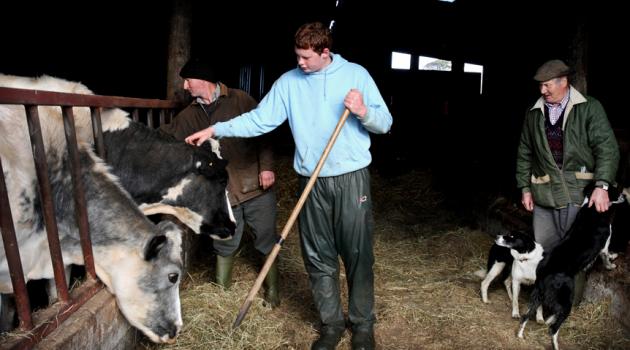 Large dairy farms often employ people to help with milking and the care of the herd, but during the outbreak restrictions were introduced that made it impossible for dairy farm workers to work normally, going home after work and coming back the next day. This particular farm asked a family friend from Liverpool to come and stay on the farm for the duration to help them, and the young man had no experience of farming life. He reacted to the everyday routines of the farm as you or I might, noticing things that the farmers took for granted, asking naive questions, making mistakes through lack of experience. In literary terms, this character’s function is somewhere between the Greek chorus and the gravediggers in Hamlet, and more emotionally detached than the farmers themselves as the outbreak spread ever closer. In a crime story, as this will be, the ‘stranger’ can also be a useful source of tension and mystery. Let’s see how it all turns out.
by admin | May 18, 2017 | crime fiction, Cumbria, fact-based fiction, historical fiction, Lake District, Publishing, readers, Uncategorized
Having done my deal with Unbound.com to publish my next book ‘Burning Secret‘ – a crime story set during the Cumbria foot and mouth disease crisis in 2001- there’s now a link unbound.com/books/burning-secret to the page where the project is explained, illustrated and presented in a video. Alongside all this information is a list of possible pledges that interested people can make, ranging from the simplest – the ebook of ‘Burning Secret’ – to the more elaborate, a customised tour of West Cumbria with the author (me) to find the key sites and settings of my novels. The project needs hundreds of these pledges, small and larger, to reach the target fund and get the book published.
 It’s called ‘crowd-funding’ – a term only vaguely familiar to me before I started down this road. I wonder how it really works: do people actually pay money up front for something that may not appear for months, and if so what motivates them to do so?
Apparently Unbound are interested in this too, and the research they’ve commissioned seems to be saying that people like to feel part of the project: their willingness to join this ‘crowd’ is about being a member of a shared enterprise, an insider, a patron not just a reader.
I have to admit that as a pre-internet adult, growing up before ‘social media’ were even dreamt of, all this has been something of a mystery to me. More importantly, I guess it must be something of a mystery to many of my readers too. Book buyers of my generation expect the book to be finished and ready to buy before we pay our money for it. We might buy online, but this ‘pre-order and be part of the supporters’ club‘ notion may feel odd.
If that’s true, if the baby-boomer generation doesn’t ‘get’ crowd-funding, then I need to think again about finding those pledges. ‘You have to nag people,’ is the advice I get about this, but nagging goes against the grain. I feel I have a relationship with many of the people I’m asking for pledges, and that this relationship could be jeopardised by pushing them to behave in a way that feels unfamiliar. ‘Do this for me, please’ sounds whiney and manipulative.
Clearly I have some thinking to do, or perhaps I’m just reacting too quickly and the crowd-funding process just takes longer than I expected. In the meantime the necessary link https://unbound.com/books/burning-secret is being widely shared, but the numbers of visits to the link far outweigh the number of actual pledges. Is this what happens?
Here’s the question, does the crowd ‘pond’ from which pledges are drawn need to be wide and shallow, or small and deep? Maybe I should focus on getting a smaller number of high-level ‘donations’ and sponsorship, rather than chasing individual pre-orders. Any suggestions?
Recent Comments