by admin | Dec 16, 2017 | costs, crowd-funding, hardback format, marketing, Pricing, Publishing, readers, reviews, selling, stories, Unbound, Uncategorized, West Cumbria
The papers this weekend are commenting on, and apparently bemoaning, the decline in sales of the ‘literary’ novel over the past two years. Some of the articles suggest that sales of this or that novel might increase when it’s published in paperback, usually a year or so after the hardback.
I read all this with some bemusement. Firstly, I’m struck yet again by the artificiality of genre distinctions that the publishing world seems fixated on. Who decides whether a novel is ‘literary’ or ‘genre’ fiction – I think that’s the main divide, before the ‘genre’ is further sub-divided? I’ve seen it defined that character drives ‘literary fiction’, and plot drives ‘genre fiction’, but surely these are points along a spectrum, not a dichotomy? It might be easy to identify novels at either end of the spectrum, but after that the distinction falters.
The ‘literary’ tag may have to be reconsidered, especially as it now seems to be connected to poor sales, which is increasingly the traditional publishers primary concern. We’ve all heard that a very high proportion of published books lose money, and that the business is rescued from financial disaster only by a few block-busters. Some of these massive sellers can be predicted – the ghastly Dan Brown, for example – whereas others come out of nowhere, as predictable as a win on the lottery. Does any other business trying to make a profit organise itself like this?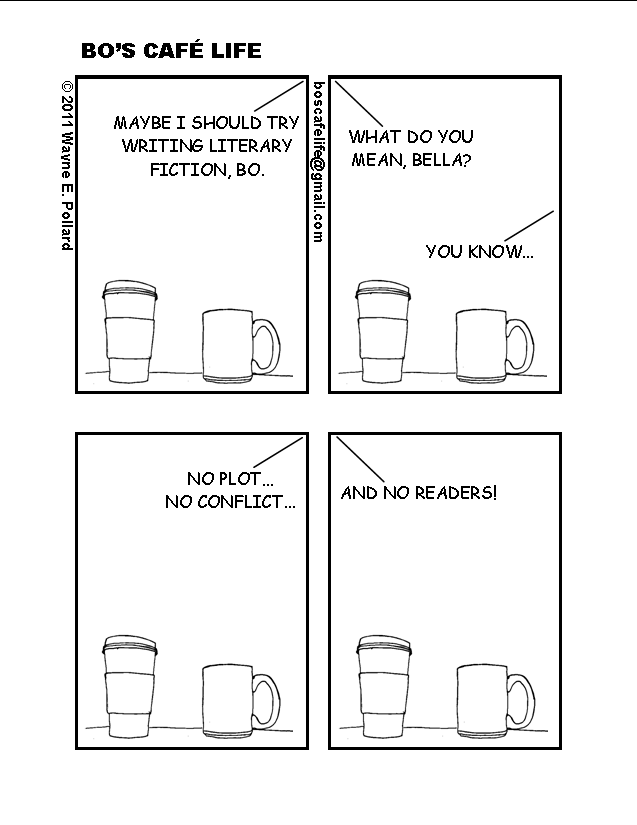
And if we’re talking about sacred cows in need to disposal, what is the point of publishing novels in hardback form first and making anyone who doesn’t want a heavy expensive tome wait for a year to get the version they actually want to buy? This is a mystery, and clearly, it’s not working. This time next year, and the year after, will publishers still be fretting about poor sales of the hardback versions and still planning to keep on churning them out? I admit to be baffled about it all.
Many readers like a ‘real’ book – I do myself: the paperback format fulfils this need. Ebooks are also useful in some circumstances. So who wants to read a hardback, besides a tiny number of picky traditionalists who profess to have ‘standards’ and probably insist on esoteric and expensive ways of eating and drinking as well as reading?
My recent and unsuccessful dalliance with ‘Unbound’ crowd-funded publishing came across this issue all the time. Many of my readers, keen to see the new book as soon as it comes out,were puzzled that they would have to pay twice as much as normal for a ‘special edition’ hardback when they would actually prefer a paperback, lighter to carry around and easier hold with one hand in bed, for instance. ‘That’s the way traditional publishing works’ I would lamely explain, and I had no answer to the inevitable next question – ‘Why?’
by admin | Jun 17, 2017 | marketing, Uncategorized
First, to pick up on the last blog post, how has it been the past week to be back in a place where I used to do so much work? Actually, despite my fears, it’s been great. There are enough people here who still remember me and our time together, and it’s been lovely to see them, even if only for a few minutes. But if I’d left it much longer to return, it would have been too late, so the timing was about right and can’t be repeated.
Secondly, I’ve realised that what people remember, about me or anyone else in the public arena, is not the written word, but the spoken. The events of the past week have reinforced that too: we long to hear words at time of tragedy or uncertainty, not just read them. The human voice has immense emotional power and subtlety. Used well it can move, to tears, to anger, to inspiration. It can also reveal discomfort and insincerity, the tone and timing sometimes belying the actual content.
Can we learn to speak effectively, or is it a gift? For me, relying on my voice over decades in my education work, what seems to matter most is to clear my mind of everything that would come between the words in my head and their expression. Only then will the connection between me and my ‘listeners’ be as close as it needs to be. The words in my head come from careful thought, over an extended period of time, and maybe a few notes which may be discarded or used only as an occasional prompt. Never read, never look down for more than a second, look at people, connect with them, speak freely, let your mind elaborate and make connections.
Don’t rush, hold a silence if you want to, make the words count. Speaking freely and without notes has a cost: sometimes things don’t come out exactly as they should. A story or a joke may bubble up and can’t be contained, even though some might find it inappropriate. If that happens, apologise, but not too much.
It’s been interesting to discover that what people heard me say is what they remember most, and gratifying to realise that most of it is positive. I’m pleased that some remember my words as both thought-provoking and funny. In a few weeks I’m heading into the first draft of a new novel, which will mean a intense focus on the written word, not the spoken. What I will need also is the chance to speak about what I’m writing and learning, and to savour those precious opportunities.
by admin | Mar 4, 2017 | crime fiction, marketing, Publishing, reviews, royalties, self-publishing, Uncategorized

I’m sure I’ve blogged about finding an agent before: I certainly think about it ‘ad nauseam’, but until this past week I’ve done nothing about it since about 2012. Aversion, avoidance – for whatever reason I’ve put it off, until a necessary change in my route to publication has forced me to take a next step.
The change is necessitated by the retirement of the publishing partners, editor and book designer, with whom I’ve worked since I decided to self-publish several years ago. If I want to continue writing, then I need to do something to fill that gap. There are three possible options:
- find an editor and a book designer, preferably closer than London, establish a relationship and work with them in the same way as before. I take their advice, and pay them for it, and keep overall control of the process and of the income generated by the books. The costs are upfront and considerable, but I’m used to that, and it works, so long as there’s a reasonable rate of sales;
- approach a publisher direct. It would have to be one of the few who will accept ‘unagented’ projects, and ideally they would take on my backlist too, reprints, storage, orders, distribution, and so on, leaving me more time to focus on the writing. You can find independent publishers like this, but keep an eye on the small print, and on the royalties – how much and how often. Ebook only publishers are more generous, as they should be given lower costs, but if you want to produce a paperback in larger numbers, not just Print on Demand, the number of potential publishers goes down. Some are focussed only on crime fiction, which might not suit my future writing plans;
- Find an agent. This is the default choice these days if you want to get ‘traditionally’ published. The majority of publishers will deal only with agents, who act as a ‘first filter’ and protect the publisher from being overwhelmed with stuff they don’t want and can’t sell. Fair enough, but it still feels like you’re dealing with the doctor’s receptionist, who may or may not have the skills to recognise symptons and do proper ‘triage’.
For the time being, I’m keeping my options open by pursuing all three of these routes simultaneously. Down comes the ‘Writers’ and Artists’ Yearbook’ from the shelf and I start combing through, doing everything I’ve advised my aspiring writers to do in my workshops and have been so reluctant to do myself.
The list I gathered of possible agents was quite long, and of course almost all of them were in London, which always pisses me off. (I had to explain to an agent in London once that ‘Cumbria’ was actually an English county, not somewhere in Italy where Islington goes on holiday.) Because I’m interested in getting my backlist re-published rather than touting a half-finished draft, it’s a different ‘submission’ process, more factual and less aspirational, but I still feel like the ‘supplicant’ rather than a prospective partner, and I still don’t like it. I’m a mature woman with a successful career, five popular novels and an enthusiastic (local) following. I fear I’m not the kind of client many agents would want to work with – too stroppy, too old, and too far from the literary action, and part of me knows that. But here I am, deserving of attention, but I fear I will get get very little. One good response in the few days since my first exploratory emails went out, one mildly curious, and three rejections so far, worded almost exactly the same way as the rejections I received last time around.
Early days yet. I understand applications to agents take a long time to process: they have to be weighed against each other, as only a small number of new clients can be handled at once. Waiting is always a drag: patience is not one of my strengths. But I am resigned to the delay. Maybe my current circumstances are different enough from five years ago to make the outcome different too.
One independent publisher has reacted fast and positively, but they want only crime books and I have yet to see what their contractual terms might be. If the potential sales are high enough then acceptance of a low royalty might work out. But what if they’re not? Publishers talk about the quality of their marketing, but how can you substantiate that? Amazon ebooks sales figures can be manipulated, and I want my books on shelves, not just in the cloud.
Reading this, I can see why I’m an unattractive proposition. I ask questions and have clear expectations, and five books self-published in five years gives me a bit of clout. Maybe I have the answer to my question, but I keep on asking it. Apart from the first step of getting published, I want some of the extras that could come through ‘traditional’ publishing – access to reviews, to the major book-chain shelves, to radio or TV, or audio book production expertise. I write good stories that people enjoy, and I want more people to be able to find them. So I wait for the responses to my search for professional help, but I’m not holding my breath.
by admin | Mar 8, 2016 | costs, marketing, Pricing, Publishing, readers, research, self-publishing, self-publishing workshops, Uncategorized
There was some very interesting discussion of this question at a workshop on self-publishing I led recently. Sixteen or so people round the table all had different goals, starting points, skills, strategies and experiences. Some did everything themselves, and used time and perseverance rather than money for the project. Others – me included -needed professional help with all or part of the process, and were able and prepared to pay for it. Others spent all their money on producing the book, but then found themselves with nothing left over to use for promotion, without which their beautiful books were still in their boxes cluttering up the house. Some just about covered their costs; some were nowhere near doing so; one or two had lost more than they could afford. I’d expected at least some stories of financial success, but heard none. Maybe the quiet ones at the table were doing better than they wanted to share.
There’s no question that almost all self-publishing projects will cost you something, either money or time, and probably both. There’s also no doubt that producing an ebook is much easier and cheaper than any other format, and you can sell heaps if you put a ludicrously low price on it, but the effect on sales is ephemeral. Publishing a paperback is a more difficult, but carries with it many more opportunities for promotion and direct sales.
I’m often surprised that many aspiring self-publishers don’t appear to have thought the process through, although that’s understandable given its complexity. If you truly understood the whole process it might be so daunting that you would never even start. One of the more unfortunate of the workshop participants regretted that she hadn’t attended a workshop like this two years before, and we realised why when she recounted – very bravely I thought – the series of mistakes she had made and the loss she’d incurred.
I may have had some advantage in this ‘business project’ game having been self-employed for many years, and having some idea of how to think ahead financially. Before I took the decision to self-publish I knew enough to calculate how many books I would need to sell, at what price, to retrieve the money I had shelled out at the start on the costs of ensuring a high quality paperback. The costs were for critique, editing, design and printing, and came to around £5000 for a 1500 print run. I also knew that bulk printing is cheaper than ‘print on demand’ (POD), and that unit costs are a function of quantity. How did I know that? I did enough initial research to think through some of the details and their implications. I was then able to work out how long it might take to recoup the money, and an approximate ‘rate of sale’. I reckoned it might take two years to recoup the outlay on the 1500 print run, and that turned out to be about right, although the necessary promotion strategy developed very slowly. I should have thought longer and harder about ‘How will people know about your book and why should they want to buy it?’
Once printed, and before sale, the books have to be stored somewhere. I ended up paying for dry secure storage, although I could at a pinch have saved that money by persuading friends and family to store a few boxes each for me. When the first print run was all sold, at a profit of about £4 per book, and I could reprint, then the the unit production cost would go down by about 50% while the price would remain the same, which makes for more profit. I priced the ebooks so that they too would generate about £3-4 each, as the up front costs are minimal. I have used Kindle Direct Publishing, which seemed very complicated to start with and required patience to reach any level of confidence. It’s paying off though: ebooks sales are steadily increasing, and £80-£100 per month is quite a healthy return, in my terms at least. The more books you have to sell, the better, but the outlay of time and investment to produce one book each year, as I currently do, is very demanding for someone with a job or a family, or both.
None of this is rocket science. But listening to people’s experiences the other day I realised what a struggle some self-publishers have. One person had sent off their precious manuscript to an outfit who promised to publish and make her rich. She has not seen any money, as the company she’d trusted went bankrupt, having sold her work on to another bunch of charlatans who also went down. What a mess. Now she has no money left to find out what she may be entitled to, and is lost the commercial maze that she tried unsuccessfully to avoid in the first place.
There’s lots more to say about the financial aspects of self-publishing, and I’ll hold some of it for future posts. I hope my recent two-hour workshop was helpful, although it could have been longer, and pressure of time didn’t enable me to get detailed feedback. There are so many writers out there considering self-publishing, and so many unscrupulous people keen to exploit that interest, that I find myself wanting to help with the basic practical details. Will running workshops on self-publishing generate greater sales of my books? I doubt it, but it feels like something that needs doing.
by admin | Nov 6, 2015 | cover, Cruel Tide, marketing, selling
I veer between positive and fearful anticipation from hour to hour in this final run-up to the publication of ‘Cruel Tide’. Very occasionally I imagine what it would be like for it to be a runaway success, with sales off the scale and a rushed reprint. But most of the time I know I’m probably not doing enough to overcome the self-published author’s biggest challenge – getting people to read what you’ve written and created when there are so many other books out there competing for attention.
I’m actually going to get a review for this one in Lancashire Life, the offer of which was unexpected, but what if they don’t like it? Perhaps the value of getting any kind of review is greater than the downside of a bad one. I’ve put out so many feelers, and so few of these get any kind of response that it can be very disheartening. I wonder if those who don’t respond understand the impact they have. Maybe they do, and just shrug. I wish I understood that world better and could handle it with more equilibrium.
This general anxiety wasn’t helped this afternoon when I took an advance copy of ‘Cruel Tide’ to show to one of my strongest local supporters in her shop where she’s sold heaps of my books over the past few years. ‘Do you want to see it?’ I asked, preparing to pull my advanced copy of the book out of the envelope for the big reveal. She grimaced. ‘I’ve seen the poster, but I can’t look at it because I can’t bear hands.’ For a moment my heart sank. ‘I’ll sell it,’ she added, ‘and I’m sure the cover won’t bother anyone else, but I won’t be able to have it on the counter.’ What??? That’s a strong reaction: I know the cover image is striking, but it was meant to spark curiosity not revulsion. Surely someone would have advised against using the cover if it was that bad?

Front and back covers, with the offending hand.
Anyway, it’s too late now. The books are printed and the full shipment will arrive on Monday. I’m taking a copy through to Waterstones in Barrow on Tuesday and will see what a professional bookseller thinks. I hope she doesn’t have a hand phobia. There must be a special word for that condition, and I hope that it’s extremely rare.
Beyond that the dates and events for presenting the book multiply, in libraries and bookshops all around the area. I’m grateful for all of them, and will enjoy them all too, but I wish I could break out into the wide sales uplands of Manchester or London. What would that take? Maybe I should just rock up to the huge Waterstones on Manchester’s Deansgate, book in hand, and tell them how lucky they are. That’s what I need – more chutzpah.
by admin | Oct 7, 2015 | marketing, self-publishing, selling
We know how fashion works in clothes. Someone – usually one of the big fashion houses – decides that the coming season’s colour will be ‘ecru’ or orange, or whatever. Or that women’s hemlines will be high or low, trousers wide or narrow, or whatever. The new ‘look’ is pored over by the fashion writers and ready-to-wear clothes manufacturers and the word goes down the supply chain: after a few weeks the shops are full of the latest look, and the sale rails full of last year’s stuff.
The more I listen to agents and publishers talk about the book business, the more parallels I can see. I used to think that what mattered was ‘quality’ and all would be clear when I understood what ‘quality’ really meant. Old and cynical as I am, I wonder if the real ‘quality’ that creates and perpetuates the fads and fashions of the book business is mostly about money. There are two levels, it seems to me. First there is the definition of quality that engenders a Booker Prize shortlist, for example, which in turn guarantees relatively healthy sales. And then there are the outsiders, who for whatever ‘unliterary’ reasons are picked as potential best sellers and hyped vigorously enough to make them so. Different definitions of ‘quality’ apply to these two categories. Let’s face it, some of the ‘bestsellers’ are pretty bad by any literary standard, but if they boost the finances of a hard-pressed publishing house, who really cares? The publisher of the ghastly Dan Brown, for example, could brag to his/her peers about sales figures however embarrassed he/she should be about the absence of any literary merit. It’s like admiring Donald Trump just because thousands of people turn up to hear him ‘speak’.
Once a ‘best-seller’, however poor, has established itself the rush is on to replicate it as quickly as possible. If it’s an 800 page doorstop that’s what we’ll see more of; if it’s ‘chick-porn’ there’ll be more, God help us. If the hero is a dysfunctional depressive alcoholic similar miserable protagonists will rise up everywhere: the next fad has been established and the bandwagon rolls on again down a different track.
There will be exceptions, of course, but not too many as the financial risk is now too great. No wonder finding an agent feels like such a lottery, and the criteria remain notoriously vague. The book business seems to demand that the agent finds a few offerings from the thousands on offer that resonate with current fads, has a good look at the ‘marketability’ of the writer as well as their work, and brokers a deal with the publisher in terms of potential sales. The publisher then invests as much as possible in promotion, persuades the other authors in their ‘stable’ to write the come-on reviews, and prays they’ve backed a winner.
Tell me I’m wrong about this. Persuade me that the book business is not dominated by fads and fashion. Please. In the meantime, writers can avoid the whole sorry business and have the guts to publish their own work, which can hardly be worse than some of the stuff that makes it through the commercial publishing process.

Recent Comments