by admin | Jun 30, 2016 | crime fiction, fact-based fiction, historical fiction, plotting, research, Uncategorized
Who remembers good old Sergeant Dixon, courteous, uncomplicated, with his files and his big black phone, solving crime through listening to people and figuring things out?
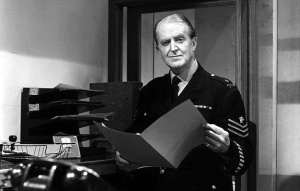
Those were the ‘good old days’, before DNA and computers and CSI forensics, when policing was simple and villains were wicked and the death penalty was still the ultimate deterrent and women knew their place.
I’m thinking about the setting of a new crime series. The choice of place is easy, it has to be Cumbria. But time? Personally I prefer the present day to previous decades when oppression of various kinds was more widespread, but as a crime writer I’m attracted by the relative simplicity of policing in the past. I want my main detective to be female, but that’s unrealistic in the days before the late eighties when it was finally accepted that female police officers might be given more to do than making the tea. But I also want to avoid some of the more clinical and technical aspects of contemporary policing which radically affect both the research and the plotting. There must be a window of opportunity between these two. It would be really interesting to focus on the early days of women in CID in Cumbria, in which case I need to talk to some of those early pioneers and get their stories. That would be a worthwhile exercise, no matter what plots ideas flowed from it.
At the same time as I’m considering all this I’m watching the Brexit decision and all its implications. Today I saw the figures on the close correlation between those in favour of the death penalty and those wishing to leave the EU. And there’s a piece in the Guardian about ‘false binaries’, another way of saying that the best choices are rarely just one solution or another, which is one reason why the EU referendum was so flawed in both process and result. Real life, personal, social and political, is always complicated and pragmatism is an under-rated virtue. President Obama has maintained a good balance of principle and pragmatism, in my view, but I’m not optimistic about political leadership in the UK right now. They say we get the political leadership we deserve. We must have done something really bad.
by admin | Jun 19, 2016 | cover, crime fiction, Cruel Tide, Morecambe Bay, Publishing, readers, self-publishing, title, Uncategorized
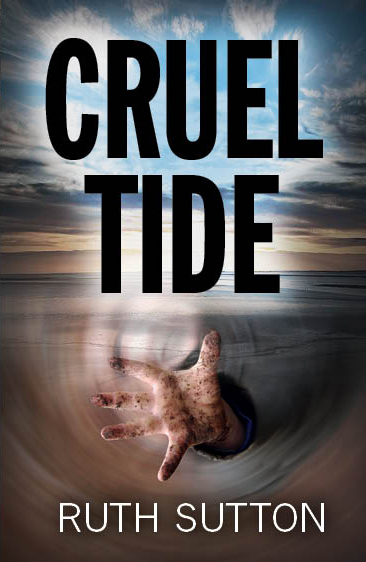
I always struggle with titles, and then with the cover image that should illuminate the title and engage the reader: as an independent author/publisher, these decisions are all mine. The image on the cover of ‘Cruel Tide’ developed before I even started the book. It came to me when I did the walk across Morecambe Bay and was struck by the menace of quicksand very close to the northern shore. The snaking, threatening tide that covers these huge mudflats twice every day connected with another cruel tide – of abuse, cover-up and corruption that have damaged so many children’s lives. The decision about both title and cover came to me quite quickly.
Not so with the sequel to ‘Cruel TideI’ that I’m currently completing. My editor Charlotte and I have brainstormed possible titles, but nothing really stood out. Then in the final stages of the first draft, in one of those times when the story seems to be writing itself, the words ‘Seize the Day’ became suddenly significant and I could see them on the cover, with a dark image of one of the settings – no details for fear of plot-spoiling.
The first thing you do is check how many other books already exist with that title. Of course there are several, but then you have to take them one at a time and decide whether the replication is significant. The most recent was non-fiction, an autobiography, so that was OK. Another appeared to be a religious tract, too different to bother about. There was one fiction book, but a very different genre.
I think I have my title. Next I’ll think hard about the image, and start working with the cover designer Kevin Ancient who did such a wonderful job with ‘Cruel Tide’. Crime fiction covers seem to be have some common characteristics, to ensure that readers understand what may lie between the covers. Decisions to make. Watch this space.
by admin | Jan 14, 2016 | crime fiction, Cruel Tide, genre, Uncategorized
I’m off to London this weekend so I’ll do this post now, and hope it doesn’t get lost in the Twitter and FB clutter that seems to fill my timeline and probably yours too.
I’m surprised to say that having waited years for a decent review of any of my books, I’m both looking forward to and dreading the review that’s been promised in February’s issue of Lancashire Life, which will probably be out in a couple of weeks. First, I wonder if it will ever appear. Editing a monthly magazine must be quite a job, and whatever’s been written might just hit the cutting room floor, as they say in the film business. But if it does actually appear, what will it say, and how will I feel?
One of the hardest things about self-publishing is the absence of professional feedback in the form of reviews. The national newspapers take their books for review from the traditional publishers, apparently, to avoid being swamped by unreviewable rubbish. Understandable, assuming that much self-published fiction is indeed rubbish, and therein lies the dilemma for those of us who have chosen to take that route direct to our readers. Apart from Amazon reviews and star ratings, which are mostly welcome but don’t represent considered professional feedback, authors like me have no way of helping readers decide what’s worth buying and reading. How do you pick from the plethora of stuff out there, except on the questionable criterion of price? You could use the star ratings as a guide, but they’re pretty questionable too.
I managed to get two very kind writers to give me a ‘quote’ about ‘Cruel Tide’ for promotion purposes, but I couldn’t ask them to undertake a full-scale review. Apart from that, and some mentions in the local press, nothing about this book or any of the others. I’ve asked for reviews, of course, but have been told repeatedly that they don’t have the time to read full-length fiction, or people to do it, or space to print them. One national organisation I’m actually a member of, which has a book page in its monthly magazine, claimed that they couldn’t review my books without upsetting other members who are writers. Really?
That leaves me with no experience of getting public written feedback on my novels from a professional who reads and writes critically about books as part of their daily work. The Lancashire Life reviewer doesn’t live in Cumbria, so the ‘local’ flavour probably won’t be of interest. I assume that the reviewer will come at ‘Cruel Tide’ cold, without reading my preceding trilogy where some of the characters have been heralded, and she has been told that this is crime fiction, and will therefore have certain genre expectations, which may or may not be satisfied. Any of these factors could have a bearing on her reaction.
I can cope with specific criticism: I generate plenty of that myself about anything I’ve written. What I fear is overall dismissal, scorn, disinterest, or the suggestion that I’m wasting my time and should find something else to do. You don’t see reviews like that very often, but they do happen, and the author must be crushed, unless they’re far more resilient than I am. I don’t expect to be told that the book is badly written, but I could be told that the structure is poor, the characters unbelievable or the ending is a let down. I’m in the early stages of the next book, and specific feedback could be useful, if I can bring myself to accept and act upon it. Or I could have faith in myself and stick to my guns. I can’t anticipate how I’ll react until it happens, and I can’t do anything about it either, so I’ll just have to wait and see. How do other inexperienced novelists cope with reviews? Are they as nervous about them as I am, and does this anxiety wear off with more experience and confidence?
by admin | Dec 13, 2015 | character, crime fiction, Cruel Tide, readers, stories, Uncategorized
It’s been a busy week for meeting readers, and I’m always interested to discover what they want from me and from the books. Here are a few of the questions that crop up most frequently:
Q. Do you base your characters on people that you know? Do you people-watch and use it in your books? (The sub-text here is ‘Are you watching me now?’)
I never really know how to respond to this. The details of characters for the story don’t just appear from nowhere: from a few decades of people- watching there are hundreds of people in my head, but memory retains only bits and pieces – the metaphors someone uses, or the voice or style of clothes, or something they did. I remember, for example, a boy I was at school with who had wide shoulders and a short body, and how his jackets always looked too long. He and I were walking near my house one afternoon and were overtaken by a sudden violent thunderstorm. We’d never shown much interest in each other before, but in the middle of this violent weather we kissed passionately, just once, galvanised by the energy around us. That was a moment of intensity that has lingered in my memory: I haven’t used it in a story yet, but I will.
There are countless fragments like that, some visual, some emotional, that surface suddenly while I’m writing. It’s not really an intentional process. It just happens, and I think my characters and the stories are the richer for them. When I’m writing I do so for hours at a time, reaching a level of concentration which is sometimes called called ‘Flow’, (defined by Wikipedia as “the mental state of operation in which a person performing an activity is fully immersed in a feeling of energized focus, full involvement, and enjoyment in the process of the activity. In essence, flow is characterized by complete absorption in what one does.” That’s it. In that state, fragments of memory appear and find their way on to the page: the outline of a character might have been created earlier, but many of the details emerge during the writing.
Q. Do you always know how your story will end?
I’ve certainly improved my planning since the random chaos of the first attempt at writing a novel, but I can’t say that I know exactly how my story will end when I start it. It’s trite to claim that the characters take over, but to some extent it’s true. If the story is character-driven, that’s bound to happen. Crime fiction, with its requirement for structure and ‘clues’ sprinkled around makes that more difficult, as I found when writing ‘Cruel Tide’. I knew quite early on how the penultimate climatic scene would work, but the final scene of reaction and resolution was written several times before I found a way of closing the story that was true to both the characters and the authenticity of the events and the setting.
Q. When is the next book coming out?
It’s a welcome question in as much it indicates an willingness to read on, but my hear sinks whenever I hear it. ‘This time next year,’ I’ve been replying as cheerfully as I can muster, thinking as I do so of the months of work that are entailed, the planning, the problems, the research, and then the days of purdah, sitting at the laptop for hours at a time, reading, re-reading, worrying, dreaming, talking to my editor, worrying some more. Sometimes I wonder if I really want to go through it all again at such speed, but my commercial sense tells me that a year is about as long as my readers are prepared to wait for the next one before they lose interest.
by admin | Nov 23, 2015 | crime fiction, formula, plotting, self-publishing, structure, writing
Two things have prompted this question. The first was a response from a well-known crime writer I asked to read ‘Cruel Tide’ a few weeks ago. I was pleased that he said some positive things about it, but he ended his note with words to the effect that I needed a specialist editor. I thought about what that implied, but then put it out of my mind in the flurry of activity leading up to publication.
The second nudge to my thinking about this question has arrived today. This evening I do my first public outing of the new book,at the library in Ulverston, and I’ve thinking about what to say. Why did I turn to crime fiction after the character-driven trilogy that preceded it? What does crime fiction entail, and what have I learned from this experience? The remark about a specialist editor came back to mind and now I’m thinking harder about it.
The role and function of an editor is always tricky for someone like me who’s written a lot over the years and always alone. Many education writers do their work collaboratively, sharing ideas, reading each other’s stuff, getting feedback as they go. I never did. I wrote, read it over a few times, made some adjustments and that was it. Only with the final education book, about school progression for the Canadian market, did I write with others and then have an editor employed by the publishers. I didn’t expect the editor to change much, but she did and all of it for the better, not about the content but in terms of the clarity and economy of expression. I analysed the changes she suggested and learned a great deal about how to write more clearly.
The role of editor, it seems to me, is three-fold: first there is ‘content’ editing. For a novel, this is the story edit, that looks at structure and character and chronology, how the whole thing flows and fits together. Then there’s the way that meaning is communicated, the structure of a paragraph or a sentence. Finally there’s the proof read, checking spelling, punctuation, speech marks and so on. All three functions have been undertaken in my books so far by the same person, a friend who has worked in publishing for decades, but almost exclusively with non-fiction. As a reader and book group member she’s analysed my stories in their various iterations, suggested changes, and pointed out anomalies or others mistakes to be ironed out in the final drafts. She would not describe herself as an expert fiction editor and she has – as far as I know – no links with current fiction publishers.
I’m hesitating to go back to my crime writer colleague and asks him what a specialist editor could do that my current editor can’t. He’s a busy bloke, and I’ve probably imposed on his time enough already. I did follow up with a phone call to a specialist editor he knows, and during the conversation what became clear was not so much the editing function as the networking that lay behind it. The person I was speaking to was well-connected, to other crime writers, to agents and publishing houses. She lived at the other end of the country and was already very busy, so I took it no further, but I was left still wondering what this editor could do for me.
I was back yet again to the issue of genre and the specialised protocols that seem to apply to different genres, and even sub-genres. Obviously a crime writing specialist editor would be more familiar with these protocols than me. She/he would know the insider tricks of the trade that would distinguish my book, and make it more interesting to an agent who would probably also specialise in crime fiction. Editor and agent would have a shared language and recognise my attempts to join that club.
The idea of this shared understanding and its unwritten rules is not attractive for me. It plays to my innate and sometimes unhelpful aversion to following rules of any kind that I don’t understand or see the point of. I still ask myself, what do readers really want? Do they get a buzz from seeing how the crime fiction rules are followed in different contexts and with different protagonists. Do they smile in appreciation as they recognise the genre features that they expect as soon as something is described as ‘crime fiction’? Do they only ever look on the crime and mystery shelves of the library or the bookshop?

‘Cruel Tide’ is not classic crime fiction, as far as I can judge. It doesn’t have the closed group of potential suspects, or a single dysfunctional detective with a drink problem, or even a genius problem solver. The story is propelled by the characters as much as by ‘events’. There is no final reveal that ties up loose ends and looks ahead to a certain future. The goodies do not necessarily triumph. What would a specialist editor have made of all this, I wonder? If the advice was to follow the rules of the genre more carefully, how would I react? It’s my story after all. If the editor told me that an agent or a potential publisher would expect me to do things differently, I’m not sure I would have warmed to that advice. I’m too old and too awkward, and I’ve chosen to self-publish with all its attendant risks rather than chase any commercial publishers’ approval. If it doesn’t work, so be it.
But still, the notion of a specialist story editor lurks in my head. If I could learn from that interaction, it’s probably something I should do, for myself, but it would have to be someone I respect, and I’d offer no guarantees about my response. Maybe I’ll wait and see the reaction to my first crime novel and go from there. I need feedback, people: specific, considered, detailed feedback and suggestions about alternatives before I embark on the next book in what will probably be a series, although I’m not sure how many more books I want to write. It’s hard work!
by admin | Nov 17, 2015 | crime fiction, genre, readers, trilogy
I read something recently about how many readers will only buy books from an author they already know, and how much harder that makes it for people like myself who are just starting off. There are so many books available, and some of them are so poor, that you do need some assurance that your hard-earned money and space on your shelf aren’t both going to be wasted. I do it too. It’s understandable.
I’m just seeing a faint glimmer of hope, however, after years of plugging away, speaking to groups of readers in out of the way places, sometimes no more than half a dozen at a time, and getting occasional mention of my books into the local media. The new book seems to be selling more quickly than any of the previous ones. There could be all sorts of reasons for this. It’s the first attempt at crime fiction, and we know how popular that genre is. Even my daughter, who was vaguely interested in my previous books, greeted the new one with more enthusiasm and said she might actually read it! And we’re learning about how to promote the book ahead of time, on FB, on Twitter, in the local press, and by contacting people who’ve bought books from us before. Incidentally, we had a curt email from Amazon recently, saying that on no account could we ever contact anyone who’d used their website to buy from us. Fortunately the number of hard copy Amazon sales is low. I wish we could do without using Amazon altogether, but the Kindle sales are too good to miss and that still seems to be the most popular route to the ebook market.
I wonder if the main reason for more of the books being sold so far is that more people actually recognise my name on the cover. It’s possible: not a radical change but a gradual seepage into the local consciousness and the word-of-mouth network. And the cover itself may be helping too. It’s certainly striking.
I called one of the local papers last week just to tell them that I had a new book out. They’d run stories about the books before and I thought they might do so again. The initial response was pretty bland, but an hour or two later a young woman from the paper called me back, introduced herself and asked for an interview. We had a good long chat: I quickly realised how important it was to clarify that the content of the book was not drawn from local events, but from the enquiry into child abuse at a boys’ home in Belfast forty years ago. It had been through reading the report of the Kincora Boys’ Home enquiry that I’d begun to understand how institutional abuse could begin, develop and continue even though key people were in a position to know – and to stop – what was happening. I didn’t realise how much of that knowledge stayed with me until I began to write. Some of it, and what I have learned since, was horrifying and I had to tone it down. I wanted my readers to be clear about how the children and young people had suffered, but too graphic an account would be like abusing them all over again.
The other thing we talked about was how young women just like the young reporter I was talking to, and the WPC in the book, had struggled with their treatment in the workplace in the 1960s. There may be many things wrong with our lives in 2015, but as a woman I’m glad I’ve seen things change during my lifetime.
I’ve yet to hear how readers of the new book respond to its fairly dark message, which provides both the context and part of the plot. I’m afraid some of the male characters don’t come out well, but so be it. Two of the young female characters have been badly affected by behaviour which these days might put the perpetrators in the dock. Some of the previous themes in my trilogy also reflected their times and the place of women in society, but perhaps not quite as starkly as this. ‘Cruel Tide’ is not meant to be a polemic, and I hope it won’t be read as such. If the community it represents is deeply flawed, that’s just the way it was, and I hope my readers aren’t disappointed by that. They can’t be expecting a happy ending, as they haven’t had one yet, and the ambivalence is still there in the last chapter. Maybe I should have tied up more of the ends in a neat bow. Let’s see what reactions I get this time. I’ll let you know.

Recent Comments