by admin | Jun 19, 2016 | cover, crime fiction, Cruel Tide, Morecambe Bay, Publishing, readers, self-publishing, title, Uncategorized
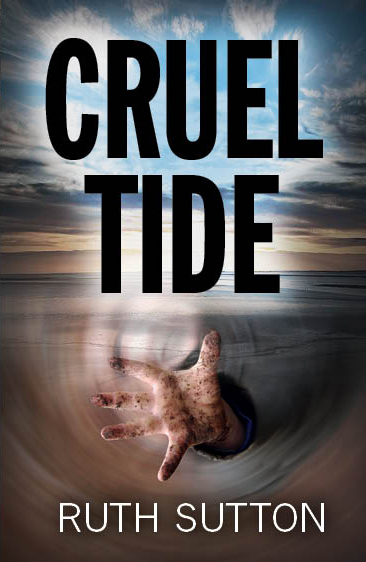
I always struggle with titles, and then with the cover image that should illuminate the title and engage the reader: as an independent author/publisher, these decisions are all mine. The image on the cover of ‘Cruel Tide’ developed before I even started the book. It came to me when I did the walk across Morecambe Bay and was struck by the menace of quicksand very close to the northern shore. The snaking, threatening tide that covers these huge mudflats twice every day connected with another cruel tide – of abuse, cover-up and corruption that have damaged so many children’s lives. The decision about both title and cover came to me quite quickly.
Not so with the sequel to ‘Cruel TideI’ that I’m currently completing. My editor Charlotte and I have brainstormed possible titles, but nothing really stood out. Then in the final stages of the first draft, in one of those times when the story seems to be writing itself, the words ‘Seize the Day’ became suddenly significant and I could see them on the cover, with a dark image of one of the settings – no details for fear of plot-spoiling.
The first thing you do is check how many other books already exist with that title. Of course there are several, but then you have to take them one at a time and decide whether the replication is significant. The most recent was non-fiction, an autobiography, so that was OK. Another appeared to be a religious tract, too different to bother about. There was one fiction book, but a very different genre.
I think I have my title. Next I’ll think hard about the image, and start working with the cover designer Kevin Ancient who did such a wonderful job with ‘Cruel Tide’. Crime fiction covers seem to be have some common characteristics, to ensure that readers understand what may lie between the covers. Decisions to make. Watch this space.
by admin | Jun 10, 2016 | Uncategorized
Do other writers share my ambivalence about the need to go back to the first draft of a new book and make it much better? I want to make it as good as it can be, but it’s hard to go back to the text and start over. I just want it to be finished. My head knows that I must buckle down and do the second draft, but my heart wants to go out to play.
I met my deadline and got the first draft of the new book off to my editor by the end of May. For a day or two I felt as if a weight had been lifted, but I knew it wouldn’t go away. Since then I’ve been waiting for her reaction. It reminds me of waiting for my A level results fifty years ago: the feeling of anti-climax after a long period of concentration, not being able to settle to anything or see the way ahead.
Ten days of waiting have fuelled my tetchy impatience. When the pages of notes and annotations arrived yesterday I read through them too quickly, thinking not about the feedback but just about the implications for the next steps, worrying prematurely about getting everything done properly in the time I’ve given myself. Today I’ve made myself read through it all again, more slowly. I have to let the ideas settle, give myself time to think.
I recognise much of what’s been picked up by my editor’s eagle eye. Maybe I’d hoped she wouldn’t notice when things weren’t quite right, and I could carry on convincing myself that the first draft is ‘good enough’. But it isn’t, of course. And I’ll have to go back to it and fix it, and it will be much better as a result.
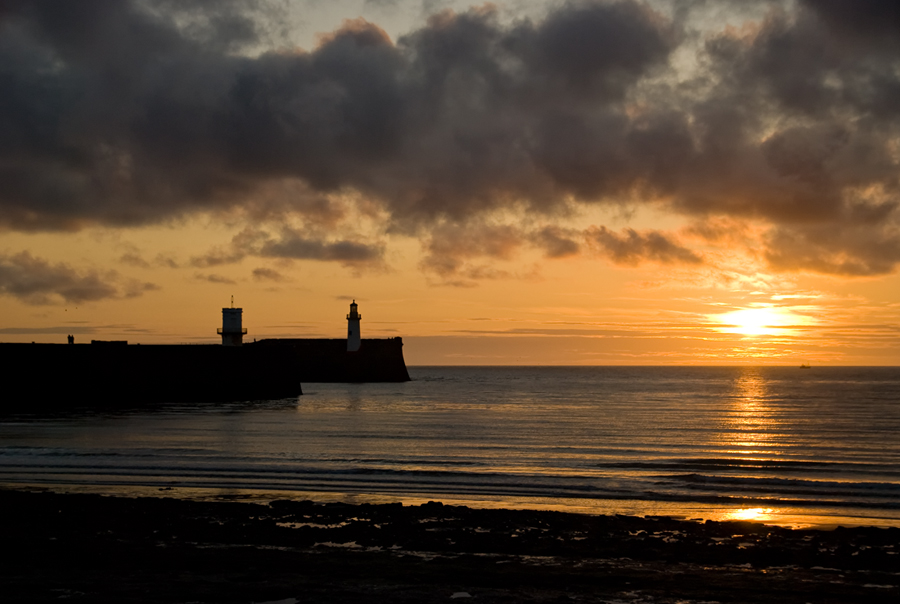
But right now I’m going to watch the cricket, then make a meal for a friend, have a glass of wine, and let the second draft gestate for a while. I’ll start next week. Isn’t this a great image, by the way. I want to see it on the cover of the new book, but I have to think about that too. My head hurts.
by admin | Jun 4, 2016 | Uncategorized
I’m spending the weekend at the Holker Hall Garden Festival in Cumbria, which is a great place to meet loads of people- existing readers, future readers, possible readers- and sell and sign books as well.
They put me in the ‘Floral Art’ marquee for some reason, and I took a bunch of buttercups as a token gesture. These have been a big hit! And I’ve sold loads of books too, and had many great conversations so far and more to come, which is very pleasing. Took a bit of organising, and three days out of a gloriously sunny weekend, but definitely worth it.
by admin | Apr 8, 2016 | Uncategorized
If you click on the link below you’ll hear an interview I did with Paul Teague about my ‘self-publishing journey’.
http://buff.ly/1VT4rKB
Part of that interview, towards the end, deals with the business of ‘promotion’ – how do people get to know your book exists? That was a question I asked myself right at the beginning of the process, having decided that writing for myself, or just for friends and family wasn’t going to be enough for me: I wanted people to read my stories and realised that I would have first to let them know the books existed and then to encourage and enable them to find and buy them. This would have been an issue for a traditionally published book too, but the publishers have more to spend on promotion than I could afford. So, how could I promote my books at minimal cost, in order to get sales and a readership?
When Paul Teague asked me about this aspect of the project, I realised how much I’d learned along the way, and that I’ve become increasingly pro-active. If I wanted to get on local radio, I had to ask the presenter and producer to have me air-time, and did so. If I wanted a review in a local magazine, I asked for that too. Sometimes it didn’t work, sometimes it did, but it was always worth asking. Just before the new book – working title ‘Truth Will Out’ – appears in November 2016 I will send an ‘Advance Information’ sheet to my all current sales outlets and local media. This will have all the details of the new book, cover image, ISBN, synopsis etc, to alert them, and through them their customers/listeners/readers. Hopefully this will generate people willing to buy when the book is launched. It all helps. And if the local media pick up the same information, they will help too with a short piece, or a photo, and that increases the coverage. After all, you’ve given them information to fill their pages, which is what they want.
There are so many ways to promote your work beyond the usual FB page and repeated announcements on Twitter. If your work appeals only to an internet and social media savvy clientele, that’s where you pitch it, but you may need a much more wide-ranging promotion strategy. For my Cumbria-based fiction, local people and visitors are main main pitch, and a regular visible local presence helps.
If you’re going to self-publish, ask yourself – how will people know my book exists, why should they buy it, and how can I make that easy for them? It’s not rocket-science, you just have to think it through from the buyer’s perspective, not your own.
by admin | Apr 1, 2016 | A Good Liar, formula, plotting, structure, trilogy, Uncategorized
In the past few weeks I’ve been getting into the next book, the fifth one. When I began the first one A Good Liar seven years ago, I had no idea of the implications of being a planner or a ‘pantser’ (it’s a ghastly term, isn’t it, but aptly described the exercise of writing ‘by the seat of your pants’). It turned out I was a ‘pantser’ who really should have planned more. The first draft of A Good Liar was a terrible mess and took two years to sort out. Even now it feels more of a dog’s breakfast than I’m really happy about. It sells well as the first part of the trilogy, although I sometimes wish it didn’t!
After that difficult experience I decided I would plan in much greater detail, and do try to do so, but with this latest book I’m realising yet again that however careful the plan, it won’t hold together as soon as you start writing. Writing involves immersion in the characters and their world. It’s trite to say that they take over and do unexpected things, but sometimes that’s what happens, and the carefully programmed story veers off into something else. These deviations from the plan are not u-turns, more like scenic diversions, but when they come along they are welcomed, not disapproved of. So does that make me an inadequate planner? I don’t think so.
Writing is like life, complex, varied, and predictable only up to a point. That’s what makes both of them so enjoyable. I have an outline for each chapter which gives me a sense of direction, but every few chapters I amend it, adding a chapter or removing one, introducing a new idea or nuance in a conversation or a scene to drive the story more convincingly even though the direction may not radically change. Without any plan, I’m lost. With too rigid a plan, things get stale and formulaic. So I hover happily between the two stances, – an ‘organic shaper’. That phrase sounds like environmentally friendly underwear: there must be a better term for my mixed approach to novel writing. All suggestions welcome.
by admin | Mar 27, 2016 | author platform, Cumbria, self-publishing, Uncategorized
Last week someone whose name I’ve already forgotten wrote a piece about all the reasons why she couldn’t possibly self-publish her ‘literary’ fiction. I read it expecting to find the usual catalogue of poor information and ill-disguised intellectual snobbery, and there it all was, again. Not sure why anyone gave the piece an airing, except that they probably knew it would cause a stir, and here I am responding to it like a fish to bait.
Whenever I read or hear these well-worn points I wonder who the writer has been talking to. It’s obviously someone who doesn’t care much about the quality of their writing, can’t be bothered with a proper editor, goes straight to ebook and spends much energy manipulating the publication figures to make their stuff appear to be a best-seller. Granted, living as I do in beautiful West Cumbria, I don’t know many writers, but I don’t recognise this person at all.
Here’s an alternative view of self-publishing, from my own experience.
My naive expectation that any agent would be interested in the early draft of my first novel was quickly dispelled. I could have spent more time trying repeatedly to find an agent – far more time incidentally than I have ever spent on promoting my books – but preferred to write the novel rather than begging letters. I’ve never had much patience, and like to manage my own affairs, and both of those propelled me towards self-publishing, along with a little money to invest with which to ‘back myself’ as my accountant put it. ‘If you cover your costs,’ he said, ‘you’ve succeeded.’
From the very start I wanted to produce a book to the highest standard I could manage. It had to be the best writing I was capable of at the time, well-edited, well-designed and look good on the shelf. This would be my legacy and I had to feel happy about it. Self-respect matters in self-publishing.
Among my oldest friends are two people who edit and design books, mostly non-fiction, but I trust and respect them for their passion and their skills. We have worked closely together on each of the four novels I have written so far, with the fifth due out in November 2016. After the first one took three years to write, it’s been one book each year, and hard work. Most of that time is spent on research and planning, the writing and editing will take around five months, and I’ll fit any promotion activities around the core business. All the books are on Kindle, and in paperback. My sales come from local shops, a Cumbria-based distributor, the usual national distributors, Amazon and my website as well as ebooks, which tick along at about 30 each month with very little push from me. Last year I also made over £2000 selling direct to people I met while doing talks to groups around Cumbria, almost all of which were in the evenings when I wouldn’t be writing, and were also very enjoyable. I’m on Twitter and half-heartedly on FB, have my own website and write a weekly blog post. My limited social media activity is mainly about keeping up with family news and promoting my beloved Cumbria.
Each book costs about £5000 to produce and print, and various running costs include a small amount for storage and help with fulfilling orders and keeping track of the finances, neither of which I want to do myself. It’s hard to quantify precisely, but I just about break even. The first book ‘A Good Liar’ has already been reprinted, and the second is down to the last few dozen copies and will be re-printed shortly, with a new cover incidentally as I’m not convinced about my original choice. Reprinting is much cheaper than the first run, while the selling price remains the same. ‘You do the math’. Each new book stimulates sales of the previous ones and increases my ‘shelf-presence’ as an author. I make all my own decisions about the content and production of my novels: they may not be the best choices in commercial terms but they are consistent with my own values and notion of quality, and I’m happy about that.
Do I make much money? No. Do I feel proud of what I’m doing, after a life-time of longing to write fiction? Yes. Do I recognise the self-publishing writer portrayed in the post I read last week. No. That’s not me.
Recent Comments