by admin | Jun 30, 2016 | crime fiction, fact-based fiction, historical fiction, plotting, research, Uncategorized
Who remembers good old Sergeant Dixon, courteous, uncomplicated, with his files and his big black phone, solving crime through listening to people and figuring things out?
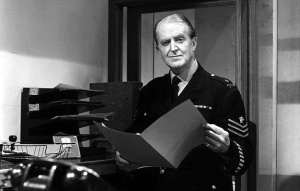
Those were the ‘good old days’, before DNA and computers and CSI forensics, when policing was simple and villains were wicked and the death penalty was still the ultimate deterrent and women knew their place.
I’m thinking about the setting of a new crime series. The choice of place is easy, it has to be Cumbria. But time? Personally I prefer the present day to previous decades when oppression of various kinds was more widespread, but as a crime writer I’m attracted by the relative simplicity of policing in the past. I want my main detective to be female, but that’s unrealistic in the days before the late eighties when it was finally accepted that female police officers might be given more to do than making the tea. But I also want to avoid some of the more clinical and technical aspects of contemporary policing which radically affect both the research and the plotting. There must be a window of opportunity between these two. It would be really interesting to focus on the early days of women in CID in Cumbria, in which case I need to talk to some of those early pioneers and get their stories. That would be a worthwhile exercise, no matter what plots ideas flowed from it.
At the same time as I’m considering all this I’m watching the Brexit decision and all its implications. Today I saw the figures on the close correlation between those in favour of the death penalty and those wishing to leave the EU. And there’s a piece in the Guardian about ‘false binaries’, another way of saying that the best choices are rarely just one solution or another, which is one reason why the EU referendum was so flawed in both process and result. Real life, personal, social and political, is always complicated and pragmatism is an under-rated virtue. President Obama has maintained a good balance of principle and pragmatism, in my view, but I’m not optimistic about political leadership in the UK right now. They say we get the political leadership we deserve. We must have done something really bad.
by admin | Jun 19, 2016 | cover, crime fiction, Cruel Tide, Morecambe Bay, Publishing, readers, self-publishing, title, Uncategorized
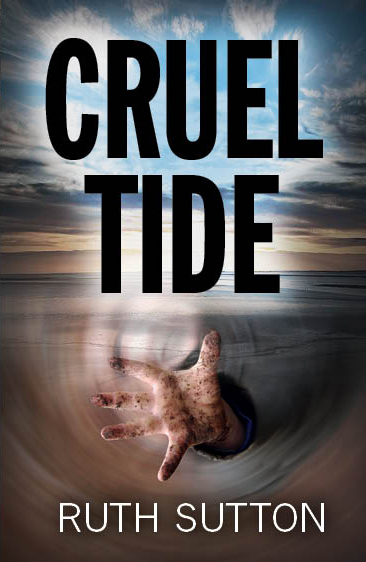
I always struggle with titles, and then with the cover image that should illuminate the title and engage the reader: as an independent author/publisher, these decisions are all mine. The image on the cover of ‘Cruel Tide’ developed before I even started the book. It came to me when I did the walk across Morecambe Bay and was struck by the menace of quicksand very close to the northern shore. The snaking, threatening tide that covers these huge mudflats twice every day connected with another cruel tide – of abuse, cover-up and corruption that have damaged so many children’s lives. The decision about both title and cover came to me quite quickly.
Not so with the sequel to ‘Cruel TideI’ that I’m currently completing. My editor Charlotte and I have brainstormed possible titles, but nothing really stood out. Then in the final stages of the first draft, in one of those times when the story seems to be writing itself, the words ‘Seize the Day’ became suddenly significant and I could see them on the cover, with a dark image of one of the settings – no details for fear of plot-spoiling.
The first thing you do is check how many other books already exist with that title. Of course there are several, but then you have to take them one at a time and decide whether the replication is significant. The most recent was non-fiction, an autobiography, so that was OK. Another appeared to be a religious tract, too different to bother about. There was one fiction book, but a very different genre.
I think I have my title. Next I’ll think hard about the image, and start working with the cover designer Kevin Ancient who did such a wonderful job with ‘Cruel Tide’. Crime fiction covers seem to be have some common characteristics, to ensure that readers understand what may lie between the covers. Decisions to make. Watch this space.
by admin | Jun 10, 2016 | Uncategorized
Do other writers share my ambivalence about the need to go back to the first draft of a new book and make it much better? I want to make it as good as it can be, but it’s hard to go back to the text and start over. I just want it to be finished. My head knows that I must buckle down and do the second draft, but my heart wants to go out to play.
I met my deadline and got the first draft of the new book off to my editor by the end of May. For a day or two I felt as if a weight had been lifted, but I knew it wouldn’t go away. Since then I’ve been waiting for her reaction. It reminds me of waiting for my A level results fifty years ago: the feeling of anti-climax after a long period of concentration, not being able to settle to anything or see the way ahead.
Ten days of waiting have fuelled my tetchy impatience. When the pages of notes and annotations arrived yesterday I read through them too quickly, thinking not about the feedback but just about the implications for the next steps, worrying prematurely about getting everything done properly in the time I’ve given myself. Today I’ve made myself read through it all again, more slowly. I have to let the ideas settle, give myself time to think.
I recognise much of what’s been picked up by my editor’s eagle eye. Maybe I’d hoped she wouldn’t notice when things weren’t quite right, and I could carry on convincing myself that the first draft is ‘good enough’. But it isn’t, of course. And I’ll have to go back to it and fix it, and it will be much better as a result.
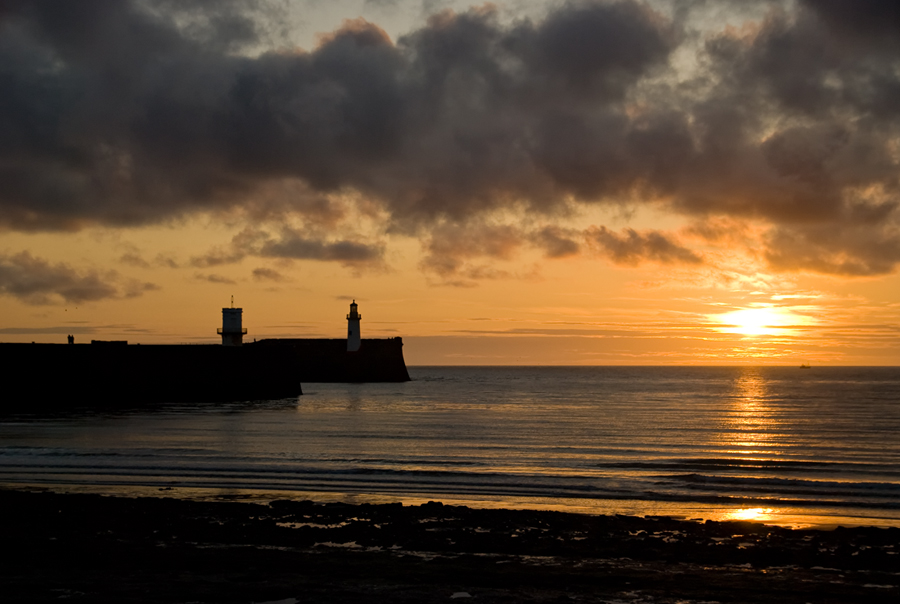
But right now I’m going to watch the cricket, then make a meal for a friend, have a glass of wine, and let the second draft gestate for a while. I’ll start next week. Isn’t this a great image, by the way. I want to see it on the cover of the new book, but I have to think about that too. My head hurts.
by admin | Jun 4, 2016 | Uncategorized
I’m spending the weekend at the Holker Hall Garden Festival in Cumbria, which is a great place to meet loads of people- existing readers, future readers, possible readers- and sell and sign books as well.
They put me in the ‘Floral Art’ marquee for some reason, and I took a bunch of buttercups as a token gesture. These have been a big hit! And I’ve sold loads of books too, and had many great conversations so far and more to come, which is very pleasing. Took a bit of organising, and three days out of a gloriously sunny weekend, but definitely worth it.
by admin | May 19, 2016 | readers, research, self-publishing
Last night at a local Women’s Institute meeting I heard a young man talk about how he and his wife have developed a plant nursery over the past seven years or so. Dull? It was rivetting, a saga of enthusiasm, aspiration, challenge, set-backs, perseverance, commitment, hard work, adverse weather and current growth – both commercial and horticultural. What kind of promotion and marketing has worked for you, he was asked. ‘Word of mouth’ he said. ‘If two people find us, a mile off the main highway and on the road to nowhere, and if those two people have a good time and each tell two, or three or ten people about it, then the business grows, and it costs us nothing that we wouldn’t be doing anyway, ie giving our customers a good experience.’My words, perhaps, not his, but that was the inference.
These people are BUSY, running a seven day a week outfit, developing the site, growing and selling their own plants and raising two young children. They won’t have time for sitting at the laptop, doing all the internet-based social media marketing stuff that we are told is the only way forward for a new business. And they are successful, doing what they love and are good at.
So what did I gather from all this, as someone trying to write and publish one novel a year, which is also pretty time-consuming? Tom Attwood’s story about the Halecat Nursery confirmed what I’ve been learning myself about the relative ‘efficiency’ of different forms of ‘promotion and marketing. We’ve learned that meeting people matters, and that nothing spreads sales faster than word of mouth. The most successful bookshop for sales of my book is the one where the person who owns and runs it tells each customer how popular my books are, that they are set in places they know, and that I live just minutes away and bring in the books myself. The single largest income stream in my book sales is the thousands of pounds I make every year through direct sales. I’ll do a talk somewhere, explain about how I write my books, the research, the stories, the challenges, and then I sell copies to people who are interested in them. It’s ‘book signing plus’, and it works.
In rural areas like ours there are many opportunities for people to come together and listen to a speaker, and an author like myself can gain an audience by simply making yourself available, and being prepared to plan as far ahead as these organisations do. Numbers may not be great, but there were forty or so people listening to Tom last night and he did a really good job. He brought lots of plants with him, made a fair amount of money from sales, garnered a small fee, and – more importantly – encouraged everyone there to come and visit the nursery, tell their friends, check the website. I’ve no doubt that the impact of his personal presence was far more effective than seeing a Tweet or an advertisement somewhere. People love plants grown locally for local conditions. People love books written locally with local stories and locations. If that’s the niche in this crowded market, then it pays both of us to address it.
That’s not to say that a writer like me can ignore all the internet-driven routes to market, but it’s clear to me that ‘viral marketing’ inspired by personal contact works really well, and it’s much more enjoyable than sitting at a keyboard.
Recent Comments