by admin | Oct 24, 2015 | Cruel Tide, self-publishing
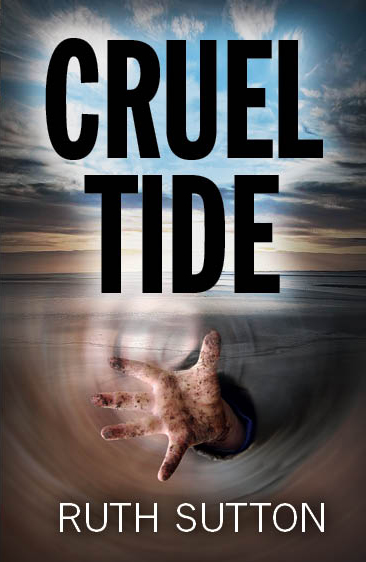
At last! I’ve worked out how to add an image to my blog – the front cover of the new book. I think it’s an arresting image, and pertinent too. See what you think.. It’ll be available from around the end of November 2015, from any good bookshop, from Amazon as a paperback or Kindle ebook, or from me direct via ruthsutton.co.uk. If you’re in Cumbria, your local bookshop should have copies. If you’re in Canada, go through Portage and Main Books in Winnipeg. If you’re in New Zealand, order through Unity Books in Wellington.
The ISBN is 978-0-9929314-0-7

by admin | Oct 19, 2015 | Uncategorized
A good friend and colleague of mine died yesterday. She was an inspirational educator and only fifty two. An aggressive cancer killed her, just over a year after the first diagnosis, despite surgery and chemotherapy. I did what I could to help her, but it could never be enough. In the end she slipped away with frightening speed while I was on the other side of the world. There was nothing I could have done, but I wanted at least to be there, and I wasn’t.
And here I am now in New Zealand, on a glorious spring day, trying to distract myself with trivia about the new book, but in the end the only things that really matter are friendship, love and kindness. I’m remembering my friend, and wishing she had lived a little longer to realise some of the plans she had made for a brief spell of happiness.
by admin | Oct 16, 2015 | Pricing
This week I designed a poster to promote the new book ‘Cruel Tide’ in bookshops around Cumbria. I used a template provided by an on-line printing company, which was generic and didn’t prompt you to include a price. I uploaded the cover image and some text and the ISBN number and sent it off for printing without including the price of the book.
In the middle of the night I woke up, realising what I’d done, or not done, and cursing my own carelessness, as I often do. In the more rational light of day I reconsidered, and wondered whether the lack of a price on the poster would seriously affect anyone’s willingness to order it. I’m not sure it would.
For a start, there have been three previous books, all at the same price of £8.99, and a potential buyer might correctly assume that the price will stay the same, which it will. Second, if readers who tell me that are waiting for the new book are really keen to buy it, the price is not as important as the publication date. Some people have been pestering me for the next one since about two weeks after the last one came out. I’m not sure they understand how much work goes into writing and producing a book. Some of my readers may wait to buy it from me direct at one of the many meetings or events I do, and I usually offer a discount for direct sales.
Amazon offer a cheaper price, as usual, but the shortfall is consumed by the cost of postage and packing, so there’s no advantage of cost or even of time, as we fufil our own orders, which normally takes a day or two longer than Amazon’s immediate turn-round. The Kindle version is slightly cheaper than the paperback, but the pleasure of a well-produced book is still a factor for many people.
If you don’t want to pay for a book at all, there’s always the library. If you do want to buy one, it will cost in this case the same as fish and chips for two or four cups of coffee. For the pleasure they can give, I reckon books are still a relatively good deal.
So instead of price being the key factor I have decided to use the cover image as the come-on. After all the agonising I did about this image, I’m really pleased with it now. It’s mysterious, arresting, relevant, and adds in a quite extraordinary way to the pathos of what lies between the covers. By next week the posters will be printed and arriving in the many bookshops served by my distributors, Hills of Workington. And as soon as I get home I’ll be taking them round to outlets where my books have sold before. It’s been nearly 18 months since the last book, and I hope previous readers haven’t forgotten about me. I also hope that I can pull in new readers too. I want this book to be widely read, because it makes a contribution to the current media storm about historical child abuse and is a timely reminder of how things were only a few decades ago.
When I can work out how to include the cover as part of a blog post, I’ll share it, so you can see what you think. Watch this space. Maybe I could offer a deal for the first five pre-orders, or something. I’m new to all these ‘sales techniques’ but I might be able to work out how to manage them, before I get back home from my trip and launch into thinking about the next book. That should keep me busy through the winter months.
by admin | Oct 7, 2015 | marketing, self-publishing, selling
We know how fashion works in clothes. Someone – usually one of the big fashion houses – decides that the coming season’s colour will be ‘ecru’ or orange, or whatever. Or that women’s hemlines will be high or low, trousers wide or narrow, or whatever. The new ‘look’ is pored over by the fashion writers and ready-to-wear clothes manufacturers and the word goes down the supply chain: after a few weeks the shops are full of the latest look, and the sale rails full of last year’s stuff.
The more I listen to agents and publishers talk about the book business, the more parallels I can see. I used to think that what mattered was ‘quality’ and all would be clear when I understood what ‘quality’ really meant. Old and cynical as I am, I wonder if the real ‘quality’ that creates and perpetuates the fads and fashions of the book business is mostly about money. There are two levels, it seems to me. First there is the definition of quality that engenders a Booker Prize shortlist, for example, which in turn guarantees relatively healthy sales. And then there are the outsiders, who for whatever ‘unliterary’ reasons are picked as potential best sellers and hyped vigorously enough to make them so. Different definitions of ‘quality’ apply to these two categories. Let’s face it, some of the ‘bestsellers’ are pretty bad by any literary standard, but if they boost the finances of a hard-pressed publishing house, who really cares? The publisher of the ghastly Dan Brown, for example, could brag to his/her peers about sales figures however embarrassed he/she should be about the absence of any literary merit. It’s like admiring Donald Trump just because thousands of people turn up to hear him ‘speak’.
Once a ‘best-seller’, however poor, has established itself the rush is on to replicate it as quickly as possible. If it’s an 800 page doorstop that’s what we’ll see more of; if it’s ‘chick-porn’ there’ll be more, God help us. If the hero is a dysfunctional depressive alcoholic similar miserable protagonists will rise up everywhere: the next fad has been established and the bandwagon rolls on again down a different track.
There will be exceptions, of course, but not too many as the financial risk is now too great. No wonder finding an agent feels like such a lottery, and the criteria remain notoriously vague. The book business seems to demand that the agent finds a few offerings from the thousands on offer that resonate with current fads, has a good look at the ‘marketability’ of the writer as well as their work, and brokers a deal with the publisher in terms of potential sales. The publisher then invests as much as possible in promotion, persuades the other authors in their ‘stable’ to write the come-on reviews, and prays they’ve backed a winner.
Tell me I’m wrong about this. Persuade me that the book business is not dominated by fads and fashion. Please. In the meantime, writers can avoid the whole sorry business and have the guts to publish their own work, which can hardly be worse than some of the stuff that makes it through the commercial publishing process.
by admin | Oct 4, 2015 | Uncategorized
Here’s the thing. I’d been in New Zealand for a couple of days and was feeling quite emotional when I fell asleep, then woke up at 3am. I thought the iPad by my bed was on mute, but the volume was just loud enough for me to hear the ping of an email as it came in. So I lay there and thought, should I just turn over and forget it, or do I need to turn the volume down so I’m not woken again? And if I have to turn the volume down, I might as well check the email at the same time, right?
Not the best idea: attached to the email was the first draft of the cover of ‘Cruel Tide’. I say the first draft, but actually this was after I’d already thought about and sent the brief to Kevin the cover designer. I had an image in my head and it was this that he’d incorporated into the cover that was staring back at me now in the middle of the night. I knew it would be powerful but it blew me away. Then I started having doubts. Was it too graphic, too haunting, too strong? What would readers of my previous books make of it? Would there be howls of protest, and was I risking my current readership for the potential larger potential audience of crime/thriller readers? These are not good thoughts to grapple with in the depth of the night, far from home, after three hours sleep.
Too late. I was hooked now and sleep evaporated. I’d already said I wanted the cover sorted out as soon as possible so we could get on with promotion, posters, and so on. So in I dived, and the emails zipped to the other side of the earth and back again. Maybe email was better than a phone call, as I couldn’t hear the frustration in the voice at the other end who was liaising with Kevin. ‘More of this’, I said, ‘and less of that’. You know how it goes, picky, picky.
By the time that exchange was over, light was dawning in the New Zealand sky and the tuis had begin their wonderful squeaky croaking chorus to welcome the day. If you’ve never seen or heard a tui, check it out. I love them, but perhaps not so early and after a disturbed night. Welcome or not, the new day and the early birds reminded me that the world goes on. Angst about a book cover is nothing, relative to the real issues of our world. A mere pimple on the cheek of life. Get over it. Yes the image is powerful, and maybe some people will find it disturbing, but the content of the book is disturbing too. I knew that from the start, and I haven’t backed away from it, so now’s the time to stay strong. ‘Staunch’ is the Kiwi word for it. If you can’t take some risks and follow your instincts when you self-publish, why bother?
by admin | Sep 28, 2015 | Uncategorized
It was a sixteen hour journey from Vancouver to Wellington and from northern hemisphere autumn to southern hemisphere spring, and now here I am on a glorious day, with flowers and blossom, blue sky, sunshine. Bliss. Rain in Auckland gave way to brilliant light on snow-capped Mount Taranaki and the Kaikoura Ranges as I watched transfixed from my window seat on the crowded plane.
I’ve been dreaming for a while about my return to New Zealand after a three year absence. The short plane trip from Auckland to Wellington this morning triggered a flood of memories of places and people and events, and made me cry, as it’s done before. I feel the same about the landscape of West Cumbria where I live, and have tried to portray this powerful sense of place in my writing, but inadequately. It’s hard to find the words to convey a passion for colours and contours and light without slowing down the pace of the story. You can infer what the characters see through what they say but real people rarely talk at any length about the landscape around them. The author’s own voice may be the only one available to carry the description, and the author’s voice should be heard rarely and only for a purpose. In ‘A Good Liar’ I used description of a hot languid afternoon to explain Jessie Whelan’s readiness for an erotic experience, and I think it worked, although no-one else seemed to notice. Oh how I yearn for some feedback about my writing at that level of detail.
Today, overwhelmed by my return to this wonderful place, I wonder if I can try again to capture the power of place in words that don’t intrude. The new novel ‘Cruel Tide’ is set in late autumn. Maybe the next story should be set in a Cumbrian spring, and all the jewellery of this glorious day could be harnessed to enfold the characters: dark deeds in brilliant surroundings. Could be fruitful.
by admin | Sep 23, 2015 | crime fiction, Cruel Tide, promotion, self-publishing
As soon as I get on a plane, this happens. In the days before actually setting off on a trip my head is full of logistical arrangements, blocking out the deeper bigger picture of what I’m doing and planning. As soon as the seat belt snaps on, the noise clears and my mind is free to roam again, with minimal distraction. It’s a form of mental hibernation, necessary to deal with the tedium of the journey itself.
Yesterday, it happened again, and by the time I checked into the hotel in Edmonton where I am now my head was busy with the decisions that I was rehearsing in the last blog post. In the past week or so, some of the picture has cleared a little, and the mental hibernation pushed that thinking along further. Realistically, my chance of finding an agent and surmounting the subsequent hurdle of a publishing deal, remains minimal. Infinitesimal actually, and as such probably doesn’t merit a major investment of my time. The submission to a potentially sympathetic agent has gone in, but my expectations remain very low.
I’ve also been prompted to re-think my use of an editor. My current editor has done a wonderful job for me, but she’s not part of the fiction publishing and bookselling network, and not a specialist in the genre I’m trying my hand at now – crime fiction. She knows a good story, but I suspect there’s more to the nuances of this genre that neither of us still know much about. We need to talk about that, and I might set out to find a specialist editor for feedback if not for further help.
Another chance encounter has also made me think about the stage of the paperback self-publishing process that is the most difficult for me – marketing and distribution. The two hang together of course: you need good promotion and marketing to raise the volume of sales to the point where the national distributors and bookshop chains are interested in putting your book on the shelf or storing them in a warehouse. The distribution deal I currently have covers only Cumbria, and what I need now is coverage elsewhere. More internet searches reveal a raft of ‘service providers’ who claim to be able to do that, but they’re expensive! Do I want to invest that much? Are my books worth it? The trilogy ‘Between the Mountains and the Sea’, set in West Cumbria, benefits from local distribution, but the new title ‘Cruel Tide’ is aimed at a wider market, at crime fiction readers wherever they be, although its links to the north-west of England are strong. Maybe investing in this would be worth it. There’s be less profit per book, but that could be offset by selling more books.
The cost of the ‘service’ is for each book, putting the cost of involving all four books is well beyond my means. But if I employ specialist help for the fourth book, might this bootstrap interest in the previous ones? The main female character of ‘Cruel Tide’ is the grand-daughter of the main female character in the trilogy, and the trilogy provides the extensive backstory of ‘Cruel Tide’ although the new book stands alone, and will probably become the first book of a new series.
As I’ve found so many times before, writing about these choices is clarifying them in my mind. Writing takes the early shape of ideas and sharpens them into the next stage. That’s one reason blogging is helpful: writing for an audience makes you concentrate harder than writing a few rambling notes for yourself. Five more weeks of travel lie ahead. By the time I arrive home I should have it all sorted out. Yeah, right.
by admin | Sep 14, 2015 | self-publishing
Maybe it was thinking about my blog on the ‘fear of failure’ and how it applied to me. Maybe it was reading a post on Twitter from a literary agent, explaining her admiration for ‘commercial women’s fiction’, or CWF as she called it. Maybe it was thinking about the daunting amount of time and investment involved in producing a high-quality self-published novel once a year. Whatever it was, all of a sudden I asked myself whether it was time to try again to find an agent, something I hadn’t done since 2011.
It was so long ago, I can’t remember now which draft of my first novel ‘A Good Liar’ I decided four years ago to submit to various agents drawn from the pages of the ‘Writers and Artists’ Yearbook’. I didn’t enjoy the process, which varied from one agency to another, but I expected something to come of it. I wanted someone in the publishing world to take me seriously and write back, with comments perhaps, or encouragement or possibly an interest in what I was doing. None of that happened. After waiting the anticipated number of weeks I received brief standard responses that arrived with numbing regularity. None showed any indication that the submission had even been read. All had roughly the same wording, thanks but no thanks, not our kind of book, etc etc. I got the message loud and clear. No point in going down this route: a 60 year old woman writing family saga fiction in a place no-one in London has ever heard of has absolutely no chance of getting on the radar.
Life is short. It didn’t take me long to decide to self-publish and avoid further rejection, and I’ve done so for the past four years, with some success. Last week for the first time I considered trying the ‘conventional’ publishing route again. I followed the trail of the agent who wrote favourably about ‘CWF’, found the agency website, read and followed the submission process to the letter despite its inappropriateness for someone with books already on the market, and posted it all off. I could have used email but somehow a set of papers in an envelope felt better.
Trying again to find an agent may be a complete waste of time, for the same reasons as before. My work is not ‘fashionable’, if that’s what agents – and presumably publishers – are looking for. The novels in my trilogy ‘Between the Mountains and the Sea’ have characters and stories designed to draw the readers in and keep them there, turning pages of one book in the trilogy and on into the next: quarter of a million words that carry you along until the end when you feel bereft. Some of my readers tell me that’s what I’ve achieved. And now I’ve finished the first crime fiction story ‘Cruel Tide’, which looks promising, but who knows?
I’ve been on the courses where agents talk about the books they want. ‘What are you looking for?’ we writers ask. ‘I’ll know it when I see it,’ one agent responds. ‘I have to fall in love with the book,’ says another. We writers shake our heads. We are being told that the process is as mysterious as falling in love, all rationality suspended. Frustrated by all this, I gave up thinking about what agents might want and listened instead to the readers who talked to me, and to my own sense of what makes a good story, well-told.
And now, with three books out and another on the way I am weighing it up again. Writing is the most important thing for me: self-publishing is fun, and potentially more lucrative than earning tiny royalties, but only if you take the cheapest route or stick with ebooks, where the investment is minimal. That’s not really what I want. My books have to be high quality in both content and presentation or I won’t feel proud of them. Hence the daunting investment of money as well as time that I mentioned before. I could keep going down the self-publishing road, but just in case there’s another way I want to try again.
So far, just one agent submission. I know that’s not enough if I’m serious about finding a publisher to take my writing to the next level. I’ll do all the necessary research about which other agents to approach, but even so it feels like a lottery, and I’ve never bought a lottery ticket. Maybe I’ll wait and see with the first one, and then decide. Fear of failure is part of it, but only part. There’s something about putting myself in the hands of an intermediary that I’m not comfortable with. It’s the publishers I want to talk to, but they’re hiding behind the door. In front of the door, determining who is allowed to peek through, are the agents. No wonder many writers feel as ambivalent about them as I do myself.
by admin | Sep 9, 2015 | author platform, self-publishing, Uncategorized
Last Saturday I led my first ever workshop on self-publishing, at the Borderlines book festival in Carlisle. Considering I’ve been running workshops for twenty five years, and had been thinking about this one for weeks – I blogged about it at the end of July – I was surprisingly nervous. Could I cover in three hours the range of wants and needs that my participants might bring with them? Did I have enough experience? Would they want the technical guidance that is only really possible if you have a laptop and internet access available for each person, and did I have the skills for that anyway?
As I anticipated, each person in the group came with a unique set of prior experience, interests and questions, as was obvious as soon as they introduced themselves and began to talk about what they’d done so far. Predictably, one or two really needed the technical guidance through the maze of WordPress or Createspace or Lulu that we weren’t really geared up for, although there was another workshop the following day with that focus. Others came with a notion of how they wanted to proceed if they couldn’t find a ‘proper’ publisher. Some were optimistic about their chances of success, others less so, and each defined success differently, all as I anticipated. Some were quite reticent: why I wondered.
What was very striking was the number of people, and not the oldest, who were still coming to terms with the digital and online world. A few appeared to be very uncertain about how to use the internet as a resource to learn from, and were reliant on external guidance – from me in this case – about matters that they could have discovered for themselves with just a few clicks and a short tutorial on Youtube. Others had heard of Twitter or WordPress but the idea of an ‘author platform’ was new and nerve-wracking. I know it’s a truism that the under 30s are naturally more internet savvy than us oldies, but some of the over-30s seem to have forced themselves to catch up while others are still fearful, or dismissive, or both.
I’ve been wondering since then how I managed to learn some of this stuff myself over the past few years, despite my relatively extreme old age. I suppose it needs some spare cash to invest in ‘courses’ of various kinds, but it also needs a belief in eventual success, and a willingness to overcome the fear of failure. Faltering first steps don’t always feel good, but they are a pre-requisite if you want to learn anything.
Many years ago I was visiting a small primary school in Northland, New Zealand and noticed a poster on the staff room door, the inside of the door to be read by the staff not the outside to be read by the children. It said:
We pay a heavy price for our fear of failure.
It is a powerful obstacle to growth.
It assures the progressive narrowing of the
personality and prevents exploration and experimentation.
There is no learning without some difficulty and fumbling.
If you want to keep on learning, you must keep on
risking failure – all your life.
It’s as simple as that.
I kept a copy and brought it home, and still have it twenty years later. Much of what we discussed and shared last weekend involved exactly this type of learning – full of ‘difficulty and fumbling’. Once that expectation was established, people were able to ask the ‘simple’ questions that had been confusing them and getting in the way. Different people had learned different things and were able to share them. No one had a monopoly of expertise, and three hours passed very quickly. Before we left I asked everyone to think about their next steps, write them down and then share them with one other person. I learned a long time ago that I feel more committed if I’ve spoken it, not just thought about or written it, so that’s what we did. The feedback was positive, but the real feedback if I could get it would be what each person managed to do later, on their own, with some of the difficulties eased a little as a result of our time together. ‘Fear of failure’ is a habit of mind that needs continual practice to be overcome. Practice may not make perfect, but It’s pretty important in self-publishing. The 4th self-publishing project I’m on now feels a lot less scary than the first one. Maybe it’s time to find the next challenge.
by admin | Sep 1, 2015 | Uncategorized
I’ve worked hard all my life, because I had to support myself and my child in the early days, and more recently for reasons other than earning enough to live on. As a self-employed education consultant I worked because it was fun, and creative and occasionally provided magic when everything came together and was indescribably satisfying. And I got to travel too, all over the place, and not as a tourist. There’s nothing like working in a community for a while to give you a sense of what it’s really about, not just the superficial view you get as a ‘visitor’. There were downsides too: working alone meant that the quality was down to me and no one else. I needed to think and plan well ahead to make sure things went well, and there seemed no end to it. As soon as one job was over I was into the next, and rarely felt free of the responsibility that is integral to self-employment.
Up to a point that’s fine. But somewhere down the line I’ve lost the art of doing nothing, if I ever had it. If there’s nothing on my mind I assume it’s something I’ve forgotten that will trip me up later. Having one major thing on my mind, to the temporary exclusion of everything else – like when I’m writing – is easier than spinning several plates at once, but not when that one thing invades my sleep as well as my waking hours. And trying to focus on one major thing while keeping other plates spinning at the same time – well, that’s too hard.
Maybe it’s something to do with age. Or maybe after decades of plate spinning I would like it to stop. The problem is, I want my writing to be successful, and that means keeping on writing. A book a year, that’s what it takes to keep up the momentum as a self-published author, and just recently I’ve detected signs that this could turn my pleasure in writing into an obligation, or – worse – a chore. If it is an obligation, it is to no one except myself: how self-indulgent and ego-centric is that? I have what countless other people crave – a high degree of control over my own life, and here I am finding that difficult.
Sometimes I would love to go to bed knowing that there was absolutely nothing to do the following day, except walk, or read, or swim, or eat and drink or sit in the sun. When I took six months off a few years ago, that was the plan. But then I decided there had to be a project, which was to write my first fiction, and with that decision the treadmill began to turn again. And now it’s turning like crazy and I’m still on it. It may be a different treadmill than the education work I was doing before, but I have to reassure myself that I can get off it if and when I want to. I drive my writing, the writing should not drive me, and the treadmill needs to be dismantled before it becomes truly addictive. Or maybe I just need some warm sunny weather to justify a day on the beach, or swimming in the Duddon. What happened to summer?
The upcoming trip overseas could be just the ticket. I have work to do in Edmonton, and a little more in Wellington, but that’s only a few days in all out of the five weeks of my trip. For the rest of the time I shall indulge myself, seeing friends who are important to me on the other side of the planet, eating and drinking and walking and talking. It’ll be early spring in New Zealand and probably not swimming weather, but I’m looking forward to everything else.
Recent Comments