by admin | May 7, 2019 | Burning Secrets, crime fiction, drafting, planning, plotting, Uncategorized
Last week, little more than two months after starting it, I finished the first draft of a new novel. At just less than 90,000 words, it’s currently shorter than some of my crime novels, and my editor may suggest that it needs more depth in some places, more background, more whatever. But that’s the thing about a first draft: you write and write, revising as you go, letting the original plan founder in the wake of what comes out of your head. And when it’s done you stand back and look at it from a distance. That’s the time too when you ask someone else to have a look, as you’re too close to see it clearly.
The draft was zipped off to my editor, after one last re-reading and some tidying up. So now, I wait. It’s a curiously flat stage in the process. Day after day for several weeks I sat at the laptop for every available minute. Night after night details of the plot, unfinished business, unresolved anomalies, all reverberated round my brain.

My sleep suffered. Sometimes by morning I could see a way through to the next steps, sometimes the dilemmas turned out to be non-existent. But the damn thing occupied my head almost without respite until I never wanted to see it again.
And now it’s gone. For a day or two I was still fretting about it in the night, but then that wore off and here I sit, waiting, like a deflated balloon.

I’m trying to do the things I put to one side while I was writing, but nothing feels important enough to bother with. Days that passed so fast are now dragging, not helped by a tendon strain that’s restricting my walking and exercise routines. It’s only a week since let the draft go, but it feels like a month and I’m impatient for some reaction. I know there’ll be re-writes to do, but what and how is still to be decided.
When the last book was heading towards publication this time last year, I asked myself whether I ever wanted to do it again. The same question is on my mind now. I know there are so many other things in life I want to do: getting older certainly adds a sense of urgency. But right now nothing other than writing seems to provide the sense of ‘flow’ in the way that Csikszentmihalyi defined it, a very satisfying combination of effort and focus, that makes the hours flash past. Fell walking comes close, and maybe I need to concentrate on my recovery and get the boots back on. With summer coming, that looks like a worthwhile alternative.

by admin | Mar 31, 2019 | Authenticity, drafting, planning, plot devices, plotting, stories, structure, Uncategorized
The current fashion in crime fiction seems to be for the writer to visualise the plot of a story in terms of a series of gripping scenes. It’s certainly the way to go if you fancy selling to TV. The drama of these scenes can lie in the characters and their individual or collective crises. Or it can rest in the extraordinary landscape, or with a revelation, or twist in the story, or – possibly – all of these at once. As authors we imagine the details that would make these scenes as engaging as possible, but it’s not easy.
The problem lies in the machinations necessary to get your characters into a particular space at a particular time with a worthwhile revelation to share. The frequent victim of this process is authenticity. What we end up with is a story that just doesn’t makes sense.

All writers try to avoid too many coincidences and accidents in plotting, although one or two are useful if they drive the story forward. Similarly, we treasure dysfunctional characters with flaws, because they can be delightfully unpredictable and prone to mistakes, both of which help with the ‘twists and revelations’ issue. Coincidences, accidents and characters’ poor judgements are all OK up to a point, but if overdone can steer a plot towards improbability. The reader may be asked to ‘suspend their disbelief’ once too often, and if the reader is me the story is dismissed as a ‘fix’.
With the first draft of Book 7 rolling along, I’m right in the middle of this dilemma. I have a number of great scenes in mind, and need them to work without stretching authenticity just that bit too far. I’m looking forward to seeing what my editor will think when she sees the first draft in a month or so.
by admin | Jan 2, 2019 | creativity, crime fiction, drafting, planning, plotting, setting, structure, Uncategorized
Over Christmas I read Peter Ackroyd’s excellent biography of Alfred Hitchcock, and was particularly interested in how Hitchcock set about planning his films. He began not with characters, or even with a plot, but with a series of scenes – actions in a setting – and then talked at length with a writer, whose job it was to incorporate these scenes, in any order, into a story.
The film maker’s vision was essentially, and unsurprisingly, ‘filmic’: he saw the scenes in his mind’s eye and then had to unpick and articulate the details in a series of ‘storyboards’. The characters were merely servants of the scenes: it was the writer’s job to get them into these various settings with as much realism and authenticity as possible.
This got me thinking about the new crime novel which is beginning to take shape in my head. I was already aware that the final scene was the first one I’d thought of, and that the planning/plotting process was at least in part about working backwards from the end point. What I began to consider was whether idea that would work repeatedly: could I see the story as a series of key scenes, adding drama through the physical setting as well as by means of dialogue or plot twists. Instead of two characters having a conversation in an office, should they have it on a beach, or in extreme weather, or in a setting that contributed to the tension of the story rather than merely accommodating it?
The other aspect of Hitchcock’s ‘modus operandi’ that I found fascinating was his insistence on developing the details through talking with the writer, not for a few hours, but for days at a time. They would sit together and ask the ‘what if?’ and ‘why?’ and ‘so what?’ and ‘what next?’ and ‘how?’ questions, over and over, until the story evolved in minute visual and aural detail. Neither one of them could have achieved this degree of creativity alone: it had to be through verbal interaction, sparking each other off. The other person who would consistently fulfil this function was of course Alma Reville, Hitchcock’s wife and closest collaborator, an exceptional story teller in her own right.
How does all this square with the image of writing as an isolated activity, with the writer alone in her garrett/office/workroom, emerging only when the masterpiece is complete? Of course it doesn’t. I’m reminded of my conversation with Ann Cleeves about her writing process, which involves several people in the early stages – a forensics expert, a police procedure specialist, and her three agents, all of whom comment on the first draft, asking no doubt the same kinds of questions as those between Hitchcock and his screenwriter.  Ann very generously suggested that her book covers ought to reflect the collective effort of its various collaborators by including all their names, not just hers.
Maybe what every writer needs is a person or a group of people whose sole job is to ask great questions: how many of us can effectively do that for ourselves? And how visual does our planning need to be, as if we are film-makers not just wordsmiths?
by admin | Dec 16, 2018 | creativity, crime fiction, Cumbria, planning, plotting, setting, stories, Uncategorized, West Cumbria, writing
After the difficulties in writing and publishing my last novel ‘Burning Secrets’ I vowed I wouldn’t put myself under that kind of pressure again. I would not set immutable deadlines, or make important decisions too quickly. And I would set time aside for other things in my life, to avoid the constant feeling of obligation to a project which was supposed to be a pleasure, not a burden.
 So far, I’m doing well with these resolutions. I took time to plan an overdue visit to see friends in New Zealand, and for the four weeks or so I was away I wrote no blog posts, didn’t look at the draft outline of the new book, or read anything remotely connected with it. But now I’m back, living once more in the area where all my books are set, and the itch to get writing has started again. For my morning reading today I chose not the biography of Hitchcock by Peter Ackroyd that is sitting by my bed but a book about forensic science. Not a detailed dry tome about a technical subject but a great read, full of engaging questions and dilemmas, just the kind of book I enjoy. The book is ‘All That Remains: A Life in Death’ by Professor Sue Black, about her career as a forensic anthropologist, and inevitably it’s started me thinking again about my story.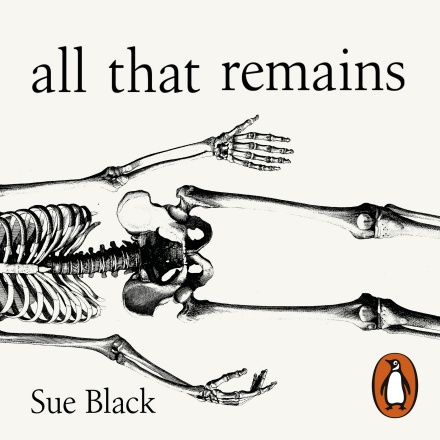
The timing isn’t great, as I really ought to be doing something about Christmas, but maybe the upcoming busyness could be turned to advantage. If in the next day or two I can absorb enough information, my brain can churn away for several days, processing and sorting and generating new ideas while I’m distracted by mindless festivities. When I return to ‘work’ in a couple of weeks I expect things to be clearer and the draft outline improved. It takes time and deliberate distraction for this useful process to be effective, and I suspect it doesn’t work for everyone. I just need the confidence to step away for a while. The mistake I made last time was to get so anxious about losing momentum that I didn’t step away, and some opportunities for improvement were lost.
I can already feel some of the pieces of the complex plot dropping into place, which makes the new writing project a potential source of pleasure rather than pain. Thank heaven for that.
by admin | Nov 19, 2018 | Amazon, Uncategorized

I need to say first that I really value reviews, and appreciate the effort and commitment of those who write them. I’ve been thinking a lot about them lately, prompted by my first experience of a ‘blog tour’, and also by a passing comment from a friend who wanted to mention my books on his new website. ‘Have you got any reviews we could take extracts from?’ he asked. ‘Only Amazon or bloggers’ reviews,’ I said, explaining that despite all my efforts over the years, I haven’t managed to get reviews of any of my six books in the local or national press. His reply was that Amazon or blogging reviews ‘didn’t count’ in his traditional view of publishing. Was he right, I wondered? I sent some of my reviews anyway, and choosing which ones to send got me thinking about what makes a good review.
Let’s be very clear, by ‘good’ I don’t necessarily mean ‘favourable’. Some of my books are ‘better’ than others, in my own opinion. Obviously, I try to do the best I can with each book I write, but sometimes – usually through the need to meet artificial targets or deadlines – there are compromises, or one edit too few, or a scene that is left in even though it doesn’t really add to the story, or a missed chance to illuminate a character through some telling. If a reviewer spots a specific shortfall, that’s a good review, so long as the specific positives are mentioned as well.
So, there’s the first criterion for quality in a review – specificity. The vaguer the wording, the less satisfactory for me as the writer, and for those who might use the review to decide what they want to read. This presupposes that a good reviewer has read the book with care, not just skimmed it. If a review uses the back cover blurb word for word, and without quotation marks, I’m left wondering whether they read much further.

The second criterion for a review’s quality, in my view, is that it describes and analyses the work rather than just ‘evaluates’ it. Saying the book is ‘good’ or ‘weak’ doesn’t tell us anything: the question is why is it so. Sometimes reviewers tell us that they ‘like’ or ‘don’t like’ a character, but don’t explain why. It’s the explanation not the judgement that helps the readers understand what’s going on, and whether they want to read the book for themselves. And some characters can be wonderful to read about, even though we might not like them much as people: sinners are often more interesting than saints.
The third criterion would probably be that the reader gets enough detail about the content to whet their appetite, but not so much that they don’t have to read the book at all! I’m not a member of a book group, but friends who are have confessed from time to time that reading a very detailed review will help them pretend that they’ve read the book. The review becomes the ‘potted version’ of the real thing, and I’m not sure that’s really helpful.
From all this, you won’t be surprised to discover that I don’t have much time for the ‘star rating’ system which seems to be ubiquitous. Yes, it’s quick, and you can use a crude number rating to filter books in or out of consideration. But what does it really mean, when you get down to it? I spent my whole working life in education on issues of ‘assessment and evaluation’ and the main thing I learned was that one single ‘number’ cannot represent a task or achievement of any complexity, such as a book. There are frequently questions of ‘subjectivity’: one reviewer’s four stars could be about the same as another’s five stars, or another’s three. Even if the reviewer uses a process of breaking down the criteria into separate ratings, one point either way can tip the total one way or the other, making the final summary number inaccurate as well as meaningless.

Numbers are often assumed to be accurate than words, but that’s a false assumption. The star system is crude, simplistic, and riddled with potential error.The only thing going for it is speed, and the potential for comparability, but what’s the point of comparing information which is itself flawed?
Writing a high quality review is a time-consuming and demanding task. If reviewers are to be successful, they need to be paid, and not just fobbed off with a free book. And the quicker we see the back of the overall star rating system, the better.
by admin | Nov 7, 2018 | agents, Amazon, author platform, author talks, creativity, ebook, marketing, Pricing, selling, Uncategorized

All self-published writers know that the hardest part of the whole process is not the writing, which is creative and challenging and satisfying. The bit we struggle with is getting our books into the hands of readers, and having those readers pay a price commensurate with the effort and energy that’s gone in to the book.
Obviously, much will depend on the mode of publication you choose. With an ebook there’s no physical product, but readers still have to know where to find your book, and choose it over the masses of others that are available, especially in the crowded market of genre-fiction. Some ebook authors use price as the come-on, but that quickly turns into a race to the bottom and the pressure to charge a derisory amount or nothing at all.
If you choose, as I did, to create a physical book as well as an ebook, there are more routes to sales, but most of them still fundamentally depend on ‘visibility’. I advertise my books on my website and on all the flyers and bookmarks I have printed. I also get orders through Amazon, and through the major book distributors such as Gardners Books in Eastbourne. In Cumbria, where I live and the books are set, distribution is handled by Hills Books of Workington, which supplies almost all Cumbrian bookshops and other outlets, but beyond this region getting my books onto bookshop shelves is almost impossible. Readers can order them of course, and do so, but the supply chain is long with discounts at every stage.

The bookshop contacts their wholesaler, who contacts me, who posts off the requested amount, which then goes back to the wholesaler, then to the bookshop, and finally into the hands of the reader. With postal charges rising all the time, any supply chain that relies on the self-published author fulfilling such orders by post means precious little profit.
An efficient and profitable selling route for me is via my website direct to the reader, using Paypal for payment. I could invest in a card reader, but that in turn relies on a good mobile signal which can never be assumed either in my home or when I’m out on the road meeting potential readers. Maybe it’s something I need to investigate again.
The main problem is the very slow traffic to my website and how to increase the website’s ‘attractiveness’, a task so far from my original passion for writing that I constantly put it off. Everything I know about the internet and how to use it I’ve had to learn in the last twenty years, and much of it still frustrates me. I have a Twitter account with over a thousand followers, but won’t play some of the games that seem to required to grow that number. I use FB too, but am wary of it and share only with a limited number of people already known to me. The key issue may be that the generation that reads and loves my books is, like me, a pre-internet generation. Why else would people sometimes tell me that my books are ‘hard to find’ when a ten second online search using just my name would give them all the information they need?

Why do they go to a bookshop and order, when they could go straight to my website and its online ‘bookshop’ in half the time? Of course I’m keen to preserve local bookshops, but I wish more of them would stock good self-published books like mine.
Fortunately, I really enjoy doing presentations about my books to groups large and small, meeting readers and potential readers. Almost all of these are in Cumbria, but that’s where my books are already known. Without a publisher or an agent, it’s well-nigh unheard-of to be asked to present self-published work at any of the major events and book festivals, unless you’re very well-connected, which I am not. For me, an added frustration is that after thirty years as a professional presenter I know I could do as good a job as most of the authors I hear talking about their work, and better than some. Even with a restricted field for selling, however, direct sales account for a major part of my sales every year, and the most profitable.
Of course I’m contacted regularly by people offering to improve my website’s effectiveness, at a price. Is it worth it, in terms of time as well as cost? Life’s too short to spend too much time on things I really don’t enjoy. My problem is patience: I couldn’t be bothered trying to find an agent after the first few generic rejections. Nor, I fear, can I be bothered to spend precious hours growing my website traffic when I could be crafting another story. So, I’m a bit stuck. My books sell, but not as well as they should!
Recent Comments