by admin | Jan 26, 2018 | crime fiction, drafting, editing, Lake District, opening paragraph, pace, plotting, structure, Uncategorized, writing
Remember the sense of anti-climax at the end of the first draft that I complained about last week? Well, instinctive dissatisfaction was well founded. Even before the long and perceptive email arrived from my editor I had reluctantly admitted to myself that the story took too long to get going, the middle sagged, and the final chapters were either too detailed or melodramatic, or – worse – both. Oh dear.
Just goes to show that you need plenty of time for second thoughts. Fortunately, because of the fierce final effort to finish the damn thing I still have some time to play with before copy-editing is due and the production juggernaut starts to roll. Some decisions were easy: the opening scene that I crafted with such care had to go, and the first ‘darling’ disappeared. With that gone, of course, other passages now didn’t work, and they had to go too. Cut, cut, cut.
The hardest part of the whole exercise is keeping track of the various versions and not mixing them up. Every now and then on Twitter you encounter an author bemoaning the fact that they’ve just spent several hours correcting the wrong draft. I know how it feels and how easy it is to make that mistake when you’re tired or panicking or fed up with the whole business.
I cannibalise the original draft, moving text around, deleting and adding, before cutting and pasting the new version into the 4th draft, carefully labelled as such, and saving it. Two days into the corrections I’m doing OK so far, despite a head cold. Actually, concentrating on the work, however hard that might be, helps to dissipate the effects of the cold, and at least I feel as if I’m still achieving more than just a mounting pile of used hankies.
There are some technical details I’ve had to check to make the necessary plot tweaks. Here’s an intriguing example : ‘How to evade a tracker dog?’ I think I’ve got away with that one. When you’re splicing new bits into an existing draft there are continuity issues too, which are tedious both to pick up and to deal with.
But hey. If you’re going to do it, do it right. The book could still be out there when I’m too old to remember it, and I want it to work as well as it can. What’s a few murdered darlings in the great scheme of things?
by admin | Nov 29, 2017 | A Good Liar, character, crime fiction, plotting, readers, Uncategorized, villain
Maybe it’s the optimist or the humanist in me, or just naïveté, but I have trouble reading or writing about a character who is unquestionably and irredeemably wicked to the core.
I recognise that such characters are can be useful to a simple story.
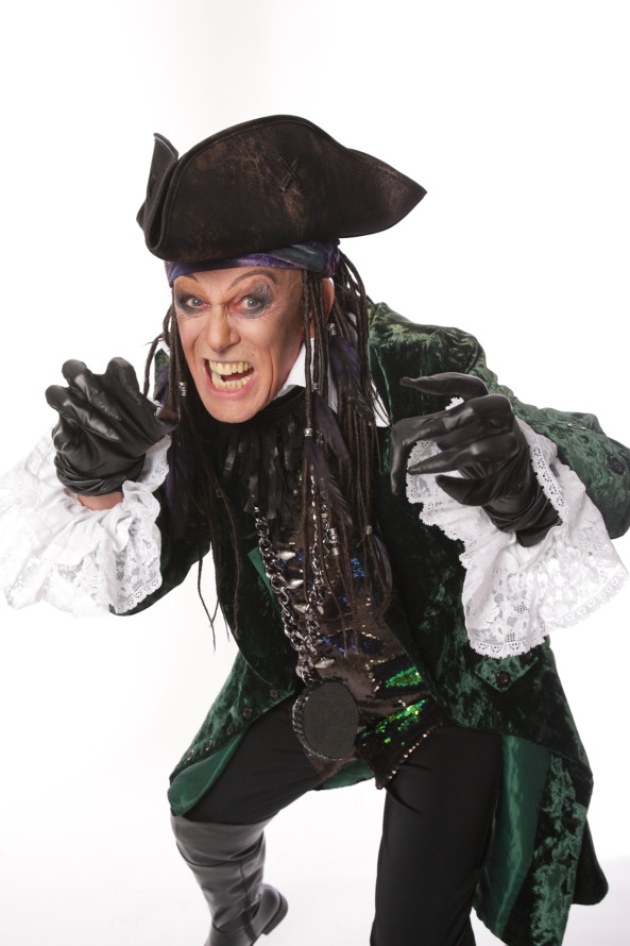 From pantomime onwards, everyone enjoys booing the villain and seeing her/his downfall, and the same is true of some modern psychological thrillers so that the fear can be cranked up as the ‘goodie’ (or ‘less baddie’) is faced with an implacable foe. Sometimes it’s their very badness that makes the character entertaining: the Devil in Milton’s ‘Paradise Lost’ is probably the most interesting being in the work. But I still prefer to introduce some nuances. Weakness in the villain may produce a lower level of fright, but it can add to the tension in more subtle ways.
My villain in my current ‘work in progress’ is a formidable person, brave, resourceful, risk-taking, committed to his vision of a family, even if that’s delusional. He is also violent, self-centred and unable or unwilling to consider the long-term outcomes of his behaviour.

Apparently this last is the fundamental flaw in many young men who find themselves incarcerated: a colleague of mine who worked with young offenders was struck by the high proportion who seemed not to understand the steps along the road that had led them to conviction and imprisonment.’How did this happen?’ was their cry, and the answer was found not in their own behaviour but in ‘bad luck’, conspiracies and the actions of others, not themselves. I think in ‘eduspeak’ it’s called ‘external attribution’ and is a factor in many negative outcomes for students.
If a villain is likeable at all, I can find the emotional and moral ambivalence which I’m after in both my reading and writing. My interest in seeing both sides of people and situations is not universal: it doesn’t, for example, encompass the current President of the United States for whom I cannot find anything but contempt. But almost everyone else has some traits that might be deemed likeable, or at least understandable.
I suspect that some of my readers like things to be more straight-forward, and are shocked to discover some of the frailties of characters they want to like. such as Jessie Whelan in my first novel ‘A Good Liar’. The title of that book was chosen deliberately as a play on ‘good’ in relation to lying: Jessie has to be an effective liar, but is still a good person. I expect those readers may be similarly anxious about feeling just a tiny bit sorry for a person who does bad things. Never mind. That’s just the way it’s going to be.
by admin | Nov 8, 2017 | Authenticity, community, crime fiction, Cumbria, Lake District, landscape, Uncategorized, West Cumbria
I live in Cumbria, the most north-westerly county of England, and one of the most beautiful. Both sides of my family came from here, it was the place where all my childhood holidays were spent, and when I moved back here to live twelve years ago it felt like coming home .
.
When I decided, just after moving here, that I would write the novel I’d been planning for years, there was no doubt where it would be set. This place is essential to the world in my head that drives my stories. But I was wary of making the immediate location of my story too identifiable: my neighbours, the community I am part of, might not take kindly to being so clearly recogniseable, and as an ‘offcomer’ I didn’t want to sour the relationships that are important in a rural environment. So I anonymised my village, changing its features slightly and giving it a new name. When the action moved further afield those worries receded and I included real places, with their real names. In fact many of the people who read my books love to follow the locations. It’s as if my mention of places they know, peopled by imaginary characters, validates where they live.
That’s fine as long as the characters are reasonably real and mostly well-intentioned. But when I turned to crime fiction for my fourth book, I had bad people doing bad things, and didn’t want to upset the current inhabitants of my locations, so I anonymised the specific locations yet again, even though the physical geography of the area remained the same, recogniseable to anyone who knows the area.
Changes of name are one thing, but actually changing the landscape of this area strikes me as quite different. It breaks the authenticity that a sense of place in fiction demands. If the setting is all a figment of your imagination, you can do what you like with it. But if you say that this is, for example, a Cumbrian story, then I feel that you should respect the land that is called Cumbria and not mess with it. At least that’s my view.
One crime story I read was ostensibly set in the Lake District, the national park located within Cumbria, but the writer didn’t seem to know the area well at all. He had travel distances and times between places that bore no relation to reality. He had wildlife that didn’t belong there. The lack of authenticity annoyed me so much that I put the book down.
Recently I heard another author talking about his novels, also based in the Lake District, although he lived elsewhere. He was so keen not to locate his stories in anywhere recogniseable that he actually changed the landscape, including new valleys and hills that couldn’t be found on the map. For some reason, I found this hard to take, perhaps because he was messing with a place so important to me. This sounds petty, but the landscape is so precious and eternal that I don;t want it to be treated like that. We create fictional people, of course, but landscape that is half real and half a fabrication? No, not for me.
Is this too precious? I wasn’t even even born here and I’m being proprietorial about the place. But the fact remains that I don’t want to read books in which the setting is an invention, despite the title that claims that the setting is real.
by admin | Oct 28, 2017 | character, crime fiction, genre, planning, plot devices, plotting, stories, structure, Uncategorized, violence, writing
I came to crime fiction really late. I didn’t publish my first novel until I was 64, and then spent three years on a character driven trilogy before I decided to try crime writing. I read crime stories and I have some idea how they’re constructed and what makes them work. So why not have a go? How hard can it be?
Oh, the misplaced confidence of the (relatively) old!
Online crime writing course: tick. Found and studied my notes on the ‘Three Act Structure’: tick, although I worried that genre protocols might make the writing formulaic. Then I plunged into ‘Cruel Tide’, a story about institutional child abuse, and ignored most of the genre protocols I’d identified. I refused to make it too graphic and violent; I avoided the expected romance between my two main characters, and – mercy! – I left the ending ambivalent, with the goodies thwarted and the baddies apparently getting away with murder, literally.
I thought it was a good first attempt, but some of my readers were fretful. They wanted a ‘cosier’ theme, more romance, and the wicked to be punished. When I wrote the sequel ‘Fatal Reckoning’ I bent towards these expectations a little more, but that’s the end of the plot spoilers. My ebook and Print on Demand publisher, Fahrenheit Press, dubbed the two crime novels ‘Cumbrian noir’ and I was actually quite chuffed about that. ‘Noir’ has great resonance: it conjures up unresolved wickedness, dark landscapes, claustrophobic interiors, moral ambivalence.  If you love ‘Double Indemnity’ you’re a noir fan, and I do. So if I have a crime fiction sub-genre it’s definitely not cosy crime, nor classic police procedural, and there’s no ‘great detective’ who reveals all in the penultimate chapter.
So Cumbrian noir it is, and I decided to have another go, setting the story in one of the darkest times in recent Cumbrian history, the catastrophic foot and mouth disease outbreak of 2001. I’ve reached the point where I’m reasonably happy with Act 1, and Act 3 looked clear, important and achievable. But here’s the hard part, Act 2. Tension has to mount, complications are necessary, a few blind allies and red herrings come in handy. If it all sounds a bit meandering, that’s the problem. You have to pull the reader along into the breathless tension and twists of Act 3 and then leave things feeling reasonably well resolved by the end. Trouble with Act 2 is a common problem, apparently.
When Act 2 isn’t working, you’ve got some choices. A new character? A new sub-plot? An unexpected twist that raises the danger level? Or there’s something more radical, that might take more time to sort out: you can change the ending you’d planned.
Many writers recommend starting with the denouement and planning backwards from there, and it’s tempting. But sometimes as the characters develop they just don’t fit into the dramatic ending that seemed so attractive in your earlier plans. Or you realise that the underpinning theme that’s emerging from the story doesn’t chime with the original ending. You need to take a deep breath, go back to your outline, and start again, at least from the half way point to the end. It feels drastic, and you need to think hard about the next outline before continuing with the first draft, or you could be wasting even more time than you’ve lost already.
That’s my way out: my ending has to change, and I can see Act 2 taking a better shape already. Phew. Hope it works!
by admin | Oct 18, 2017 | character, creativity, genre, plot devices, plotting, point of view, research, setting, stories, structure, Uncategorized
Every writer has a different approach to planning their work. Some claim not to plan at all: they just have an idea, start with a blank page and ‘Chapter 1’ and go from there. How they do it, and make it work, I have no idea.
The rest of us will need to do more merely thinking ahead. There’s so much to juggle, setting – both time and place, research where necessary and how much of it to use, and – probably the most important – characters and their backstories. Maybe some people can hold all that in their heads or a few scraps of paper, but I can’t.
Of course there are apps and software that you can use, to organise everything and make it easier to access and use. I have tried to use Scrivener, more than once, but having started my writing in the old days using just a Word document for each chapter, that’s the only way that seems to work for me. Although I started writing fiction only a few years ago I’d spent my professional life before that writing documents, papers, and books too using Word and the habit was too deeply ingrained to change.
My first novel was a planning disaster, with failed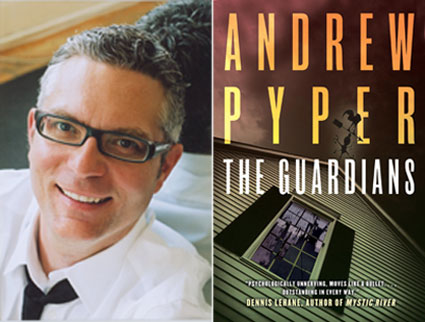 attempts to develop a complex story without a clear consistent idea of chronology and how the different threads of the story would weave together. It took two years to salvage the chaotic first draft and I never want to go through that again. Then, on a wet Saturday in Winnipeg, I heard an ad. on the radio for a talk at the central library by Andrew Pyper, an author from Toronto. I braved the rain and walked into town from Osborne Village and wondered whether it would be worth it. It was, definitely.
When Pyper talked us through the way he puts the key events, people, twists, conversations, climaxes, scenes on separate sheets and then pins them up on a wall, it was all so obvious. Think of the big boards they have in police investigations, with photos and names and events, arrows, links, questions and ideas, and you’ve got an image of a plan for a novel. It’s a form of simultaneous visual display: you can see links and connections that don’t present themselves from a ‘list’. This may have something to do with the way our minds work: I happen to be a visual thinker, and quite random sometimes, so this form of display will probably work well for me.
This way of working is useful for developing the structure of the novel too. 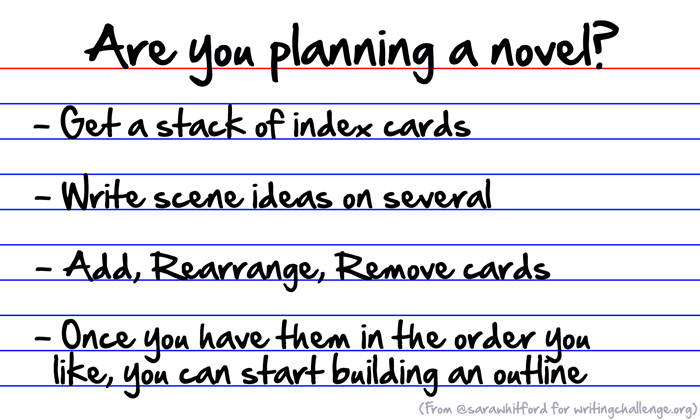 If you’ve got the key points of the story on separate cards you can move them around, arrange them into a time line, into chapters and then into ‘Acts’, either three or five. If you’re not sure what that’s about, Google it and you’ll find endless advice, diagrams, and so on. It’s the way most movies are constructed, and has seeped into the structures of others genres too.
I did warn you I’m a random thinker! So you won’t be surprised that I want to go backwards for a moment, to the very inception of the story, way before you get to the storyboard stage. Something has to spark you off. Pyper calls this the ‘what if’ stage: you read a piece in a newspaper and ask yourself, ‘What if that happened in the last century, not now?’ or ‘What if the key person was young and female not old and male?’ or ‘What if there was a storm and all phone and email communication was lost?’ or ‘What if DNA hadn’t been discovered when the story happened?’ or ‘What if you write this in the first person, not the third person?’
The ‘what if’s’ are endless. I recall that Pyper asked members of the audience to sum up their story in twenty five words and tell us. He then took ‘what if’ questions from the audience, and what a creative five minutes that was. You could see sparks flying all round the room. I asked the inevitable question: ‘Has Pyper ever written all this down, so we could go over it again?’ No, he never had. So all you’ve got is what I’m conveying here, although I’m sure other authors operate in much the same way and have written books about their writing process that I haven’t read.
So, you have an idea, twist it around with ‘what if’s’ to make it more interesting, start thinking about characters – their appearance, clothes, gait, speech, passions and fears, then weave them together and place them in a time and a place, and see what happens.
When you’ve got this far, go to the next stage, the ‘storyboard’ and the structure, and when you start to write, start at the beginning. I know it’s tempting to start on a big scene that’s set somewhere in the middle or right at the end, but you could be wasting an awful lot of time. I know, I did.
Just a caveat about planning too tightly…no matter what you plan on the page, and how detailed may be your vision of an ending, don’t assume that it will all work out exactly as you envisaged. When you get into the detail of your writing things will occur to you for the first time. Your characters may say something that throws the scene into a different direction, and from that all sorts of unanticipated things may happen. My advice is to plan tight for only three or four chapters ahead as you write and leave the future more flexible. If you’ve spent too much time on the long term plot you may want to hang on to it when the best decision would be to change it.
If you’re a teacher, you’ll recognise this dilemma: you have a plan for the week or the semester but learning is less predictable than teaching. For the sake of learning, the plan needs to change, so change it.
by admin | Oct 12, 2017 | character, creativity, crime fiction, plotting, readers, stories, structure, Uncategorized, writing
‘Are you a planner or a ‘pantser’?’ is the question. Being a planner is obvious: the alternative is to ‘fly by the seat of your pants’, hence the use of this odd word. (I could elaborate on the origin of this phrase, but not right now.)
If you’re writing non-fiction or for academic reasons, planning the order of your piece is pretty crucial. Can you imagine an instruction manual written like a novel? But when you’re writing fiction as I am now there are more choices to be made. The ‘pantsers’ make various claims for their preferred approach. Once you have strong characters, they say, these characters will take over and influence the direction of the plot. Another ‘pantser’ rationale is that half the fun of reading mystery, thriller or crime fiction lies in not knowing how the story will end, and the writer needs the same. ‘Where’s the fun in writing?’ a well-known crime writer asked me, ‘if you already know how it’s all going to turn out?’
Could it be that different fictional genres encourage different approaches to planning? If the story is principally character-driven, then surely the development of the characters during the story will drive the shape and narrative of the story. But crime fiction is surely different, isn’t it? Unless the author is capable of holding a mass of detail suspended in her head without the need to write it down in advance. The final stages of a crime story are heavily dependent, it seems to me, on the detail. This could be about ‘chronology’ – when exactly did certain events happen, and in what order? Or it could be about forensic detail and its role in the denouement.
Specific things said or done and mentioned, or not mentioned, in the text are what the reader relies on to work out what actually happened. That’s part of the challenge of crime and mystery fiction: it’s a game between writer and reader, dependent on the careful planting of clues which are then spotted and interpreted by the vigilant reader. If that’s the heart of the genre, it’s really hard to envisage how the writer could succeed without planning.
I need to plan. I wrote my first novel without a proper plan and got into a terrible mess as a result. It took two years to disentangle the web of plot, sub-plots,  confusions and unnecessary scenes and characters, and once or twice the whole thing nearly ended up in the bin. Never again, and as I turned towards crime fiction the need for planning became more intense. There’s still fun in working out how all the threads will tie together, and how the reader will be keep on turning the pages, but the fun’s now in the planning, not in the actual first draft.
The planning takes time, going back and forth, adjusting, adding detail, making sure the backstory fits together and propels the action forwards. For the structure of the story, that’s the creative stage. When the first draft is started, following the narrative structure established in the plan, then the creativity of language, dialogue and setting are to the fore. For me, it’s the plan that enables me to write quickly and fluently: without the detailed outline I’m constantly stopping and starting, losing the flow.
So, are you a planner or a pantser?
In next week’s post, I’ll try to explain how I actually plan. It’s pretty messy!
Recent Comments